On this page
Housing is the topic that comes up first in almost any conversation about Palo Alto. The city has excellent public schools, short commutes to Stanford and the tech industry and a limited supply of homes. That combination makes it one of the most expensive housing markets in the United States.
This guide explains the types of homes you will find, where they cluster and how buying and renting work here. It also covers historic districts, the special rules for Eichler homes, accessory dwelling units and how California's Proposition 13 shapes property tax bills. It is general information, not legal or financial advice. For the bigger picture of daily life, see living in Palo Alto.
Types of homes in Palo Alto
A rough rule of thumb helps. Oregon Expressway divides the city into north and south. North Palo Alto mostly has homes built in the first four decades of the 1900s. South Palo Alto was largely built in the twenty years after World War II.
Victorians, shingle houses and Craftsman bungalows
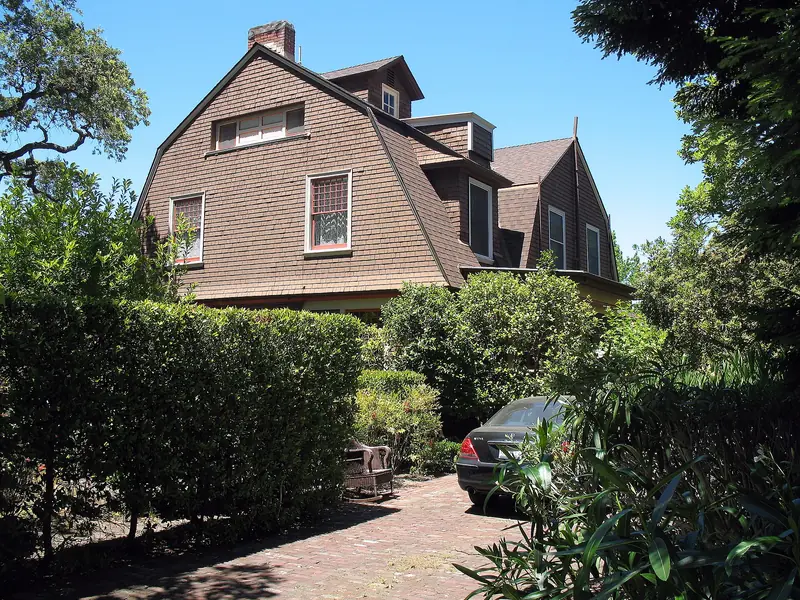
The oldest homes in the city are in and around downtown. Professorville, south of University Avenue, grew up in the 1890s and early 1900s when Stanford's first professors built houses there. You will see brown-shingle homes, a few Victorians and many Craftsman bungalows with deep porches and exposed rafters. The same eras show up in Crescent Park, Old Palo Alto and parts of downtown north. Our Professorville guide has a walking route.
These houses have charm, mature gardens and walkable locations. They can also need major work on foundations, wiring and seismic bracing. Many sit on the city's historic inventory, which affects what you can change.

Spanish Revival and Colonial Revival
In the 1920s and 1930s Spanish Revival became the local style of choice. The architect Birge Clark designed dozens of buildings in Palo Alto, including homes, downtown storefronts and the Lucie Stern Community Center. Stucco walls, red tile roofs, arched windows and courtyards are the signatures. Old Palo Alto and the streets around downtown have the best examples. Colonial Revival and Tudor homes from the same years are mixed in nearby.
Eichlers
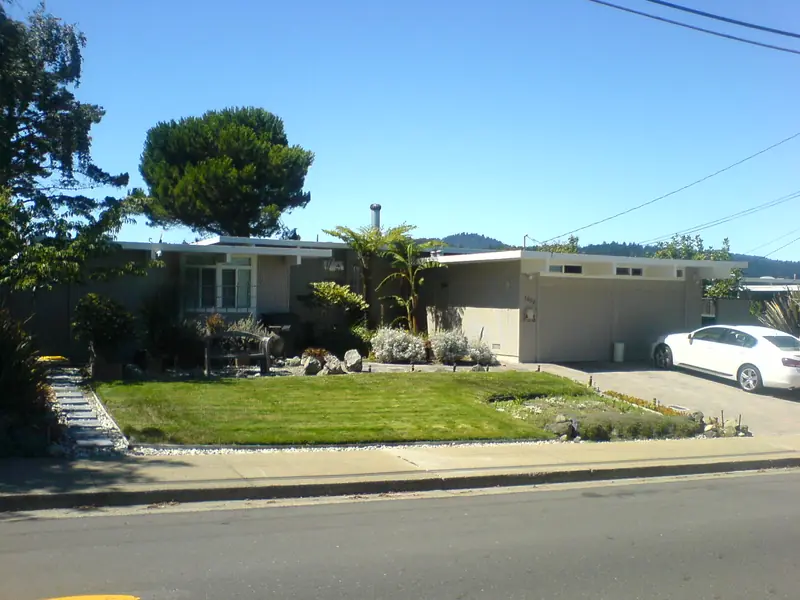
Joseph Eichler built about 2,700 homes in Palo Alto, a figure often rounded to 3,000, more than in any other city. Most went up between the late 1940s and the mid-1960s in south Palo Alto. Eichlers are single-story modern homes with post-and-beam construction, flat or low-sloped roofs, walls of glass facing the yard, open floor plans and often a central atrium. Many have radiant heating in the concrete floor slab.
Eichler was also known for selling to buyers of any race or religion at a time when many developers refused. In 1958 he resigned from the National Association of Home Builders over its refusal to back a nondiscrimination policy.
Buyers love Eichlers for their light and their connection to the garden. Practical issues include single-pane glass, aging radiant heating pipes and roofs that need careful maintenance. Renovations should respect the original design, which in some tracts is also a legal requirement. See the section on rules below.

Ranch homes
Alongside the Eichlers, south Palo Alto has many conventional ranch homes from the same era. They are single-story houses with pitched roofs on regular suburban lots. Many have been expanded or replaced with larger two-story homes. Midtown and the neighborhoods south of Oregon Expressway have the largest concentration. See the South Palo Alto guide.
Condos, townhomes and apartments
Multifamily housing is concentrated near downtown, around California Avenue, along El Camino Real and near Stanford. Condos and townhomes are the most common way to buy into Palo Alto below single-family prices. Expect homeowners association dues and check rules on rentals, pets and remodeling.
How the market works
Palo Alto's market moves on a different scale from most of the country. The Census Bureau's 2020 to 2024 American Community Survey puts the median value of owner-occupied homes above $2 million. That is the highest value the survey reports, so the true median is higher. Individual sales vary enormously by neighborhood, lot size and condition. For current prices, look at recent sales through a local agent or county records rather than national estimates.
A few patterns are typical in the Bay Area and in Palo Alto in particular.
- Sellers prepare disclosures up front. Listing agents usually provide a package of inspection reports and disclosures before offers are due. Read it carefully and consider your own inspections too.
- Offer dates are common. Many listings set a specific day to review offers rather than accepting them as they arrive.
- Buyers sign an agreement with their agent. Since August 2024, buyers working with an agent on a listing in a multiple listing service must sign a written agreement that spells out the agent's pay before touring homes.
- Inventory is thin. Single-family homes rarely come on the market in some neighborhoods. Patience matters.
- Lot value dominates. In many cases the land is worth far more than the house on it, which is why older homes are often replaced.
Renting in Palo Alto
Renting is common. About 45 percent of occupied homes in Palo Alto are rented. The Census Bureau's survey puts the median gross rent at $3,484 a month for 2020 to 2024. That survey figure includes long-term tenants, so asking rents for units on the market today are often higher.
California law gives tenants important protections. The statewide rent cap limits annual increases for many older apartments to 5 percent plus inflation, with a maximum of 10 percent. It also requires just cause for most evictions after a tenant has lived in a unit for a year. Many single-family homes owned by individuals are exempt. State law also limits security deposits to one month's rent for most landlords. Rules change often, so check current state tenant law before you sign a lease.
The city runs a Below Market Rate program that offers some homes for rent and sale at reduced prices to eligible households.
Historic districts and the Eichler rules
Palo Alto has four districts on the National Register of Historic Places, according to the city's historic preservation office.
- Professorville Historic District, the early faculty neighborhood south of downtown.
- Ramona Street Architectural District, a downtown block of Spanish Revival storefronts.
- Greenmeadow Historic District, an Eichler tract in south Palo Alto designed by the architects Jones and Emmons with landscaping by Thomas Church.
- Green Gables Historic District, another Eichler neighborhood.
The city also keeps its own Palo Alto Historic Inventory, which sorts buildings into categories. Owners of listed buildings can use incentives such as the California Historical Building Code for repairs, floor area exemptions and other zoning relief. In return, exterior changes get closer review. Read the preservation incentives before you plan a remodel.
Eichler neighborhoods have their own rules. The city has adopted design guidelines for Eichler homes that encourage additions and remodels to keep the low rooflines, glass walls and clean lines of the originals. Several neighborhoods, many of them Eichler tracts, have also voted in single-story overlay zoning, which limits new homes and additions to one story. Always check the zoning of a specific address before you buy if you plan to expand.
ADUs and lot splits
Accessory dwelling units, often called granny flats or backyard cottages, have become a big part of Palo Alto's housing story. California law requires cities to allow an ADU and a junior ADU on most lots with a single-family home and to approve plans that meet the standards within a set time. ADUs can be detached cottages, garage conversions or additions.
A state law known as SB 9 also allows many single-family lots to be split or to hold two homes, subject to local standards. Palo Alto's planning department publishes the local rules for both. ADU and SB 9 projects are popular with families who want space for parents or adult children. Owners who want rental income build them too.
Property taxes and Proposition 13
California property taxes work differently from most states because of Proposition 13, which voters approved in 1978. The basic rules are simple.
- The base tax rate is 1 percent of a property's assessed value.
- Voter-approved bonds and special assessments are added on top. In Palo Alto these can include school parcel taxes and other local measures, so the total bill is a bit above 1 percent of assessed value.
- The assessed value is set when you buy, usually at the purchase price.
- After that, the assessed value can rise by no more than 2 percent a year, no matter how fast the market rises.
- A sale or new construction triggers a reassessment of the affected value.
The result is that two identical houses on the same street can have very different tax bills. A family that bought decades ago may pay a small fraction of what a new buyer pays. New owners should also expect a supplemental tax bill from Santa Clara County covering the gap between the old and new assessed values for the rest of the tax year. Proposition 19, passed in 2020, changed the rules for transfers between parents and children and for some older homeowners who move. Contact the Santa Clara County Assessor for specifics.
Tips for house hunters
Good to know
- Confirm school boundaries for any address with the Palo Alto Unified School District. See our schools guide.
- Check whether a home is on the historic inventory or in a single-story overlay before you plan changes.
- Older homes may need seismic work. Ask about foundation bolting and soft-story issues.
- Electricity, gas and water come from City of Palo Alto Utilities, so ask sellers for recent utility bills.
- Budget for property tax at a bit over 1 percent of your purchase price each year.
Spend time in the neighborhoods before you commit. Walk them at different times of day, try the commute and visit the parks. Our neighborhoods hub is a good place to start. For a house-hunting trip, our where to stay guide covers hotels close to the areas you will tour. A short-term furnished rental can be a good base while you search.
In this section
Frequently asked questions
How much does a house cost in Palo Alto?
Palo Alto is one of the most expensive housing markets in the country. The Census Bureau's 2020 to 2024 American Community Survey puts the median value of owner-occupied homes above $2 million, the top value the survey reports. Actual sale prices vary widely by neighborhood, lot size and condition, so check recent sales with a local agent or county records.
How many Eichler homes are in Palo Alto?
Developer Joseph Eichler built about 2,700 homes in Palo Alto, a figure often rounded to 3,000, after World War II, more than in any other city. Most are in south Palo Alto. Two Eichler tracts, Greenmeadow and Green Gables, are listed as historic districts on the National Register of Historic Places.
How does Proposition 13 affect property taxes?
Under Proposition 13 the base property tax is 1 percent of a home's assessed value, plus voter-approved local bonds and parcel taxes. The assessed value is set at purchase and can rise by no more than 2 percent a year until the property is sold or newly built on. New owners are taxed on the purchase price, which is why recent buyers often pay far more than long-time neighbors.
Can I build an ADU in Palo Alto?
In most cases, yes. California law requires cities to allow accessory dwelling units and junior ADUs on lots with single-family homes and to approve compliant plans through a streamlined process. Palo Alto's planning department publishes local standards and reviews permits.
Is it better to rent or buy in Palo Alto?
That depends on how long you will stay. About 45 percent of Palo Alto homes are rented. Renting is the common first step for newcomers, postdocs and young families who want to learn the neighborhoods before committing to the very high purchase prices.