On this page
People who move to Palo Alto from the East Coast often say the town has no fall. That is half right. The native landscape is built around a dry summer and a wet winter, not a cold autumn, so the hills do not blaze the way a Vermont maple forest does. But the city planted thousands of deciduous trees along its streets over the last century. Many of them come from places with real autumns and they still keep that calendar. By late November whole blocks turn red, orange and gold.
This guide covers where to see that color in town, on the Stanford campus and in the preserves in the hills, plus the timing that catches out visitors who arrive in October expecting a show. Nothing here needs a ticket. Most of it you can see on a walk from a downtown hotel.
When the leaves turn
Fall color in Palo Alto is late. A few street trees begin turning at the end of October, but the main show usually comes in mid to late November, after the first cold nights. Ginkgos tend to be last, often peaking around Thanksgiving, which falls on November 26 in 2026. Our pages on October and November fit the leaves into the rest of the season.
Weather shifts the calendar every year. A warm, dry fall can hold color back into December. A big storm can strip a street in one night. The first rains usually arrive between late October and November. Once they do, the color tends to move fast. If you see a row of pistache turning orange, go back within the week.
| Where | What turns | Usual timing |
|---|---|---|
| Hills and creeks | Poison oak (red), buckeye (drops leaves early) | Late summer into fall |
| Skyline ridge | Black oaks, bigleaf maples | Late October into November |
| City streets | Pistache, sweetgum, maples | Mid to late November |
| City streets and campus | Ginkgo | Late November, often around Thanksgiving |
Street trees in town
The city cares for nearly 66,000 trees through its Urban Forestry Section, most of them along streets and in parks. That planted forest is where the brightest color is. Three trees do most of the work:
- Chinese pistache. A tough, drought-tolerant street tree that turns orange, scarlet and coral. Look for it along residential blocks across the city.
- Sweetgum, or liquidambar. Star-shaped leaves that turn a mix of purple, red and yellow on the same tree. Watch for the spiky seed balls on the sidewalk.
- Ginkgo. Fan-shaped leaves that turn a clear butter yellow and then often drop within a few days, leaving a gold carpet under the tree.
The best walks are in the older neighborhoods north of Oregon Expressway, where the trees are tall and the streets are narrow enough for the canopy to meet. Try Professorville and Old Palo Alto in the second half of November, then cross Embarcadero Road into Crescent Park. Our Professorville walking tour gives you a route with historic houses to look at between the trees.
Native oaks do not change much. Coast live oaks stay green all year. The city counted more than 11,000 native oaks in its Great Oak Count, finished in 2025. They give the fall streets their dark green backdrop. Our guide to the urban forest explains which trees the city protects.

Stanford's campus
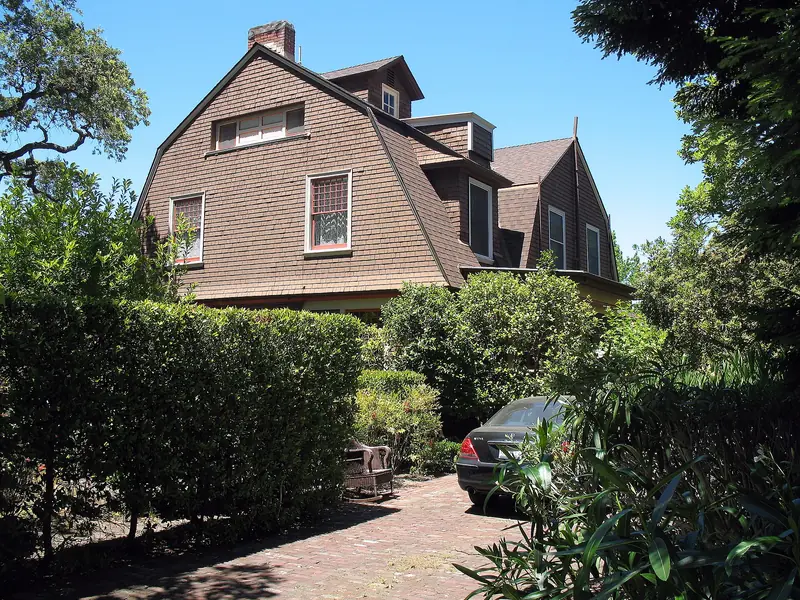
Stanford is a good place to see autumn against evergreens. Coast live oak is the most common tree on university land and the campus also has big stands of eucalyptus and palms. Deciduous trees planted around the buildings turn in November and stand out sharply against all that green. The effect is strongest in the Arboretum between Palm Drive and the Mausoleum. It also shows in the courtyards around the Main Quad.
Walk up Palm Drive from El Camino Real, loop through the Arboretum, then continue to the Quad and the Science and Engineering Quad. It is flat, free and about an hour at a slow pace. The self-guided campus walk covers the buildings on the way. Late afternoon light works best. Campus is busy on weekdays during the academic quarter, which in 2026 runs to December 11.
The preserves and the hills
The native color in the hills is quieter but more varied. It comes from a handful of plants rather than whole forests:
- Poison oak turns bright red and orange from late summer into fall. It is the most common source of red on foothill trails. It causes a rash in every season, even bare in winter, so stay on the path.
- California buckeye drops its leaves in summer to save water. By fall the bare gray branches carry big round seed pods.
- California black oak turns orange and gold on the higher slopes.
- Bigleaf maple turns yellow along creeks and shaded canyons.
- Grasses go from gold to green after the first soaking rain, which can feel more like spring than fall.
Close to town, the oak woodland at Pearson-Arastradero Preserve and Foothills Nature Preserve shows poison oak color against the gold grass and the evergreen oaks. Both city preserves are open 8 a.m. to sunset. Foothills charges a vehicle fee and limits how many people can be inside at once.

Castle Rock and Skyline
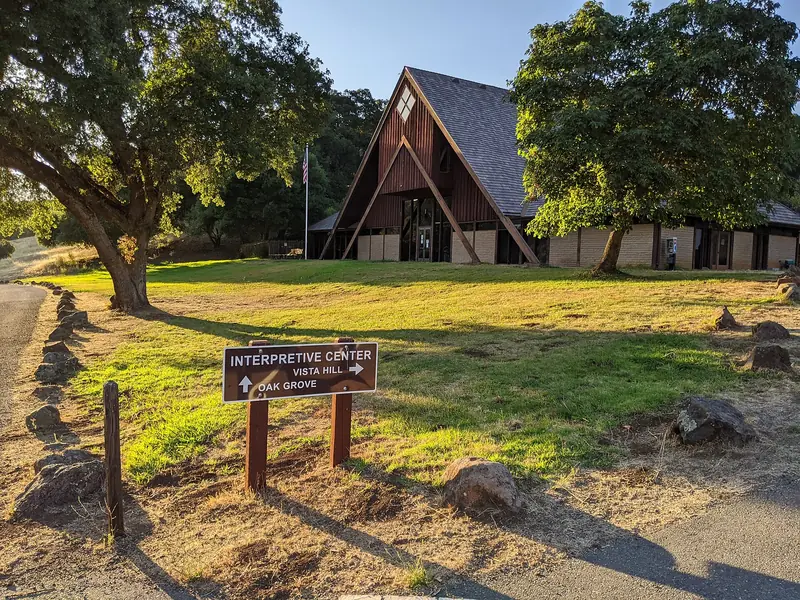
For the strongest native color, head up to Skyline Boulevard. California State Parks named Castle Rock State Park in its 2025 list of parks to visit in fall. It describes high-elevation coast redwoods, knobcone pines and black oaks that turn orange in autumn. The park sits on Highway 35 about 2.5 miles southeast of Highway 9.
State Parks lists day use hours of 6 a.m. to sunset and a $10 vehicle day use fee. There is no visitor center or store and no cell reception in the park. Dogs are not allowed. If you go after the first rains, the seasonal waterfall in the park may be running too; see our guide to waterfalls near Palo Alto.
Along the way, the Midpen preserves on Skyline mix oak woodland with grassland. Midpen preserves open a half hour before sunrise and close a half hour after sunset. Some trails close to bikes and horses in wet weather.
Tips for photographing fall color
- Go after a storm. Clear air and wet pavement make the reds glow. Wet leaves also reflect less glare.
- Use side light. Low sun in the late afternoon lights up leaves from behind. Shoot down the length of a street rather than straight across it.
- Look down. A ginkgo carpet on a dark sidewalk often makes a better picture than the tree itself.
- Mind the neighbors. Street trees stand in front of private homes. Stay on the sidewalk and do not block driveways.
- Watch for leaf piles. The city runs a fall leaf program, so piles in the street may be waiting for pickup. Our street sweeping and leaf pickup page explains the schedule.
Good to know
- Fire season can run into November until a soaking rain arrives. Some preserve areas close on Red Flag Warning days.
- Smoke from distant wildfires can dull the color and make hiking unpleasant. Check air quality first.
- Days are short after the clocks change on November 1, 2026. City preserves close at sunset.
Frequently asked questions
When do leaves change color in Palo Alto?
Later than most people expect. A few street trees begin turning at the end of October, the best color usually comes in mid to late November and ginkgos often peak around Thanksgiving. A warm, dry fall can delay the show and a big early storm can strip leaves quickly.
Where are the best fall colors in Palo Alto?
Walk the older neighborhoods such as Professorville, Old Palo Alto and Crescent Park, where mature planted street trees line the blocks. Chinese pistache and sweetgum give reds and oranges. Ginkgos turn bright yellow last.
Are there fall colors in the hills near Palo Alto?
Yes, though they are subtler than in New England. California black oaks turn orange and gold, bigleaf maples turn yellow along creeks and poison oak turns bright red. California State Parks singles out the black oaks at Castle Rock State Park on Skyline Boulevard.
Is poison oak the red plant I see in the fall?
Often, yes. Poison oak is common in the foothills and its leaves turn red in late summer and fall. It still causes a rash in any season, even when the leaves have dropped, so admire it from the trail and do not touch it.
Does Stanford have fall color?
Yes. The campus mixes evergreen oaks and eucalyptus with deciduous trees that turn in autumn. The contrast is clearest in the Arboretum and around the Quad, where bare and colored trees stand among the evergreens by late November.