On this page
Palo Alto runs from the edge of San Francisco Bay up into the Santa Cruz Mountains, which puts three very different habitats within a short drive. The Baylands hold salt marsh and mudflats. The foothills hold oak woodland and grassland. Just over the city line, Hidden Villa runs a working farm. Several organizations use these places to teach children, through classes, guided walks and volunteer days that families can do together.
This guide lists the programs we could confirm in October 2026. Most need registration and fill early, especially on weekends. For trails to explore on your own, see our hiking guide.
Baylands and the Lucy Evans nature center
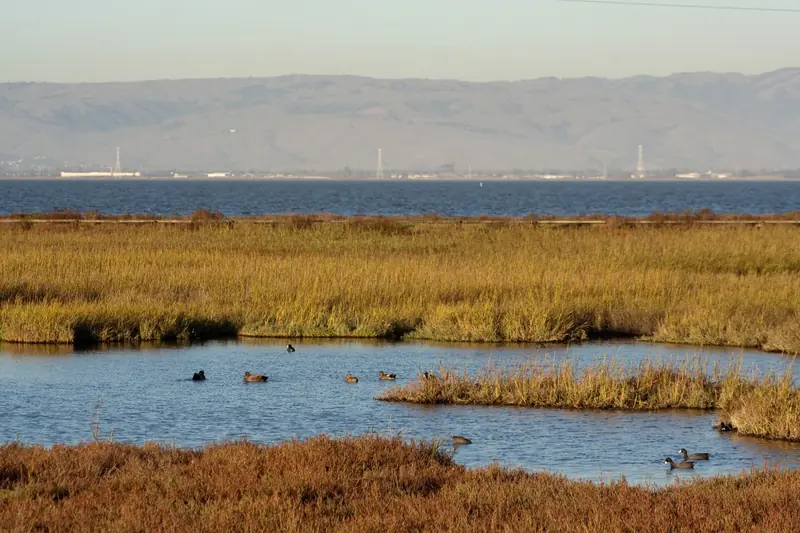
The Baylands Nature Preserve covers about 1,940 acres at the east end of Embarcadero Road. The city's Lucy Evans Baylands Nature Interpretive Center sits at the edge of the marsh. The city says the center serves about 130 classes and camps, 3,000 elementary students and 80,000 visitors a year.
From the center, a boardwalk crosses the marsh to open water. It was rebuilt after most of it closed for safety in 2014 and is now open to the public. It is the easiest place in the city to show a child a salt marsh up close. Late fall through early spring is the best season for birds. Our birdwatching guide explains what to look for.
Nature classes and camps run by the center are listed in the city's seasonal Enjoy! catalog. Open hours for the building have changed over the years, so check the city's center page before a visit.

Hidden Villa, Los Altos Hills
Hidden Villa is a 1,600-acre farm and wilderness preserve at 26870 Moody Road in Los Altos Hills, roughly a 20 minute drive from downtown Palo Alto. Frank and Josephine Duveneck bought the land in 1924. In 1945 they started what Hidden Villa calls the first racially integrated residential summer camp in the country. Today the nonprofit runs programs on food, farming and nature.
Visiting
The property is open to visitors during its posted open hours. Instead of admission, guests pay a $10 parking fee, either online in advance or in the box by the gatehouse. Hidden Villa says it will not turn anyone away who cannot pay. An Access Pass gives a year of free visits during open hours from September to May. There are about 8 miles of hiking trails, an education garden and farm animals you can view from outside their pens.
Programs for families
The farm's calendar for individuals and families is the place to look. Recent listings have included:
- Family Friendly Volunteer Day. About two hours of farm work, free.
- Natural Science Saturdays. Two-hour classes on topics such as birds and nests or fungi, listed at $30.
- Behind-the-Scenes with the Farmer. A 90-minute visit with the animal husbandry manager at feeding time, listed at $35.
- Summer camps. Hidden Villa still runs summer camps, carrying on the tradition started in 1945.
Hidden Villa's safety notes ask families with children under 5 to take extra care around farm animals and to wash hands well. Cell coverage is limited, so set a meeting point.
Grassroots Ecology volunteer days
Grassroots Ecology is a local nonprofit that restores native habitat with volunteers. Its roots go back to 1997, when Bay Area Action, which later became Acterra, started the Arastradero Stewardship Program at Pearson-Arastradero Preserve. The program grew and branched off as an independent nonprofit. It marked its 10th anniversary as Grassroots Ecology in 2026.
The group says most of its volunteer events allow youth. An adult must come with children under 13 and anyone 17 or under needs an online minor waiver. That makes these workdays one of the easiest ways for a family to do real conservation work together. All events need advance registration and spots fill. The Pearson-Arastradero workdays run about three hours on a Saturday morning. Upcoming fall 2026 dates included Foothills Nature Preserve on November 8 and Pearson-Arastradero on November 14 from 8:30 to 11:30 a.m. The group also listed a Día de los Muertos event at Cooley Landing in East Palo Alto on November 7.
What kids do
The work changes with the seasons. From November to February volunteers plant natives, since that is the only planting season. Spring is mostly weeding. Summer brings watering and mulching. Tools and gloves are provided. Bring water, long sleeves, closed-toe shoes that can get dirty and sun or rain gear. Expect poison oak, ticks and prickly plants in the preserves.
Night hikes and teen programs
Grassroots Ecology naturalists also lead night hikes at Pearson-Arastradero, looking for bats, owls, spiders and glowing scorpions on a walk of about 2.5 to 3 miles. Older kids enjoy them most. For teens, the free Youth Stewards program runs in summer and winter, according to Grassroots Ecology. In 2026 a late winter session (listed as spring) met on weekday afternoons from February 25 and a summer session met on Wednesdays at several park sites. In 2026 most sites served high school students, while the Arastradero site took grades 6 to 12. Sign-ups for the February session open in winter.
Acterra
Acterra, the group that gave birth to Grassroots Ecology, now focuses on climate solutions. It runs free workshops and community events on topics such as electrification and sustainable food. Its youth work centers on You(th) Be the Change, a free climate curriculum in English and Spanish with teacher training and field trips for middle school classes. Families looking for hands-on habitat work should start with Grassroots Ecology instead.
Midpen docent hikes
The Midpeninsula Regional Open Space District, known as Midpen, manages preserves along the ridge above Palo Alto. Its docent naturalists lead guided walks and hikes year-round, listed on the district's guided activities calendar. Read each listing carefully. Some are gentle walks while others are long climbs. An early November 2026 Explorer Hike on lichens, for example, covered about 5 miles with 600 feet of gain, better suited to older kids.
Midpen also points families to easier places:
- Alpine Pond at Skyline Ridge Preserve. A 0.5-mile trail circles the pond. The David C. Daniels Nature Center beside it is open on weekends from spring to fall.
- Horseshoe Lake. A 1-mile loop around a year-round pond with picnic tables under oaks.
- Deer Hollow Farm. A working homestead and educational center inside Rancho San Antonio Preserve.
Midpen has also published free self-guided walks, many downloadable to smartphone apps.
City preserves on your own
Between programs, Palo Alto's own preserves are open for self-guided exploring. Pearson-Arastradero has bluebirds and gentle trails. Foothills Nature Preserve has a nature interpretive center and Boronda Lake, with a vehicle fee. The Baylands are free.
Good to know
- Register early. Volunteer days and classes often cap numbers.
- Dress in layers and closed-toe shoes. Wind is common at the Baylands and the foothills get hot in summer.
- Learn to spot poison oak before you go. It grows in every foothill preserve.
- For more ways to give time as a family, see our volunteering guide.
Want a guided outdoor day farther afield, such as Muir Woods or the coast? You can browse Bay Area nature tours.
Frequently asked questions
Does Hidden Villa charge admission?
Hidden Villa asks visitors to pay a $10 parking fee rather than an admission fee. It says no one is turned away for inability to pay and offers a discount code on request. Many classes and workshops have their own fees, while family volunteer days are free.
Can kids volunteer with Grassroots Ecology?
Yes, at most events. Grassroots Ecology says most of its events allow youth volunteers. An adult must come with children under 13 and anyone 17 or under needs an online minor waiver. Every event needs advance registration. It also runs a free Youth Stewards program in summer and winter, mostly for high school students.
Is Acterra the same as Grassroots Ecology?
Not anymore. Grassroots Ecology began in 1997 as the Arastradero Stewardship Program of Bay Area Action, which later became Acterra. It grew into an independent nonprofit. Acterra now focuses on climate work, including the You(th) Be the Change program for middle school teachers.
What nature programs does the Baylands nature center offer?
The city's Lucy Evans Baylands Nature Interpretive Center serves about 130 classes and camps, 3,000 elementary students and 80,000 visitors a year. Classes and camps are listed in the city's Enjoy! catalog. Check the city page for current open hours before you go.
Are Midpen docent hikes good for kids?
Some are. Midpeninsula Regional Open Space District docent naturalists lead free guided walks across its preserves. Distances range widely, so pick short outings for young children. Midpen also suggests easy family spots such as Alpine Pond at Skyline Ridge, where a 0.5-mile trail circles the pond.