On this page
For most of the 20th century the big building at 340 Portage Avenue was just there: a cannery and later the Fry's Electronics store where Silicon Valley engineers bought parts. Few shoppers knew it was built by one of the most successful Chinese American businessmen of his era. Thomas Foon Chew arrived in California at eight under the Chinese Exclusion Act and died a multimillionaire at 42.
In 2026 his name came back. The old cannery reopened as an all-electric building with a mosaic in his honor. The city also voted to put his name on the street outside. This page covers his life, the cannery and what you can see today.
From Heshan to San Francisco
Chew was born in 1889 in Heshan, in Guangdong province, China. In 1897, at eight, he came to California with his mother to join his father, Sai Yen Chew. The Chinese Exclusion Act of 1882 barred most Chinese laborers from entering the country. The family was admitted as merchants, one of the few categories still allowed. The exclusion law stayed in force until Congress repealed it in 1943, so Chew built his business while the law still limited who could join him from China. His son Timothy later recalled his mother saying the family came in on a visa set aside for Chinese merchants.
He preferred to be called Thomas Foon. That is how many records and family members refer to him.
The Bayside Canning Company
The family's first cannery was in San Francisco. The 1906 earthquake destroyed it. Afterward Chew's father founded the Bayside Canning Company in Alviso, at the southern tip of San Francisco Bay. He brought Thomas into the business. Some accounts credit Thomas himself with the founding. Either way, he soon ran it.
He expanded Bayside from tomatoes into a long list of fruits and vegetables. The company packed under at least seven brand names, among them Bohemian, Cal Taste, Gondolier, Calico and Snow Peak. In the 1920s Bayside became the third-largest canning business in the United States. Chew also farmed more than 8,000 acres in the Sacramento-San Joaquin River Delta as the Thomas Foon Ranch Company.
The Asparagus King
In 1919 Chew built an asparagus and spinach cannery at Isleton in the Delta, then the center of American asparagus growing. Chew developed methods for canning green asparagus and shipping it across the country. He became known as the Asparagus King. The patent drawing of an asparagus sorting machine on his Palo Alto mosaic recalls that side of the business.
The Mayfield cannery
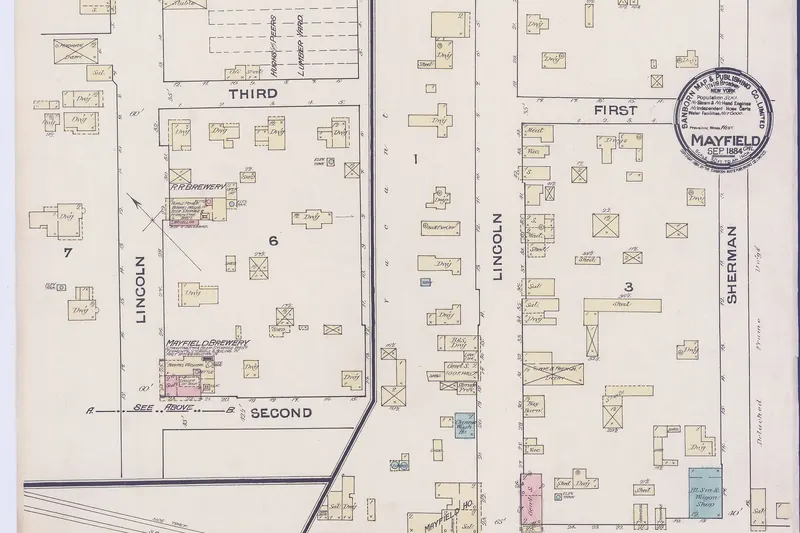
In 1918 Chew bought about four acres in the Mayfield area, south of Palo Alto. He built a Bayside plant there. Orchards still covered much of the valley. Mayfield joined Palo Alto in 1925. The Ventura neighborhood around the cannery came into the city later, in a 1954 annexation, so the plant may have stood outside the city limits for part of its life. Our page on Mayfield explains why the two towns merged.

Sources describe the plant's scale in different ways, so it helps to separate them:
- The company. Bayside as a whole was the third-largest canning business in the country in the 1920s, according to Wikipedia.
- The Palo Alto plant. Chew's granddaughter Gloria Hom said in 2026 that it was one of his smaller canneries. It specialized in apricots, pears and peaches.
- Local importance. For a time it was the largest employer in town, according to the city and local histories. We found no primary source with exact worker counts. Wikipedia's Palo Alto article gives a figure of about 1,000 workers when the cannery closed in 1949, but we could not confirm it. Cannery work was seasonal, tied to the valley's orchards and farms, so numbers rose and fell with the harvest.
Chew sold the plant to the Sutter Packing Company in 1928, according to San José Spotlight. Canning on the site continued under other owners. Local histories date the cannery's closing to 1949.
Death at 42
Thomas Foon Chew died of pneumonia in San Jose on February 25, 1931. He was about 42 and left seven children. His son Timothy remembered that he had asthma and chain-smoked cigars. His memorial parade along Grant Avenue in San Francisco's Chinatown drew about 25,000 people, according to Wikipedia and Robin Chapman's research. Hom gave a smaller figure in 2026, about 2,500 at the funeral. The accounts differ.
For decades he was largely forgotten outside his family. Chapman's 2018 book Historic Bay Area Visionaries included the first long account of Chew and his canneries in nearly 50 years. The Los Altos History Museum shared that research in its "Silicon Valley Eats" exhibition.
From cannery to Fry's to housing plan
After canning ended, the big shed found other uses. The building became the Palo Alto store of Fry's Electronics, a destination for engineers and hobbyists for years. Fry's left before the whole chain shut down in 2021.
The Sobrato Organization owns the site. The city and Sobrato agreed on a framework in 2022 and a development agreement in 2023. Wikipedia reports that about 40 percent of the cannery building was demolished despite protests from preservationists. The plan includes 74 townhomes across from the cannery, about 100 below-market-rate apartments and a new public park. Our Ventura neighborhood guide explains the city's North Ventura plan.
The 2026 reopening and the mosaic
On May 12, 2026, Sobrato, city leaders and Chew's descendants gathered at 340 Portage Avenue to celebrate the renovated building. San José Spotlight described a 73,000-square-foot interior completely refurbished as an all-electric commercial building. John Sobrato called it the most sustainable building in his company's 70-year history, net zero for emissions and on track for LEED Platinum certification.
The art tells Chew's story:
- The mosaic. Artist Kyungmi Shin's glass mosaic at the entrance shows Chew, cannery workers, product labels, the asparagus sorter patent drawing and apricot blossoms over valley fields. A computer among zeros and ones nods to the Fry's years.
- The cans. A sculpture of oversized cans leads to the door. Their labels spell out Bayside Canning Company.
- The street. In fall 2025 the City Council voted to rename Portage Avenue as Thomas Foon Chew Avenue. At the ceremony the city handed Hom a street sign bearing his name.
"My heart is just overflowing with gratitude," Hom said. Former mayor Tom DuBois said, "I think it's great that we found a way to honor his memory and have this building modernized and reused." The city lists the mosaic in its public art collection.
Seeing it yourself
The Cannery is a private commercial building, so enjoy the mosaic and the can sculpture from the public frontage. It is about a 10 to 15 minute walk from the California Avenue Caltrain station. Our California Avenue walking tour links it with old Mayfield's depot and brewery sites. Street signs may read Portage Avenue or Thomas Foon Chew Avenue while the change rolls out, so use the 340 address for maps.
Make a morning of it. The Sunday farmers market on California Avenue runs year-round a few blocks away. Our California Avenue guide covers cafes and parking. To place the cannery among the city's other milestones, from the Mayfield brewery to the research park, scan our Palo Alto timeline.
Frequently asked questions
Who was Thomas Foon Chew?
Thomas Foon Chew (1889 to 1931) was a Chinese American businessman who ran the Bayside Canning Company, which grew into the third-largest canning business in the United States in the 1920s. He was called the Asparagus King for developing ways to can green asparagus for shipment nationwide. In 1918 he built a cannery in Mayfield, now part of Palo Alto.
Where was the Bayside Cannery in Palo Alto?
It stood at 340 Portage Avenue in the Ventura neighborhood, near California Avenue. The building later housed Fry's Electronics. The Sobrato Organization rebuilt its interior and celebrated its reopening on May 12, 2026.
When did the Palo Alto cannery close?
Chew sold the Palo Alto plant to the Sutter Packing Company in 1928, according to San José Spotlight's 2026 report. Canning on the site ended in 1949, the date local histories give for the cannery's closing.
What is the Thomas Foon Chew mosaic?
It is a glass mosaic by artist Kyungmi Shin at the entrance of the former cannery. It shows Chew, cannery workers, product labels, a patent drawing of an asparagus sorting machine and apricot blossoms. A sculpture of cans spelling out Bayside Canning Company leads to the building.
Is Portage Avenue being renamed?
Yes. San José Spotlight reported that the Palo Alto City Council voted in fall 2025 to rename Portage Avenue as Thomas Foon Chew Avenue. At the May 2026 ceremony the city gave his granddaughter a street sign with his name. Maps and some signs may still show Portage Avenue.