On this page
It is hard to picture today, but the flat land between El Camino Real and the bay was once farm country. Ohlone families gathered acorns under valley oaks. Spanish and Mexican ranchos ran cattle for hides. American settlers planted wheat and hay, then grapes, then the fruit trees that gave the whole Santa Clara Valley its old nickname, the Valley of Heart's Delight. Palo Alto grew up on the northern edge of that orchard belt and its southern neighborhoods were still farms within living memory.
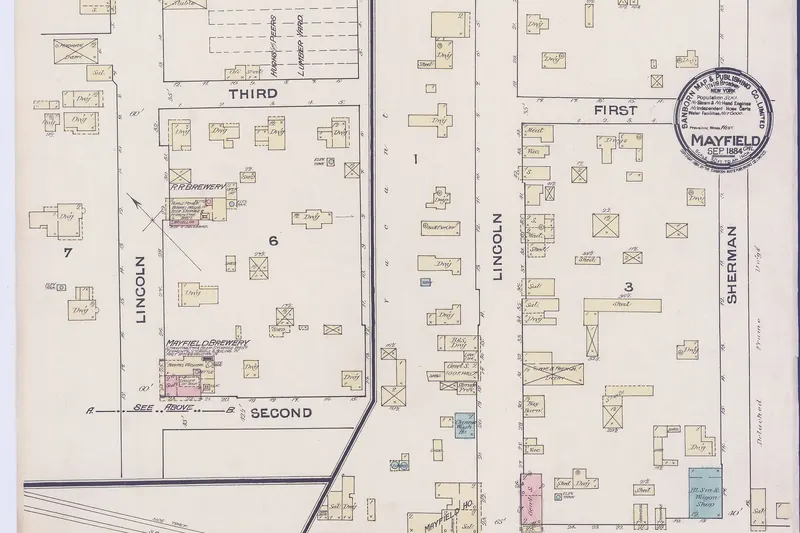
This page follows the land from rancho to orchard to subdivision. It draws on the City of Palo Alto's history pages, Stanford's archaeology program, local markers and published histories of the valley. For the town that grew up among the farms, see our page on Mayfield.
Ranchos, hides and the first farms
The City of Palo Alto describes a valley floor once covered by thousands of oak trees, whose acorns fed the Ohlone for generations. After 1777 the grazing lands of Mission Santa Clara spread over most of what is now Palo Alto. Under Mexico the mission pastures were split into ranchos, where cattle were raised mostly for hides and tallow.
A marker at the Stanford Palo Alto Community Playing Fields, at Page Mill Road and El Camino Real, gives a picture of that economy. It says that in the 1850s Juana Briones took three days by wooden cart to haul cattle hides to San Francisco. The same marker notes a farm run by Jesus Ramos across Page Mill Road in 1856 and William Page's sawmill in the hills, which was shipping lumber down to Mayfield by 1866. Briones owned the rancho that covered much of today's southwest Palo Alto.
The American era brought new owners and new crops. In 1853 Elisha Oscar Crosby bought 250 acres of the Robles rancho and named it Mayfield Farm. Sarah Wallis acquired it in 1856. Farmers along the old county road grew grain and hay for San Francisco's horses. When the railroad reached Mayfield in October 1863, those crops could reach the city in hours instead of days.
Leland Stanford's farm
The biggest farm of all belonged to Leland Stanford. In 1876 he bought George Gordon's Mayfield Grange, about 650 acres. There he began building the Palo Alto Stock Farm. Its fame came from trotting horses, but it was a working agricultural estate too. In 1882 Stanford added Ayrshire Farm, the property of Peter Coutts, according to Wikipedia.
The city's history page says Stanford's vineyards were among the largest in California. Much of that wine country lay far to the north, but the Palo Alto farm had its own vineyard near today's Arboretum. Stanford archaeologists say Chinese workers tended horses, worked the vineyards and winery and kept the orchards and gardens. Stanford's timeline adds that planting of the Arboretum began in 1880 and that 12,000 trees went in during 1884. The brick building now known as the Stanford Barn, on Welch Road, is usually described as the farm's old winery.
When the Stanfords founded their university in 1885, the farm became its endowment and its campus. The founding grant barred selling the land, which is why so much of it stayed open until the research park era.
The Valley of Heart's Delight
Across the valley, fruit took over from grain in the 1870s, according to Wikipedia's history of the Santa Clara Valley. Drying and canning became the leading industry. A few numbers show the scale:
- Prunes: By 1900 the valley produced most of California's prunes and shipped them abroad.
- Trees: In the 1920s the valley's orchards held about 8 million fruit trees, according to historian Robin Chapman as reported by the Almanac.
- Apricots: From the 1850s to the 1970s the valley was the center of American apricot growing. Chapman puts peak output at 160,000 tons a year from almost 24,000 farms and orchards.
- Packing: In the 1920s and 1930s the valley had 18 canneries, 13 dried fruit packing houses and 12 fresh fruit and vegetable shippers. Wikipedia says it counted 39 canneries before the 1960s.
Blenheim apricots did especially well here. The trees need about 850 hours a year below 45°F, a chill the mild valley winters provided and the hotter Central Valley does not. The bloom became an event in its own right. Saratoga's Blossom Festival began in 1900 and was revived in 2013.
Mayfield and the cannery
Mayfield, the older town now centered on California Avenue, grew into what the city calls a typical small farm town. Its biggest food business arrived in 1918, when Thomas Foon Chew built a plant for his Bayside Canning Company on about four acres near the railroad. His granddaughter has said it specialized in apricots, pears and peaches. Chew sold it to the Sutter Packing Company in 1928 and canning on the site ended in 1949.
Work at the cannery was seasonal and rose and fell with the harvest. Wikipedia says the plant was the city's largest employer with about 1,000 workers when it closed, a figure we could not confirm in other published sources. The building at 340 Portage Avenue later held Fry's Electronics and reopened in 2026 as an all-electric office building with a mosaic honoring Chew. Our Thomas Foon Chew page tells the whole story and our Ventura guide covers the neighborhood around it.

South Palo Alto before the tract homes
Into the 1950s much of today's south Palo Alto was still outside the city or barely built on. Neighborhood histories and residents' memories fill in the picture:
- Walnut groves. Residents who arrived in the 1950s told Palo Alto Online they once looked over walnut trees toward the East Bay hills.
- Apricots. The southwest corner of the city near Arastradero Road was orchard country, mostly apricots. Juana Briones Park on Maybell Avenue was itself an apricot orchard.
- Dairies. Around Louis Road, rural lots and a dairy lasted until the mid-1950s.
- Nurseries. Some land stayed in horticulture longer, such as the Bell's Nurseries property that became condominiums in the 1970s.
Then the land changed hands at speed. Palo Alto had 16,774 residents in 1940 and 52,287 in 1960. Owners sold orchards to builders like Joseph Eichler, who put up hundreds of homes at a time for veterans and young families. Our page on postwar growth explains the annexations and tracts. The argument over farmland did not end with the bulldozers. In 2013 voters rejected a rezoning on a former orchard site on Maybell Avenue, one of the decade's sharpest housing fights.
Who did the work
Farm and cannery labor in the valley drew on wave after wave of newcomers. Chinese workers built and tended Stanford's farm from the early 1880s. Japanese immigrants who arrived from the 1890s found work in orchards and fields. From the 1920s on, Mexican and Mexican American workers were central to the valley's orchards and canneries, a history San José State University documents in its oral history project Before Silicon Valley. Many orchards were family businesses. The Sunnyvale Heritage Orchard, for example, was first owned by the Vidovich family. Our pages on Chinese American history and Latino history follow two of those communities in Palo Alto.
Chapman dates the moment when technology overtook agriculture as the valley's main economy to about 1973. Palo Alto made the switch earlier, as its farmland filled with houses and the research park in the 1950s.
Where to see the farm past today
No commercial orchards remain in Palo Alto, but several places keep the memory alive within a short drive:
- Los Altos Heritage Orchard. About 10 acres of apricots planted in 1901 by J. Gilbert Smith and bought by the new city of Los Altos in 1954. It sits beside the Los Altos History Museum, whose exhibits cover the orchard era.
- Sunnyvale Heritage Orchard. About 10 acres with about 800 Blenheim apricot trees next to the Heritage Park Museum at 570 E. Remington Drive. Fruit is sold in season.
- Saratoga Heritage Orchard. About 14 acres of apricots, prunes and cherries in a public park at 13650 Saratoga Avenue.
- Stanford. The O'Donohue Family Stanford Educational Farm grows field crops, orchard trees and grapes on a few acres of the old farm.
- Farmers markets. Palo Alto's two weekly farmers markets run year-round and bring valley stone fruit to town each summer.
Good to know
- Apricot season in the valley is short, usually a few weeks in early summer. Heritage orchard fruit sells out fast.
- The cannery at 340 Portage Avenue is a private commercial building. View the mosaic from the public frontage.
- Heritage orchards are city parks. Pick fruit only on posted harvest days.
Frequently asked questions
Why was the Santa Clara Valley called the Valley of Heart's Delight?
The name came from the valley's huge spread of fruit orchards, which turned the whole floor of the valley white and pink with blossoms each spring. Fruit became the main crop in the 1870s. By 1900 the valley produced most of California's prunes and it later led the country in apricots.
Were there orchards in Palo Alto?
Yes. South Palo Alto was largely orchards, hayfields and dairies until the 1950s. Local accounts describe walnut groves, apricot orchards on the southwest side and a dairy on Louis Road. Juana Briones Park on Maybell Avenue was once an apricot orchard.
What did the Palo Alto cannery pack?
Thomas Foon Chew's Bayside Canning Company plant at 340 Portage Avenue, built from 1918, specialized in apricots, pears and peaches according to his granddaughter. Chew sold it to the Sutter Packing Company in 1928 and canning on the site ended in 1949.
Where can I see an old apricot orchard near Palo Alto?
The Los Altos Heritage Orchard beside the Los Altos History Museum is the closest, about 10 acres planted in 1901. Sunnyvale and Saratoga also keep city-owned heritage orchards. Stanford's educational farm grows a small orchard among its crops.
When did the orchards around Palo Alto disappear?
Most went in the 20 years after World War II, when orchard owners sold to home builders. Palo Alto's population tripled between 1940 and 1960. Historian Robin Chapman dates the point when technology overtook farming as the valley's main economy to about 1973.