On this page
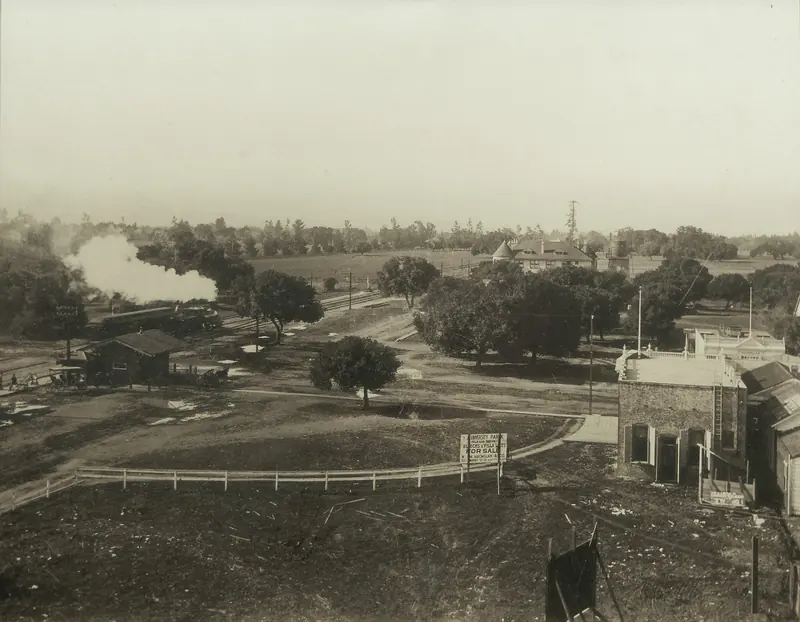
University Avenue runs from the Palo Alto Caltrain station toward the bay, lined with two to four story buildings, cafes and shops. It looks like a pleasant small-town main street. It is also one of the most productive few blocks in the history of the technology industry. Google, PayPal, Facebook and Palantir all spent their early years here or on the side streets nearby. None of them stayed.
This page tells the story of that pattern: why young companies come downtown, what they leave behind and what the street is like in 2026. To see the buildings in person, follow our famous tech addresses tour.
Before the startups
Downtown's technology story starts long before the internet. In 1909 Cyril Elwell founded the Federal Telegraph Company, with its lab and factory near the corner of Channing Avenue and Emerson Street. Between 1911 and 1913 Lee de Forest developed the first vacuum tube amplifier and oscillator there. A plaque in the sidewalk marks the site as California Historical Landmark No. 836.
A few blocks away, Bill Hewlett and Dave Packard formalized their partnership in a garage at 367 Addison Avenue on January 1, 1939. The HP Garage is now California Historical Landmark No. 976. HP grew up and moved out to the edge of town, setting a pattern that downtown companies would follow for decades.

Why young companies pick downtown
For a company of five or twenty people, downtown Palo Alto has real advantages:
- The train. Palo Alto station sits at the foot of University Avenue. Employees can live in San Francisco or San Jose and still walk to work.
- Stanford. The campus is a short bike ride away. Interns, advisors and professors can drop by.
- Investors. Sand Hill Road is a few minutes' drive. Accel lists its headquarters at 500 University Avenue.
- Lunch. Dozens of restaurants and cafes are within a block or two, which matters to people working long hours.
- Small spaces. Second-floor offices above shops come in sizes a startup can afford to fill.
165 University Avenue, the lucky building
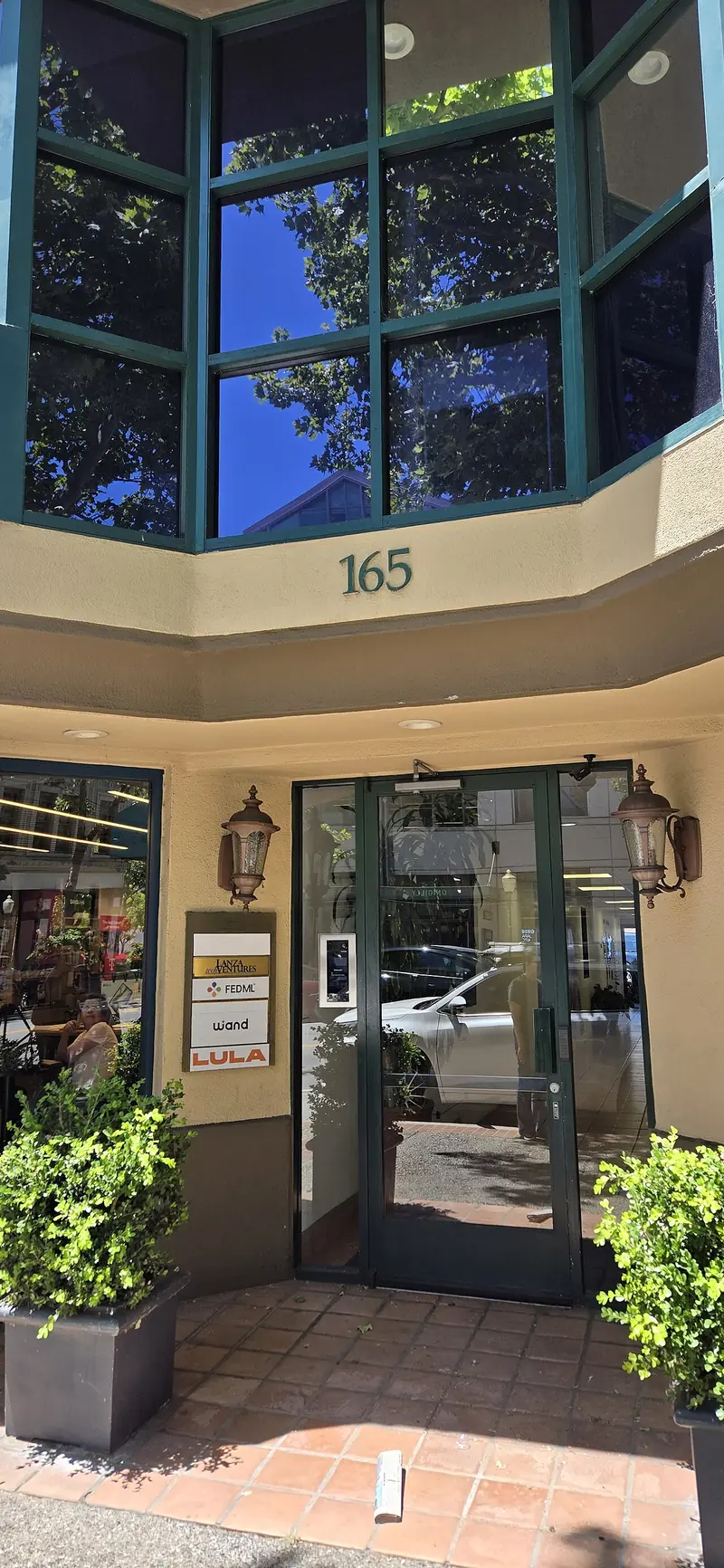
The most famous address downtown is a plain office building above street-level shops at 165 University Avenue. Saeed Amidi's family business bought it in 1988 and rented space to young companies. Amidi and his partner Pejman Nozad invested early in some of the tenants. Amidi later founded the Plug and Play Tech Center in Sunnyvale, which grew out of the same idea.
The tenant list explains the nickname:
- Logitech worked here early in its history.
- Google moved in during 1999 with fewer than ten employees, coming from a garage in Menlo Park. It outgrew the space within months and moved to Mountain View. Our Google's Palo Alto years page has the details.
- Confinity, the startup that built PayPal, used the building as an office.
- Danger, the mobile phone company Microsoft bought in 2008, came later, followed by companies such as WePay and Yummly.
Locals call it the lucky building or the karma building. There is no plaque, so look for the street number on the door.

PayPal's Palo Alto years
Confinity was founded in Palo Alto in late 1998 by a group that included Peter Thiel and Max Levchin. It built the PayPal payment service. A rival, X.com, was founded in Palo Alto in 1999 by Elon Musk and others. The two merged in March 2000 and kept the X.com name before taking PayPal's name in 2001. eBay bought PayPal in 2002. The company is now headquartered in San Jose. Alumni of those years went on to start or fund many other companies. Some stayed in Palo Alto to do it. Read more on our PayPal page.
Facebook on Emerson Street and beyond
Mark Zuckerberg and a small team came to Palo Alto from Harvard in the summer of 2004 and worked out of a rented house. In January 2005 the company leased its first office at 471 Emerson Street, just north of University Avenue, under the name The Face Book. A small marker on the building records the lease dates: January 10, 2005, to July 30, 2006.
The company grew fast. By 2007 it was commonly reported to be using 156 University Avenue and 164 Hamilton Avenue, among other buildings. It leased space in at least five downtown buildings before moving its headquarters to 1601 California Avenue in Stanford Research Park in 2009. In 2011 it left Palo Alto for Menlo Park. See our Facebook's Palo Alto years page.
Palantir and the Hamilton Avenue offices
Hamilton Avenue runs parallel to University Avenue one block south. Its office buildings became the base of Palantir, the data analysis company founded in Palo Alto in 2003. Its headquarters was at 100 Hamilton Avenue. Bisnow reported that around 2015 Palantir occupied between 250,000 and 275,000 square feet in downtown Palo Alto, spread across many buildings, including space at 164 and 300 Hamilton Avenue.
By 2018 Palantir had started subleasing large amounts of that space. In 2020 it moved its headquarters to Denver. Then-Mayor Adrian Fine told Bisnow that losing a large employer was not good for the city and that Palo Alto was stuck in a rut, with high rents and little appetite for new office space. Palantir moved its headquarters again in February 2026, to the Miami area. Our Palantir page covers the company in full.
On the other side of University Avenue, Lytton Avenue marks the downtown edge closest to the station. The Lytton Gateway building at 111 Lytton Avenue, across from the Caltrain station, mixes offices with a Coupa Café on the ground floor.
Why companies outgrow downtown
Every company above left downtown for similar reasons.
- Small buildings. Most downtown offices sit in two to four story buildings with small floor plates. A team of 300 ends up split across several addresses.
- Rent. Downtown office space is among the most expensive in the country.
- Parking. Downtown garages offer free short-term parking, but daily commuters need permits.
- Limits on growth. In 2015 the city set an annual cap of 50,000 square feet of new office space for downtown, the California Avenue area and El Camino Real. Stanford Research Park was left out of the cap. The city also moved in 2015 to protect ground-floor retail from conversion to offices. The rules have been revised since, so check current zoning before you plan a project.
The usual next stop is Stanford Research Park, which has large campuses, parking and room to build. Others move to Menlo Park, Mountain View or San Francisco.
University Avenue today
Downtown is still where many companies start. The mix in 2026 includes:
- Venture firms. Accel is headquartered at 500 University Avenue, a short walk from cafes where founders wait for meetings.
- Small startups. Second-floor offices and subleases still turn over as companies grow and move.
- Flexible offices. Regus runs a center at 228 Hamilton Avenue with day offices and meeting rooms. See our coworking guide.
- Hotels for visiting founders. Nobu Hotel Palo Alto on Hamilton Avenue and the Graduate by Hilton at 488 University Avenue opened within the past decade.
- Shops and cafes. The ground floors stay retail and restaurants. Our University Avenue shopping guide covers them.
The street keeps changing. Blue Bottle Coffee moved across University Avenue to number 525 in September 2026. Accel's office remains a short walk from the Caltrain station.
Seeing it for yourself
Good to know
- All of these sites are private offices. View them from the sidewalk.
- Start at the Caltrain station and walk up University Avenue to 165, then over to 471 Emerson Street and down to Hamilton Avenue. The loop takes under an hour.
- Want narration while you walk? A self-guided audio tour lets you go at your own pace.
- Add the HP Garage on Addison Avenue for the full downtown story.
Frequently asked questions
Which companies started on University Avenue in Palo Alto?
Google worked out of 165 University Avenue in 1999. Confinity, the startup that built PayPal, also used that building, as did Logitech and Danger. Facebook's first office was at 471 Emerson Street, just off University Avenue. It later leased space at 156 University Avenue and 164 Hamilton Avenue.
Why is 165 University Avenue called the lucky building?
So many of its small tenants went on to great success that locals nicknamed it the lucky building. Google, PayPal's predecessor, Logitech and Danger all worked there early on. The Amidi family, which later founded Plug and Play, has owned it since 1988.
Where was Palantir's office in Palo Alto?
Palantir's headquarters was at 100 Hamilton Avenue downtown. Around 2015 it occupied roughly 250,000 to 275,000 square feet across downtown buildings, according to Bisnow. It moved its headquarters to Denver in 2020 and to the Miami area in 2026.
Why do startups leave downtown Palo Alto?
Downtown buildings are small, usually two to four stories. Office rents are high. Growing companies need large floors, parking and room to expand. The city has also limited new office space downtown since 2015. Most move to Stanford Research Park, Menlo Park or Mountain View.
Can I visit the tech offices on University Avenue?
Only from the sidewalk. The buildings are private offices with shops and cafes on the ground floor. A marker at 471 Emerson Street notes Facebook's lease there. Our famous tech addresses tour links the main sites on foot.