On this page
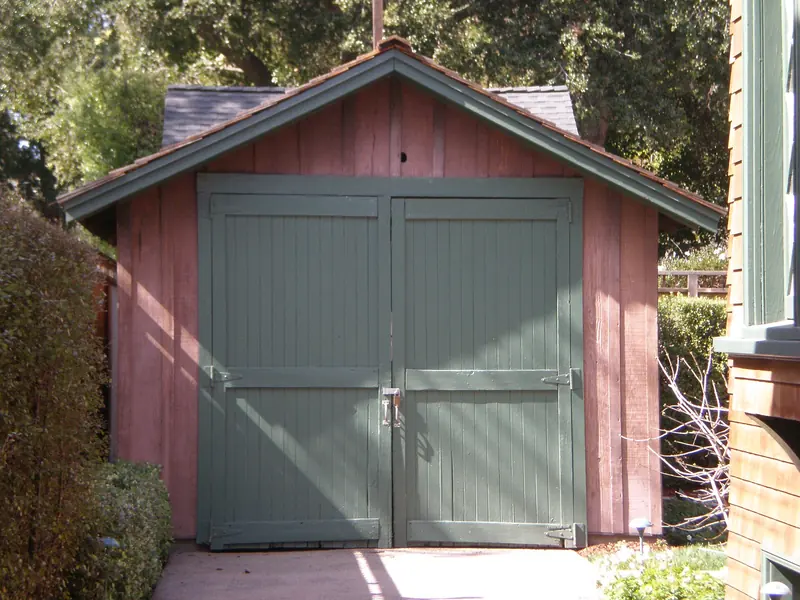
Silicon Valley has plenty of famous buildings, but none is as small as this one. The HP Garage is a narrow wooden shed with a single door, set behind a two-story house on Addison Avenue. In the late 1930s two young Stanford graduates rented the house and the garage and started a company there. That company became Hewlett-Packard and the garage became a symbol for every startup that followed.
This page tells the story of the garage, explains the landmark designations and gives practical advice for seeing it. The short version for visitors: it is private property with no tours, but you can see it clearly from the sidewalk and it pairs well with a walk through the historic streets around it.
The 1939 story
Bill Hewlett and Dave Packard met as engineering students at Stanford. Their professor Frederick Terman worried that his best graduates kept leaving for jobs back East. He encouraged them to start companies close to campus instead.
In 1937 Packard, then 25, visited Hewlett in Palo Alto and the two held their first business meeting. The next year they went looking for a place to work. According to HP's own timeline, Hewlett chose 367 Addison Avenue because it came with a garage they could use. Dave Packard and his wife Lucile moved into the three-room apartment on the ground floor. Hewlett slept in a small shed out back.
They started part time with $538 in working capital, including a used drill press. On January 1, 1939, they formalized their partnership. A coin toss decided the name, which is why it reads Hewlett-Packard and not the other way around. Later that year Hewlett married Flora and moved out of the shed, which then became the company's business office.

The house before HP
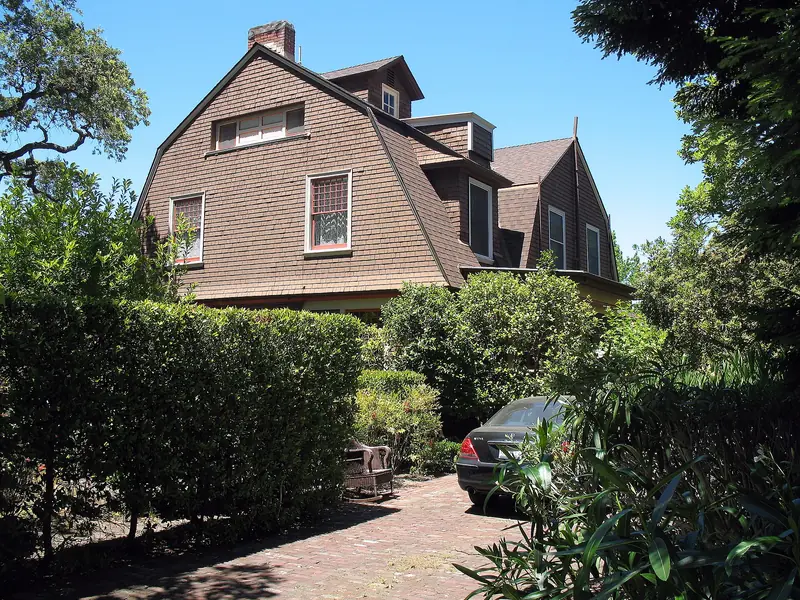
The house itself has its own history. It was built in 1905 in the Craftsman bungalow style. Dr. John C. Spencer and his wife Ione lived there from 1905 until he died in 1937. Spencer was Palo Alto's first mayor, taking office in 1909. In 1918 the house was divided into two apartments, numbered 367 and 369. After her husband died, Mrs. Spencer stayed on upstairs as landlady and rented the downstairs flat, the shed and the garage to the two young engineers.
The 200A, the 200B and Fantasia
The first product built in the garage was the HP 200A audio oscillator. An oscillator produces a clean, adjustable tone, which engineers use to test amplifiers, speakers and recording gear. Hewlett's design used a small light bulb as a temperature-sensitive resistor to keep the output steady. That trick made the instrument stable and cheap to build. The circuit had been the subject of Hewlett's master's thesis. The 200A covered roughly 35 hertz to 35 kilohertz in three ranges.
The model number was chosen on purpose. A product called 200A sounded like it came from a company with a catalog behind it, not two men in a garage.
The breakthrough customer was Walt Disney Studios. Disney ordered eight units of a modified version, the 200B, for the audio production of Fantasia. They were used most famously in setting up Fantasound, the pioneering multichannel sound system created for the film. A sale to Hollywood gave the new company credibility and modified versions of the 200A soon went into production for other customers.
Landmark designations
By the 1980s the garage had become a pilgrimage site and HP worked to protect it. Here is how the recognition built up, based on HP's timeline and the California Office of Historic Preservation listing:
| Year | Milestone |
|---|---|
| 1984 to 1985 | HP seeks landmark status and the Palo Alto Historic Resources Board names the garage a city landmark. |
| 1987 | On August 7 the garage becomes California Registered Historical Landmark No. 976. |
| 1989 | On May 19 it is dedicated as a state landmark and the Birthplace of Silicon Valley. |
| 2000 | HP buys the property. |
| 2005 | After restoration the garage is rededicated on December 6. |
| 2007 | On April 20 the Hewlett-Packard House and Garage is listed on the National Register of Historic Places. |
Note that the state landmark number applies to the garage itself, while the National Register listing covers the house and garage together.
How HP restored it
After buying the property in 2000, HP set out to return the house, shed and garage to how they looked in 1938 and 1939. In the garage, crews added steel columns to stabilize the corners, raised the sill to reduce water and termite damage and replaced badly damaged boards with salvaged wood of the same age. The old exposed knob-and-tube wiring was kept. On the house, later porch enclosures came off, the original front dormer was recreated and aluminum windows were replaced with double-hung wood windows.
One detail matters for visitors. The plan lowered the front gate so that the garage would be visible from the front yard and the street. That is why you can see the building from the sidewalk without craning over a fence.
How to see it
The garage stands behind 367 Addison Avenue in a residential neighborhood just south of downtown Palo Alto. There is no visitor center, ticket or staff on site. You view it from the public sidewalk, where you can read the state landmark plaque and take photos.
- On foot: From the Palo Alto Caltrain station, walk through downtown and head south into the residential grid. Allow roughly 20 minutes at an easy pace.
- By bike: Palo Alto's quiet residential streets make this an easy ride from downtown.
- By car: Street parking is available on nearby blocks, subject to local signs. Read posted time limits carefully.
Etiquette on Addison Avenue
- Stay on the public sidewalk. Do not walk up the driveway, onto the lawn or to the windows.
- Keep voices low, especially early in the morning and in the evening. This is a residential block.
- Do not block driveways when you park and do not double park for a quick photo.
- Large tour groups should split up so the sidewalk stays clear for neighbors.
- Drones over private homes are a bad idea. Take your photos from the ground.
You only need ten or fifteen minutes here. The light is best in the morning or late afternoon, when the street trees cast soft shadows instead of hard midday glare.
Nearby: Professorville and more history
The garage sits beside Professorville, the historic district where many early Stanford faculty built shingled houses and Craftsman bungalows. It is one of the nicest walks in town. Look for the Frank Angell House at 1005 Bryant Street and the Varian House at 1044 Bryant Street.
A few blocks away, a state landmark plaque at Channing Avenue and Emerson Street marks the site of the Federal Telegraph Company lab, where Lee de Forest worked on the vacuum tube amplifier and oscillator between 1911 and 1913. That makes this small area a strong candidate for the most important square mile in electronics history. Our Silicon Valley history page and our list of famous tech addresses take the story further.

A half-day history walk
- Start at El Palo Alto, the redwood beside the Caltrain tracks that gave the city its name.
- Walk down University Avenue through downtown and look for 165 University Avenue, the office building that housed early Google and PayPal.
- Head south to the Federal Telegraph plaque at Channing and Emerson.
- Continue to 367 Addison Avenue for the HP Garage.
- Finish with a slow loop through Professorville, then return downtown for coffee.
If you prefer a narrated version, self-guided audio tours cover the area. Some Silicon Valley tours that start in San Francisco include a quick stop here along with Stanford and big tech campuses. For more on the city's past, read our full history of Palo Alto, or see the rest of the city's top attractions.
Frequently asked questions
Can you go inside the HP Garage?
No. The HP Garage is private property owned by HP and it is not open for public tours. You can see the garage and the landmark plaque from the public sidewalk on Addison Avenue.
Where is the HP Garage?
The HP Garage is behind the house at 367 Addison Avenue in Palo Alto, in the residential area just south of downtown near Professorville. It is a manageable walk from the Palo Alto Caltrain station.
Why is the HP Garage called the birthplace of Silicon Valley?
Bill Hewlett and Dave Packard started Hewlett-Packard there in 1938 and 1939. The state of California registered it as Historical Landmark No. 976 in 1987 and dedicated it as the Birthplace of Silicon Valley in 1989.
What did Hewlett and Packard make in the garage?
Their first product was the HP 200A audio oscillator, an instrument that generates precise tones for testing sound equipment. Walt Disney Studios ordered eight units of a modified version, the 200B, for work on the film Fantasia.
How long do you need at the HP Garage?
Ten to fifteen minutes is enough to read the plaque and take a photo. Most people combine it with a walk through Professorville and downtown Palo Alto.