On this page
Before the iPhone, before Android and before most people had heard the word smartphone, a small company in downtown Palo Alto was selling a device that put email, instant messages and the web in your pocket. Danger Inc. built the Hiptop, which T-Mobile sold as the Sidekick. The device became a pop culture hit in the mid 2000s. One of Danger's co-founders then left to start a company called Android.
Danger itself was sold to Microsoft in 2008 and faded from view. This profile covers its Palo Alto beginnings, what it built and where its people went. For the street where it started, see our history of University Avenue's tech companies.
Three founders from Apple and WebTV
Danger was founded by Andy Rubin, Joe Britt and Matt Hershenson. Between them they had worked at Apple, WebTV, General Magic, 3DO and Philips. Rubin had been engineering manager at General Magic in 1993 for the Motorola Envoy, an early wireless handheld. He and Britt had also worked together at WebTV. Fortune Small Business reported that Rubin built robots as a hobby.
The company's start date is usually given as December 9, 1999. According to Fortune Small Business, the founders grew restless that December. By January 2000 they had raised about $1.7 million from friends and family and quit their jobs. In its stealth phase the company called itself Danger Research.
A University Avenue startup
Danger set up in downtown Palo Alto. In December 2001 the British tech site The Register described it as "a Palo Alto startup on University Avenue." Local lore and Wikipedia's article on 165 University Avenue include Danger among the building's famous tenants, alongside Logitech, Google and Confinity, the startup that built PayPal. We could not find a primary source giving Danger's exact suite or dates there, so treat the 165 University connection as well reported rather than documented in detail.
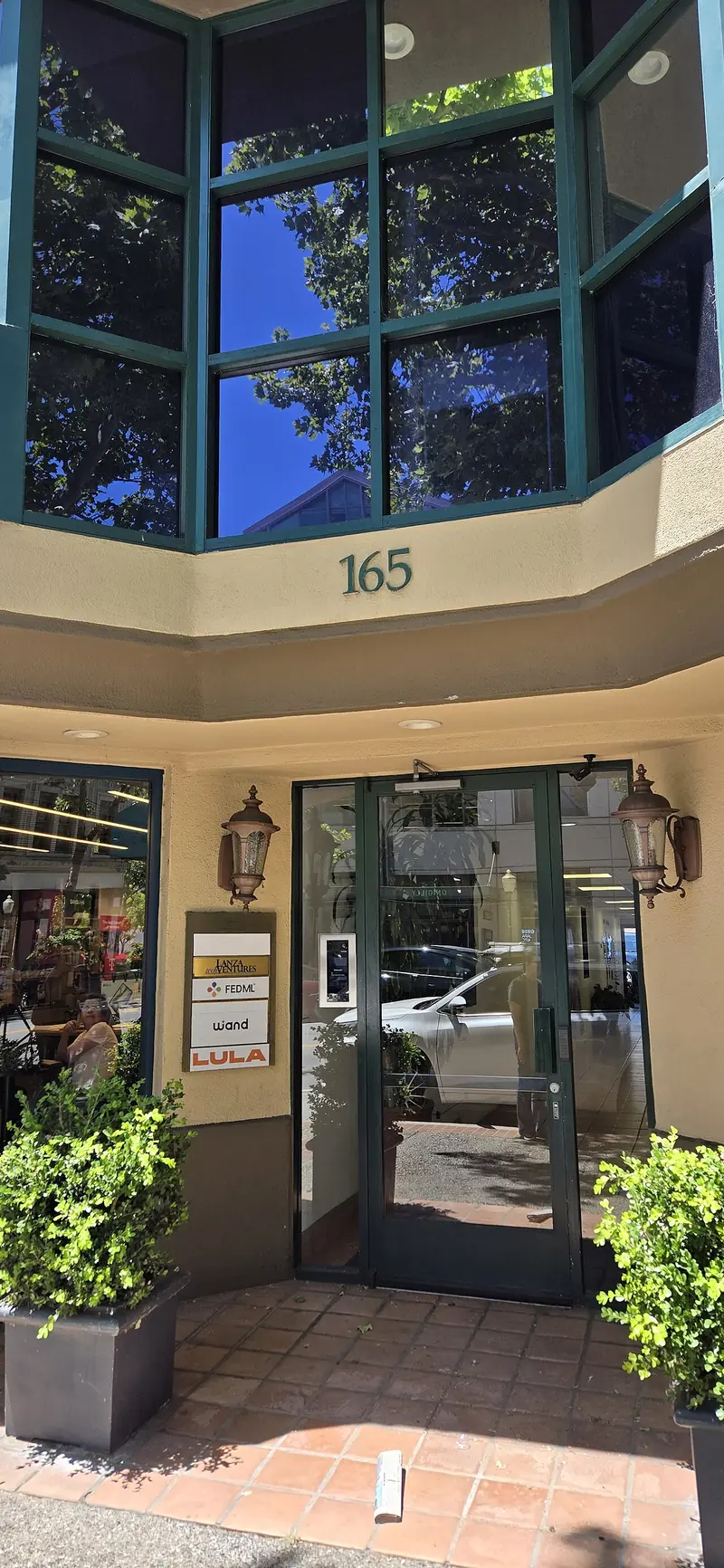

The building got its nickname, the lucky building, from that run of tenants. Google arrived there in February 1999 and stayed a few months. Our Google profile and PayPal profile cover their time on the block.
The building had a different face on the street in those years. Until 2000 its ground floor held Chimaera Books & Music, a well loved local bookstore that closed partly because of competition from online sellers. The Amidi family, which bought 165 University Avenue in 1988, rented the upstairs offices to young companies. That business later grew into Plug and Play Tech Center, the startup accelerator. Our guide to accelerators and incubators covers it.
By mid 2002 Fortune Small Business found Danger with 79 employees working in open workspaces in its Palo Alto office. The magazine did not give a street address.
Raising the money
Building a phone platform was expensive. Danger's early funding came in stages:
- January 2000. About $1.7 million from friends and family.
- October 2000. $9 million from Softbank Venture Partners, later called Mobius, led by Greg Galanos.
- By mid 2002. About $48 million in total venture funding, according to Fortune Small Business.
Telecom companies backed it too. The Register named Deutsche Telekom and Orange as investors. Steve Wozniak, the Apple co-founder, joined Danger's board in late 2001. In a company statement he praised the excitement and passion he saw in the team and its technology.
The Hiptop
Danger first designed a data-only device for the new GPRS wireless data networks. Carriers and investors pushed for a regular phone as well, so a voice radio was added later. Danger unveiled the Hiptop in October 2001. The first version had a black and white 240 by 160 pixel screen, a full keyboard hidden under the screen, Java software and a weight of about 5 ounces.
The bigger idea was in the back end. Hiptop devices kept users' contacts, calendars, photos and messages on Danger's servers rather than on the device. Danger ran those services for the carriers. Wikipedia describes it as an early cloud-based smartphone and credits it with an early app catalog, a model that Android and iOS later made universal.
The Sidekick
Launch dates slipped at least twice. In mid 2002 Fortune Small Business reported a planned July launch and said Danger had sold 400,000 Hiptops to three carriers in the US, Canada and Britain. In the US the carrier was VoiceStream, which became T-Mobile USA. T-Mobile sold the device as the Sidekick. Danger and T-Mobile marketed it by giving phones and service to athletes and Hollywood stars, who helped make it a status item for young buyers.
Rubin leaves and Android begins
Andy Rubin left Danger in 2003. He went on to start Android, a mobile software company that Google bought. Rubin ran Android development at Google until March 2013. He also hired Matias Duarte, Danger's former director of design, to work on Android's look and feel.
That chain of people is the main reason Danger still comes up in Silicon Valley history. The ideas it tried in Palo Alto, a phone tied to online services, a keyboard device for messaging and a store for apps, spread far beyond the Sidekick.
The Microsoft years
On February 11, 2008, Microsoft announced that it would buy Danger. The terms were not disclosed. Wikipedia says the price was rumored at around $500 million. Robbie Bach, president of Microsoft's entertainment and devices division, called Danger a "perfect complement" to Microsoft's software and services.
It did not go well. Former Danger staff were folded into Microsoft's mobile group and worked on a project called Pink, which became the Kin phones in 2010. The Kin sold poorly and was dropped weeks after release. By October 2009 most of the former Danger employees had already left Microsoft. That same month a server failure wiped out Sidekick users' data, which was stored online. Restoring it from backup tapes took more than two months. The Register later called the deal a classic case of a buyer failing to absorb a company's technology or people.
Timeline
| Date | Event |
|---|---|
| December 1999 | Danger founded in Palo Alto. |
| October 2000 | $9 million from Softbank Venture Partners. |
| October 2001 | Hiptop unveiled. |
| Late 2001 | Steve Wozniak joins the board. |
| 2002 | T-Mobile Sidekick launch period; 79 staff in Palo Alto. |
| 2003 | Andy Rubin leaves to start Android. |
| February 11, 2008 | Microsoft announces its purchase. |
| October 2009 | Sidekick data loss. |
| 2010 | Microsoft's Kin phones released and dropped. |
Seeing Danger's Palo Alto
There is no Danger marker anywhere. 165 University Avenue is a private office building, so look from the sidewalk. The entrance sits between storefronts a short walk from the Caltrain station. The same walk passes many other startup addresses downtown. Our famous tech addresses tour lists them in order. The where founders meet guide covers the cafes nearby. For more company stories, see our companies guide.
Frequently asked questions
Where was Danger Inc. located?
Danger was based in Palo Alto. The Register described it in December 2001 as a Palo Alto startup on University Avenue. Wikipedia and local accounts list it among the young companies that rented space at 165 University Avenue, the so-called lucky building.
What was the Danger Hiptop?
The Hiptop was a pocket device with a screen that flipped up to reveal a full keyboard, plus email, web browsing and instant messaging. Danger unveiled it in October 2001. T-Mobile sold it in the US as the Sidekick, which became popular with teenagers and celebrities.
Did Android come from Danger?
Not directly. Danger co-founder Andy Rubin left in 2003 and started a new company called Android, which Google later bought. Rubin later brought Danger's former director of design, Matias Duarte, to Google. Danger's own software went to Microsoft.
When did Microsoft buy Danger?
Microsoft announced the purchase on February 11, 2008. It did not disclose the price, which was rumored to be around $500 million. Danger staff worked on a phone project called Pink, released in 2010 as the Kin, which was dropped within weeks.
Is there anything to see at 165 University Avenue?
Only the outside. The building at 165 University Avenue is a private office building with a plain entrance between storefronts. It is famous because Google, PayPal's predecessor Confinity, Logitech, Danger and later startups worked there early on.