On this page
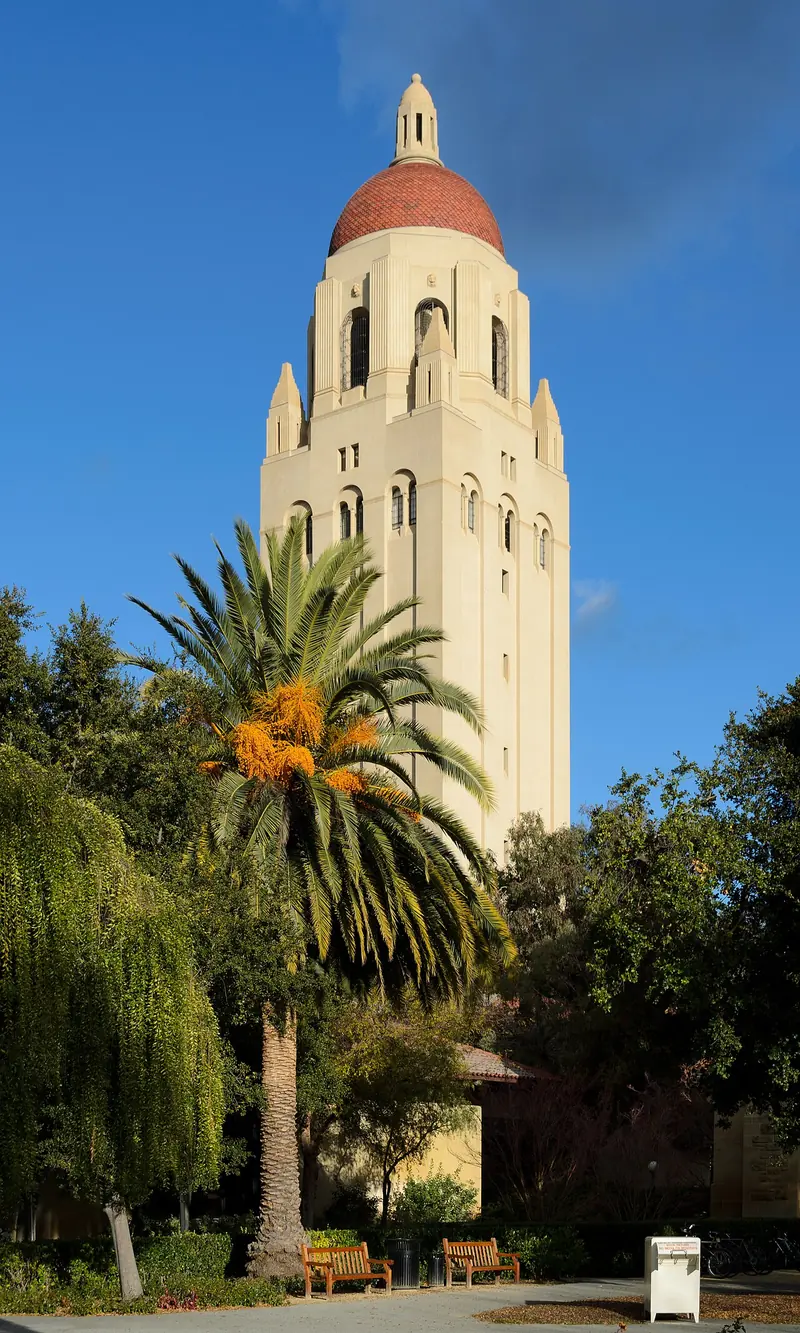
Most visitors know Hoover Tower for its view. The building was actually built to hold an archive. That archive is still there. The Hoover Institution Library and Archives keeps a collection on war, revolution and peace that draws researchers from around the world. Casual visitors can see pieces of it for free in the galleries on the tower's ground floor. Serious researchers can book a seat in the reading room next door and call up boxes of original papers.
This page explains both sides. For the tower itself, its carillon and observation deck tickets, see our Hoover Tower guide.
First, the deck closure
The observation deck at the top of Hoover Tower is closed from August 14, 2026 to January 25, 2027. During that period the tower is also closed on weekends. The ground floor galleries stay open on weekdays, so a visit is still worthwhile. Just do not plan on the view until late January. When the deck reopens, tickets are $8.
The exhibition galleries
The Library and Archives shows its collections in three spaces at the front of Hoover Tower: the entry rotunda and two galleries. According to the institution's exhibitions page, the setup in fall 2026 is:
| Space | Exhibition | Dates |
|---|---|---|
| Rotunda and Herbert Hoover Room | Hoover@100: Ideas Defining a Century | Long term |
| Lou Henry Hoover Room | Choosing Freedom: Lives That Defied Tyranny | June 17, 2026 to May 9, 2027 |
The Lou Henry Hoover Room hosts rotating shows that change about twice a year. Choosing Freedom draws on personal testimonies, smuggled belongings and photographs from the collections. It tells the stories of people who fled twentieth century regimes and refused to be broken by them. Hoover@100 is the centennial exhibition. It traces the institution from its start as a special collections library in 1919 through documents and objects tied to peace, freedom and education, the ideas Herbert and Lou Henry Hoover cared about.
Exhibitions in the galleries and the rotunda are free and open to the public. A Library and Archives docent in the lobby can often give a short gallery walk. Allow 20 to 40 minutes, longer if you read every label.
Gallery hours
- August 17, 2026 to January 25, 2027: Monday through Friday, 10 a.m. to 4 p.m. Closed weekends.
- Holidays: Hoover Tower opens on Martin Luther King Jr., Presidents', Memorial and Labor Day holidays. It closes for other university holidays and the campus winter closure.
- Football: The tower closes during Stanford home football games.
Check the Visit Us page before you go, since closures are posted there.

How the collection started
The archive grew out of Herbert Hoover's relief work in Europe during World War I. In 1919 the future president, a member of Stanford's first graduating class, gave his alma mater $50,000 to collect a documentary history of the war. Collectors went to postwar Europe to gather posters, pamphlets, government records and private papers before they could be lost. The Hoover War Library first lived inside the main university library. By the late 1920s it had outgrown that space. Hoover Tower opened in 1941, timed to Stanford's 50th anniversary, with its first floors built as stacks for the growing collection.
Over the following decades the library widened its scope to revolutions, the Cold War and political movements around the world. Today the Hoover Institution is also a public policy research center with its own fellows. Its politics draw debate on campus. The Library and Archives is a distinct part of the institution, staffed by curators, archivists and preservation specialists. Our history of Stanford has more on Hoover's long relationship with the university.
What the archives hold
By its own count, the Library and Archives holds more than one million volumes and between 6,000 and 7,000 archival collections from more than 170 countries in dozens of languages. Its curators organize the material by region:
- Europe: The largest and oldest part of the international holdings, rooted in World War I and the Russian Revolution.
- North America: Close to half of the archival holdings, covering American politics, policy and public life.
- China and greater Asia: Rare publications and papers of officials, diplomats, missionaries and journalists, with strength in modern China and Taiwan.
- Japan and the Japanese diaspora: Material from the Meiji era through postwar reconstruction, plus the Hoji Shinbun Digital Collection of Japanese newspapers published in North America.
- Latin America: Twentieth century politics, including the Cuban revolution and Perón's Argentina.
- Middle East and North Africa: A collection formally started in 1948, including a digital collection of Afghan serials.
The holdings include political posters, photographs, diaries, letters, government records and personal papers. Many items are rare, fragile or still under copyright, which is why most of the collection can only be used in person. Part of it sits in the closed stacks inside the tower. The rest is in the reading room building next door and in off-site storage.
How researchers get access
The Library and Archives is open to anyone with a research interest, not just academics. Students, scholars, writers and family historians all use it. Access is by reservation. The institution lays out four steps on its research visit page:
- Register in Aeon. Every researcher needs an account in Aeon, the online system used for requests, reservations and digitization orders.
- Reserve a seat. Book at least 7 calendar days before your visit. Seats can fill several months ahead and are first come, first served.
- Request materials. Search the collections and request up to 7 boxes per reservation. If you book several days, list items in priority order on the first day and staff will assign 7 boxes to each following day.
- Prepare. Read the visitor requirements. Lockers, pencils and notepaper are provided because some personal items are not allowed.
The institution advises researchers to book travel and lodging only after the first three steps are done. Staff also offer consultations by phone, Zoom or in person to help you find the right material before you arrive.
Good to know
- The main reading room is in the Herbert Hoover Memorial Building at 434 Galvez Mall, next to the tower. Enter through the building's main entrance on level 1.
- Reading room hours are Monday through Friday, 10:30 a.m. to 4:30 p.m., by reservation only. It closes for Stanford University holidays.
- The reading room listed a winter closure from December 22 to January 9. Check the dates for the current season.
- A Stanford Libraries day pass does not cover the Hoover Library. Stanford's own library visitor rules list it as excluded.
- An office in Washington, D.C., offers free access to selected digital collections at three workstations, by reservation.
The buildings
The Hoover complex sits southeast of the Oval, across Jane Stanford Way from Memorial Auditorium. Three structures matter to visitors:
| Building | What it holds | Open to visitors? |
|---|---|---|
| Hoover Tower | Ground floor galleries and rotunda, closed stacks, offices, observation deck and carillon | Galleries yes; deck when open |
| Herbert Hoover Memorial Building | Main reading room on the ground floor and Stauffer Auditorium | Reading room by reservation |
| Herbert Hoover Memorial Exhibit Pavilion | A 1978 building by architect Ernest J. Kump that has hosted past exhibitions | Check current listings |
The tower's middle floors hold purpose-built stacks and offices and stay closed to the public. The Hoover Institution describes the tower as ADA accessible. There are no public restrooms in the tower, so plan a stop at the nearby Cantor Arts Center or another campus building.
Planning a visit
A gallery stop pairs well with the Main Quad, which is a few minutes' walk west. Our Main Quad guide and self-guided campus walk both pass the tower.
Visitor parking near Hoover is paid through ParkMobile. The institution says enforcement for visitor and hourly spaces runs Monday through Friday from 8 a.m. to 4 p.m. with no enforcement on weekends, though posted signs can override that. Since the galleries are closed on weekends this season, you will likely be paying. Our parking and transit guide explains zones and rates. The free Marguerite shuttle from the Palo Alto Caltrain station is the easy alternative on weekdays.
If you cannot visit in person, the Library and Archives publishes online exhibitions and digital stories through its Histories series. Many collection guides are searchable online before you ever book a seat.
Frequently asked questions
Are the Hoover Tower exhibits free?
Yes. The Hoover Institution says the exhibitions in the Hoover Tower rotunda and galleries are free and fully open to the public. You only need a ticket for the observation deck, which is closed until January 25, 2027.
What exhibit is on at Hoover Tower now?
The Lou Henry Hoover Room shows Choosing Freedom: Lives That Defied Tyranny from June 17, 2026 through May 9, 2027. The rotunda and the Herbert Hoover Room hold the long-term exhibition Hoover@100: Ideas Defining a Century.
When are the Hoover Tower galleries open?
From August 17, 2026 to January 25, 2027 the galleries are open Monday through Friday from 10 a.m. to 4 p.m. and closed on weekends. The tower also closes on Stanford home football game days and for most university holidays.
Can the public use the Hoover Institution archives?
Yes. The Library and Archives is open to anyone, but you must register in its Aeon system and reserve a reading room seat at least 7 calendar days ahead. You can request up to 7 boxes per reservation.
Does a Stanford library day pass cover the Hoover archives?
No. Stanford Libraries' visitor day passes and cards do not include the Hoover Library, which runs its own registration and reservation system.