On this page
Palo Alto is a young city by world standards, but it has an unusually long list of protected buildings. Shingled faculty houses from the 1890s, Spanish Revival storefronts from the 1920s and glass-walled Eichlers from the 1950s all appear on official registers. Each list works differently and each one tells owners and visitors something different.
This guide explains the city's own Historic Inventory and its four categories, the historic districts, every National Register listing in Palo Alto and how to visit respectfully. For state landmarks and plaques, see our companion historic landmarks guide. For the styles themselves, read our architecture guide.
Four layers of protection
A historic building in Palo Alto can appear on one list or several:
- The Palo Alto Historic Inventory. The city's own list, first adopted in 1979 and updated since. The City Council designates properties on the advice of the Historic Resources Board. This is the list that matters most for local remodeling rules and incentives.
- The California Register of Historical Resources. Run by the state Office of Historic Preservation. National Register properties are listed automatically. Other properties can be listed separately, though not over an owner's objection. Listing brings certain protections under the state's environmental review law.
- The National Register of Historic Places. The federal list kept by the National Park Service. For private homeowners it is mostly honorary, but it brings eligibility for some grants and tax credits on income-producing property.
- California Historical Landmarks and Points of Historical Interest. State markers of statewide or local significance, often with a bronze plaque. Palo Alto examples include the Squire House and the HP Garage.
The Historic Inventory and its categories
The city sorts inventory buildings into four categories. The definitions below are the city's own:
| Category | City definition | Examples from the inventory list |
|---|---|---|
| 1 | An "Exceptional Building" of pre-eminent national or state importance | Post office, 380 Hamilton Ave.; Varsity Theatre building, 456 University Ave.; Lucie Stern Community Center, 1305 Middlefield Rd.; Squire House, 900 University Ave. |
| 2 | A "Major Building" of regional importance | Frank Angell House, 1005 Bryant St.; Gamble house, 1431 Waverley St.; College Terrace Library, 2300 Wellesley St.; Williams House, 351 Homer Ave. |
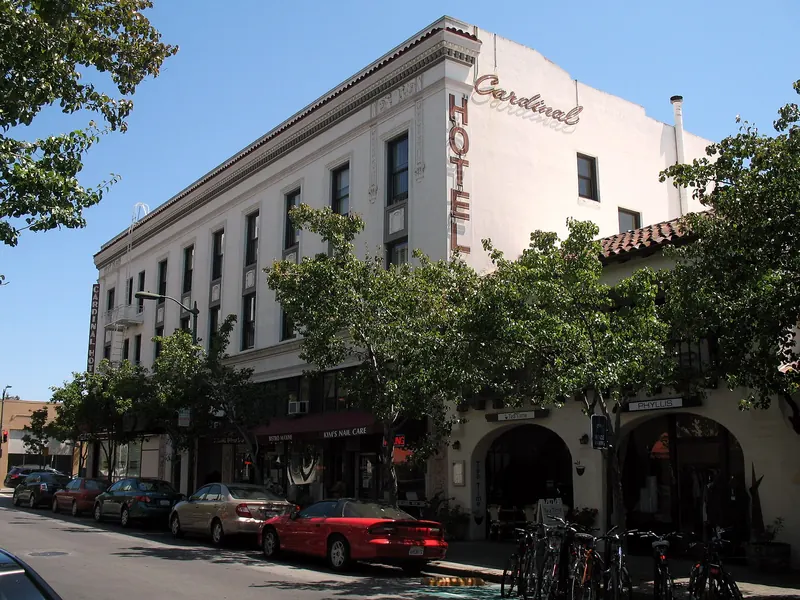
| 3 and 4 | A "Contributing Building," a good local example of a style that relates to its neighborhood's scale, materials and proportions | Cardinal Hotel, 235 Hamilton Ave. (3); Kee House, 2310 Yale St. (3); 541 to 545 Ramona St. (4) |
Buildings inside the two locally designated districts, Professorville and Ramona Street, are part of the inventory even when the list gives them no category number. The city links its historic registers page to the property list and to the state DPR survey forms, sorted alphabetically by street. Those forms are the best free source for the history of a specific building.
Categories can change. The College Terrace Library, for example, was moved from Category 4 to Category 2 in April 2008.

The historic districts
Palo Alto has two kinds of historic district. Two are local districts created by the city. Four are on the National Register. Two areas appear on both lists.
| District | Type | Listed | What it covers |
|---|---|---|---|
| Professorville | Local and National Register | October 3, 1980 (federal); local district expanded 1993 | Shingle, Colonial Revival and Craftsman houses for Stanford's early faculty. The local district covers about 65 acres and nearly 200 properties. |
| Ramona Street Architectural District | Local and National Register | March 27, 1986 (federal) | 518 to 581 Ramona St. and 255 to 267 Hamilton Ave., mostly 1920s and 1930s Spanish Colonial Revival |
| Greenmeadow | National Register | July 28, 2005 | 243 Eichler homes from 1954 and 1955 plus the community center and pool |
| Green Gables | National Register | July 28, 2005 | An early Eichler tract on Channing Ave., Ivy Ln., Greer Rd. and Wildwood Ln. |
The city publishes design guidelines for Professorville and voluntary Eichler guidelines adopted in 2018. Our Eichler homes history explains how single-story overlays work in the Eichler tracts.
National Register listings in Palo Alto
These are the individually listed properties inside the city, with dates from National Park Service records as summarized by Wikipedia. Category numbers come from the city's inventory list.
| Property | Address as listed | Listed | City category |
|---|---|---|---|
| John Adam Squire House | 900 University Ave. | Mar. 6, 1972 | 1 |
| T. B. Downing House | 706 Cowper St. | Oct. 30, 1973 | 1 |
| Hostess House | University Ave. at El Camino Real | July 30, 1976 | 1 |
| Wilson House | 860 University Ave. | Jan. 2, 1980 | 1 |
| Pedro de Lemos House | 100 to 110 Waverley Oaks | Jan. 10, 1980 | 1 |
| Norris House | 1247 Cowper St. | July 24, 1980 | 1 |
| Pettigrew House | 1336 Cowper St. | Nov. 25, 1980 | 1 |
| U.S. Post Office | 380 Hamilton Ave. | Apr. 5, 1981 | 1 |
| Dunker House | 420 Maple St. | Feb. 19, 1982 | 2 |
| Kee House | 2310 Yale St. | Apr. 11, 1985 | 3 |
| Fraternal Hall Building | 140 University Ave. and 514 High St. | Feb. 15, 1990 | 2 |
| Palo Alto Southern Pacific Railroad Depot | 95 University Ave. | Apr. 18, 1996 | 1 |
| Theophilus Allen House | 601 Melville Ave. | May 20, 1999 | 1 |
| Hewlett-Packard House and Garage | 367 Addison Ave. | Apr. 20, 2007 | 1 |
| Palo Alto Medical Clinic | 300 Homer Ave. | June 21, 2010 | 2 |
| Woman's Club of Palo Alto | 475 Homer Ave. | Jan. 7, 2015 | 2 |
| Theodore Zschokke Cottages | 617 and 621 High St. | May 26, 2020 | 3 |
A Veterans Affairs hospital archaeological site was listed in 2019 with a restricted address, as is standard. The city's own count of 16 individual listings appears to predate the newest entries. On the Stanford campus, outside city limits, the Register lists the Hanna-Honeycomb House (1978), the Lou Henry Hoover House (1978), the Palo Alto Stock Farm Horse Barn (1985), the MacFarland House (2006) and the Clifford Allen House (2024).
What listing means for owners
For buyers and owners, the local inventory matters more than the federal list. The city's preservation incentives page describes several benefits for inventory buildings:
- Access to the California Historical Building Code, which allows flexible solutions for structure, energy and accessibility.
- Floor area exemptions for some attics and basements in historic houses. Category 1 to 4 single-family homes in some zones may also exceed the usual floor area limit by up to 250 square feet.
- Smaller minimum lot sizes and a flag lot option in exchange for a preservation covenant.
- Downtown floor area bonuses and transferable development rights for rehabilitating Category 1 and 2 commercial buildings.
In return, exterior changes go through historic review under the Secretary of the Interior's Standards. The city's 2023 survey FAQ says listing does not change property tax assessments and that a Mills Act program was not available, though a pilot was under discussion. Federal rehabilitation tax credits apply only to income-producing buildings. Our building permits guide covers the process and our real estate guide covers buying.
The inventory update
In 2023 the city hired Page and Turnbull for a reconnaissance survey of about 155 buildings that a 1997 to 2001 survey had found eligible for the National Register. Properties that kept their historic character were to be nominated to the local inventory, along with about 10 others found eligible for the California Register. Local press reported that roughly 165 buildings could be added and some owners asked to be consulted first. Nominations go through Historic Resources Board and City Council hearings. We could not confirm the final outcome, so check recent board agendas before assuming a property's status.

Visiting etiquette
Good to know
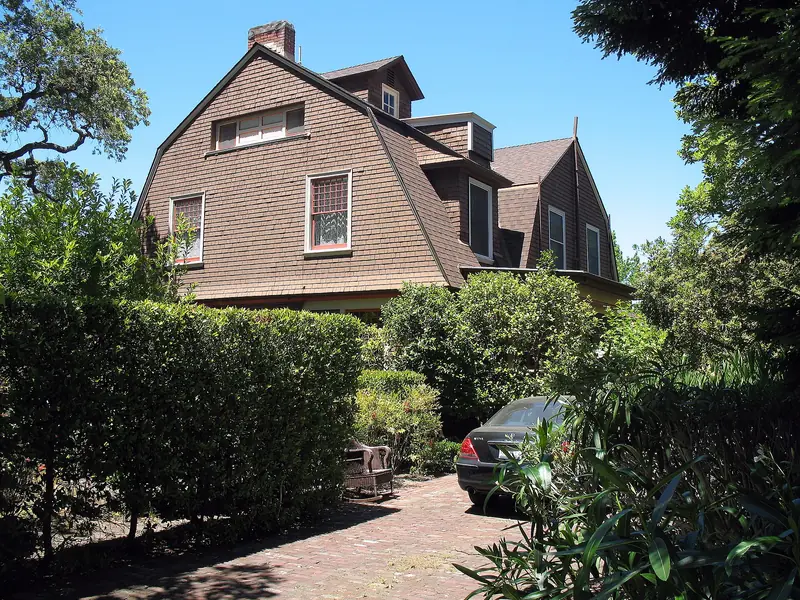
- Stay on the public sidewalk. Never walk up driveways, onto porches or into gardens, even for a photo.
- Photograph buildings rather than people. Never shoot into windows. Eichler glass walls make this easy to get wrong.
- Skip drones over residential streets.
- Keep groups small and voices low, especially early and late in the day.
- Do not knock to ask for a tour. Watch for occasional home tours run by preservation groups instead.
- Do not seek out celebrity homes. They are not on the historic lists and the families deserve privacy.
Researching a house
Start with the DPR forms on the city's historic registers page. The Palo Alto Historical Association keeps local archives and photographs. Palo Alto Stanford Heritage, the preservation group, documents architects such as Birge Clark and has run home tours and preservation awards. Stanford Special Collections holds Clark's papers. Sanborn fire insurance maps show what stood on a lot in a given year. Our Birge Clark page lists his surviving buildings by address.
Walking tours to see them
The easiest way to see these buildings is on foot. Our self-guided routes stick to listed and public sites:
- Professorville: the HP Garage and four National Register houses.
- Downtown: Birge Clark's storefronts, the Varsity and the Ramona Street district.
- Crescent Park: the Squire, Wilson and Dunker houses and Green Gables.
- Greenmeadow: the Eichler district and its community center.
- Old Palo Alto: Gamble Garden and Lucie Stern's buildings.
Prefer a recorded guide for the wider region? Browse self-guided audio tours and pair one with a walk here.
Frequently asked questions
What do Category 1, 2, 3 and 4 mean in Palo Alto?
They are ratings on the city's Historic Inventory. Category 1 is an Exceptional Building of national or state importance. Category 2 is a Major Building of regional importance. Categories 3 and 4 are Contributing Buildings, good local examples of a style that fit their neighborhood.
How many National Register properties are in Palo Alto?
The city counts 16 individually listed properties and 4 National Register historic districts. National Park Service records summarized by Wikipedia show 17 individual buildings plus a restricted-address archaeological site, since the list has grown with listings such as the Zschokke Cottages in 2020.
How do I find out if a Palo Alto house is historic?
Start with the list of inventory properties and the DPR forms linked from the city's historic registers page. Then check whether the address is inside the Professorville or Ramona Street districts. The city's planning staff can confirm status for a specific parcel.
Does Palo Alto offer a Mills Act tax break?
Not as of the city's 2023 reconnaissance survey FAQ, which said a Mills Act program was not available but a pilot was under discussion. The city does offer zoning and building code incentives for inventory buildings. Check with planning staff for the current status.
Can I visit historic homes in Palo Alto?
A few historic houses are open, such as the Museum of American Heritage in the 1907 Williams House and the Gamble house grounds at Gamble Garden. Nearly all others are private homes. View them from the public sidewalk only.