On this page
Most cities keep their airports out of sight. Palo Alto's sits at the end of Embarcadero Road between a golf course and the salt marsh, where anyone on a Baylands trail can watch a Cessna touch down a few hundred feet away. It is small, it has no airlines and it is busy almost every day of the year. For kids who love planes and adults who never grew out of it, that makes it one of the best free shows in town.
This page is about visiting: where to watch, what you are likely to see, how the public terminal works and how to get started with flying. For the airport's past, from its first field beside Stanford Stadium to the city takeover in 2014, read our Palo Alto Airport history.
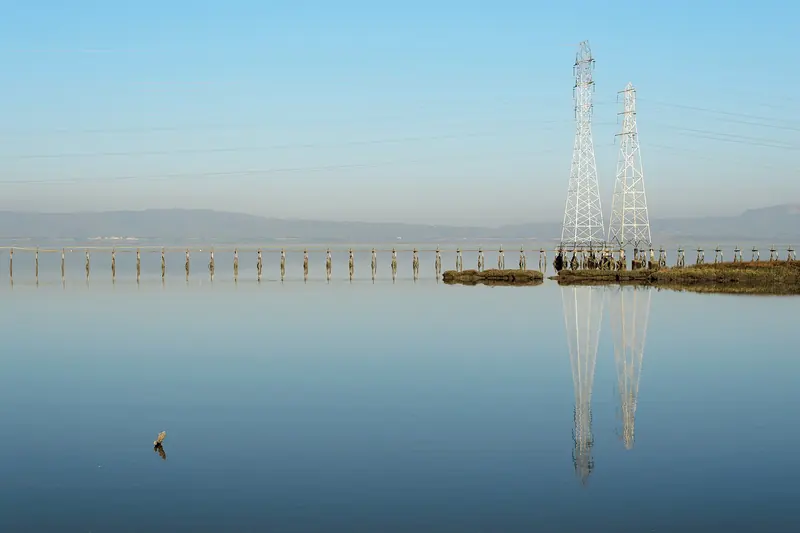

The airport at a glance
Palo Alto Airport, known to pilots as PAO, is a general aviation airport run by the City of Palo Alto. It covers about 102 acres and has one paved runway, 13/31, measuring 2,443 by 70 feet. The Federal Aviation Administration operates the control tower. The runway is short, so most traffic is small single-engine and twin-engine planes plus helicopters.
The field has been at this spot on the edge of the bay since the mid-1930s. Santa Clara County ran it from 1967 until the city took it back in August 2014. Today city staff in the Public Works department run the field, with the FAA in the tower.
There is no airline service. Users include private pilots, flight schools, flying clubs, maintenance shops and charter operators. The city also lists support for public safety aircraft. Medical helicopters use the field to refuel.
Where to watch
There is no formal observation deck. Two kinds of spots work well:
- The Baylands trails. Levee paths in the Baylands Nature Preserve run close to the airfield. From the trail you can watch planes on final approach, touching down and climbing out over the marsh. The preserve is open from 8 a.m. to sunset.
- Around the terminal. The public terminal sits beside the parking lot off Embarcadero Road. From outside the fence you can see planes taxiing and parked on the ramp.
Pilots generally take off and land into the wind. The runway runs roughly northwest to southeast, so the direction of traffic changes with the breeze. On many afternoons the wind comes off the bay from the northwest, but check the windsock and watch a few landings before you pick your spot.
What you will see
Expect a steady stream of small planes rather than big jets. Training flights are common. A student may fly several laps of the traffic pattern, landing and taking off again without stopping. That is great for spotters because the same plane passes again every few minutes.
Helicopters are part of the mix too. The city lists support facilities for CalDART, Life Flight and the county Sheriff's office. Wildlife adds to the show. Pilots watch for birds and jackrabbits on the field and the marsh around the runway is some of the best birding on the Peninsula. Our birdwatching guide covers what to look for.
Plane spotting tips
- Go on a weekend afternoon. Flying clubs and private pilots are out in force when the weather is good, so traffic is steady.
- Pick clear days. Low fog and winter storms ground many small planes. A bright day after a front passes is ideal.
- Bring binoculars. They help with tail numbers and with the birds on the marsh.
- Listen in. Some spotters use a scanner app or radio to follow tower calls, which tells you which plane is about to land.
- Plan for wind. The marsh is exposed. A windbreaker and a hat make a long session far more pleasant.
- Stay until sunset, but not after. The preserve trails close at sunset, so head back to your car as the light fades.
The terminal
The city says the terminal building is open to transient pilots and visitors. It has Wi-Fi, seating and restrooms. The city lists terminal hours of 7 a.m. to 9 p.m., Monday through Sunday. You can pay airport fees in person there during those hours.
Vehicle parking is next to the terminal. It is free for up to 8 hours, but you must register through the airport's self-pay parking app. Longer stays need a daily or monthly permit. The city's aviation business list also includes Cloud9 Coffee. Check before you count on it for a snack, since small airport businesses keep their own hours. After hours, the city lists a non-emergency dispatch line at (650) 329-2413. Dial 911 for emergencies.
Flight schools and flying clubs
The city lists fuel, ground support, flight lessons, pilot training, aircraft sales, rentals, maintenance and repair among the services at PAO. Its aviation business directory names these operators, which it says are independently owned and not part of the city:
| Business | What it does |
|---|---|
| Stanford Flying Club | Flying club, founded in 1930 |
| West Valley Flying Club | Flying club |
| Horizon Flights | Flight services; see its website |
| Bay Area Urban Eagles | Aviation group; see its website |
| Centurion Flight Services | Flight services; see its website |
| Rossi Aircraft | Fuel, maintenance and aircraft management |
| Advantage Aviation | Maintenance and aircraft management |
| Aero Works | Repairs, engine work and inspections |
If you want to try flying, ask the schools and clubs about an introductory lesson. Prices, membership rules and aircraft change, so contact each one directly. The city's aviation businesses page links to their websites.
Rules for visitors
- Never enter the airfield fence, the ramp or the runway area without permission.
- Drones and remote-control aircraft are banned in the Baylands preserve next door.
- Do not stop on Embarcadero Road to watch. Use a parking lot.
- Keep dogs leashed on the trails.
Noise and neighbors
An airport this close to homes draws complaints. The city asks pilots to follow voluntary noise abatement procedures and publishes yearly noise reports. Residents can call the noise hotline at (650) 329-2405. The city has also worked on a move away from leaded fuel. An unleaded fuel arrived at the airport in December 2024. A long-range facilities plan is paused while staff focus on fuel and noise. Our history page covers both issues in more depth.
The Baylands setting
The airport is part of a cluster of things to do at the east end of Embarcadero Road. Baylands Golf Links, the municipal course, is next door. The Lucy Evans nature center and its boardwalk are a short drive or walk away. Byxbee Park offers low hills and land art with wide views over the marsh. Cyclists can reach it all on the San Francisco Bay Trail.
A good family morning is a walk on the boardwalk, an hour of plane watching from the levee and a stop at the Duck Pond. Bring layers, since the wind off the bay can be cool even on sunny days. For airline flights, see our guides to getting here from San Jose airport and SFO.
Frequently asked questions
Where can I watch planes at Palo Alto Airport?
The Baylands levee trails and paths run close to the runway and give good views of takeoffs and landings. The public terminal at 1925 Embarcadero Road is open to visitors daily from 7 a.m. to 9 p.m., according to the city. Stay outside the airfield fence and off the ramp.
Is the Palo Alto Airport terminal open to the public?
Yes. The city says the terminal is available to transient pilots and visitors, with Wi-Fi, seating and restrooms. It lists terminal hours of 7 a.m. to 9 p.m. every day. Car parking next to the terminal is free for up to 8 hours if you register through the parking app.
Can I take flying lessons at Palo Alto Airport?
Yes. The city lists flight lessons and pilot training among the services at the airport. Its aviation business list includes the Stanford Flying Club, the West Valley Flying Club and Horizon Flights. Contact each one for training options and prices.
Are there commercial flights from Palo Alto Airport?
No. PAO has no airline service. It serves private pilots, flight schools, flying clubs, maintenance shops and emergency aircraft. For airline flights use San Jose Mineta or San Francisco International.
Who do I call about airplane noise in Palo Alto?
The city runs a noise hotline at (650) 329-2405. The airport publishes noise abatement procedures for pilots and yearly noise reports on its website.