On this page
Not legal advice
- This page is general information about law firms with offices near Palo Alto. It is not legal advice, a ranking or an endorsement of any firm.
- We confirmed each address on the firm's own website in October 2026. Offices move, so check before you visit.
- For advice on your own company, talk to a lawyer licensed in California.
Palo Alto has an unusually high number of lawyers who spend their days forming companies, drafting SAFEs and closing venture rounds. That is not an accident. Venture capital grew up a few miles away on Sand Hill Road. The law firms that served those funds and their startups set up nearby. Several of the best known firms in the field started here or opened Peninsula offices decades ago.
This guide lists firms with offices in and around Palo Alto whose own websites describe work for startups and venture investors. It explains what startup counsel usually does, how fees tend to work and what to ask before you sign an engagement letter. The order below is geographic, not a ranking. If you have not formed your company yet, read our guide to incorporating a startup alongside this one.
What a startup lawyer does
Startup lawyers are corporate lawyers who specialize in young, fast-growing companies. Company counsel usually handles a predictable set of jobs over the first few years:
- Formation. Choosing an entity, usually a Delaware corporation for venture-backed companies, plus bylaws, board consents and the first stock issuance.
- Founder equity. Stock purchase agreements with vesting, the 83(b) election that founders must file within 30 days and agreements that assign inventions to the company.
- Fundraising. SAFEs and convertible notes in the early days, then priced rounds built on the NVCA model documents. Our term sheet basics explain the main terms.
- Equity plans. A stock option plan, 409A valuations through outside appraisers and option grant paperwork. See our guide to equity and stock options.
- Commercial contracts. Customer agreements, terms of service, privacy policies and vendor contracts.
- Employment. Offer letters, contractor agreements and California-specific rules. Our hiring guide covers the basics.
- Exits. Acquisitions and, for a few companies, public offerings.
Larger firms also have separate teams for patents, trademarks, litigation, tax and immigration. A young company often uses one firm for corporate work and another for patents, especially in life sciences. Our page on patents and trademarks explains that side.
Firms with offices in Palo Alto
These firms list a Palo Alto street address on their own websites. Each describes work with startups, venture-backed companies or venture investors.
| Firm | Palo Alto address (firm site) | What the firm says about the office |
|---|---|---|
| Wilson Sonsini Goodrich & Rosati | 650 Page Mill Road | Its headquarters, with more than 250 attorneys listed as of April 2026 |
| Cooley | 3175 Hanover Street | One of its North American offices; the firm runs the Cooley GO startup resource site |
| DLA Piper | 3203 Hanover Street, Suite 100 | In Stanford Research Park; counsel to startups, investors and global corporations |
| Gibson Dunn | 310 University Avenue | Recently moved downtown from Page Mill Road; corporate, AI, IP and litigation work |
| Sidley Austin | 1001 Page Mill Road, Building 1 | Announces venture financings and tech deals from this office |
Wilson Sonsini
Wilson Sonsini is the firm most closely tied to Palo Alto's history. A 2022 report on its lease renewal described it as founded in Palo Alto in 1961. It has occupied the entire two-story building at 650 Page Mill Road since the building opened in 1994. The firm's careers site calls the office its headquarters and says it was founded before the region was even called Silicon Valley. It sits just off Page Mill Road at the edge of Stanford Research Park.
Cooley
Cooley lists its Palo Alto office at 3175 Hanover Street, also in the research park. The firm publishes Cooley GO, a free website organized by company stage, from starting up and protecting ideas to raising money and selling. Its documents and glossary are a useful primer even if you never hire the firm. Our Cooley profile has more on the Palo Alto office. Our Wilson Sonsini profile covers its neighbor on Page Mill Road.
DLA Piper
DLA Piper's Palo Alto page gives its address as 3203 Hanover Street, Suite 100. It describes the office as being inside Stanford Research Park. It says its Silicon Valley roots go back to the 1960s, when lawyers founded Ware & Freidenrich in the area. The page lists venture capital, public offerings and intellectual property licensing among the office's work.
Gibson Dunn and Sidley
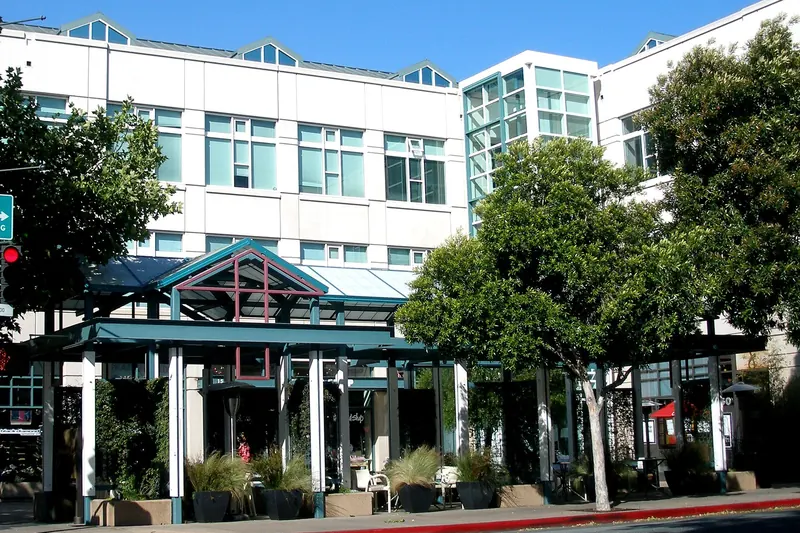
Gibson Dunn moved its Palo Alto office from Page Mill Road to 310 University Avenue, in the middle of downtown. Sidley lists 1001 Page Mill Road. Both are large national firms whose Palo Alto pages emphasize technology companies, with news items about financings and acquisitions.

Nearby Peninsula offices
Some of the firms most associated with startup work keep their local office a short drive away rather than inside city limits. Founders rarely need to visit in person, but it helps to know where they are.
- Gunderson Dettmer lists its Silicon Valley office at 550 Allerton Street in Redwood City. The firm says it opened there in 1995 with six partners and focuses on companies and funds in what it calls the innovation economy.
- Goodwin lists its Silicon Valley office at 601 Marshall Street in Redwood City. It says the office opened in 2007 and represents startups, established companies and investors in technology and life sciences.
- Latham & Watkins lists its Silicon Valley office at 801 Jefferson Avenue, Suite 300, in Redwood City. Its office page highlights work for emerging tech companies from seed rounds onward.
- Orrick lists its Silicon Valley office at 1000 Marsh Road in Menlo Park. Its Bay Area page says the firm represents more than 1,600 startups.
- Fenwick lists its Silicon Valley office at 801 California Street in Mountain View. Its practice list includes a startup and venture capital group.
Redwood City is two Caltrain stops north of Palo Alto. Menlo Park is one stop. Many startup lawyers also work from San Francisco offices of the same firms, so the location of the partner you hire matters more than the office address.
How fees usually work
Large firms bill most work by the hour. Rates in Silicon Valley are among the highest in the country. To win early clients, many startup groups offer arrangements that ease the first year:
- Fee deferrals. The firm agrees to wait for payment on early work until the company raises a set amount of money. If the company never raises, terms vary, so read them.
- Fixed-fee packages. A flat price for formation or for a seed round on standard documents.
- Caps or estimates. A written budget for a financing, with a promise to warn you before going over.
- Investment alongside the company. Some firms or their partners invest small amounts in clients. California's rules of professional conduct set conditions when a lawyer takes an ownership interest in a client, including written disclosure.
Expect to pay for investor counsel too. In a priced round the company usually reimburses the lead investor's legal fees up to a cap set in the term sheet. On a SAFE round built on Y Combinator's standard forms, legal costs are usually much lower.
Choosing startup counsel
The best fit depends on your stage, sector and budget. Questions worth asking at a first meeting:
- Who will do the work day to day: the partner, an associate or a paralegal team?
- How many companies at my stage and in my sector does this group represent?
- Do you represent investors who might fund us? How do you handle conflicts?
- What will formation and a seed round cost? Is any of it deferred?
- How fast do you usually reply? Who covers when my lawyer is away?
- Can you refer us to patent, immigration or employment specialists when needed?
The best way in is a referral. Ask your investors, your accelerator or founders a stage ahead of you which lawyers they use. Most firms also have a general contact form for new clients. Founders in a program listed in our accelerators guide often get introductions or standard discounts as part of the program.
Free and low-cost resources
A lot of good startup legal information is free. It will not replace a lawyer, but it makes every billed hour more useful:
- Firm resource sites. Cooley GO and similar libraries from other firms explain formation, financing and hiring in plain language.
- Standard documents. The NVCA model legal documents and Y Combinator's SAFE forms are free to download.
- Government guidance. The California Secretary of State, the Franchise Tax Board and the USPTO all publish step-by-step guides.
- Community legal help. For personal legal questions, our page on free legal help and notaries lists local options.
Checking a lawyer's license
Anyone practicing law in California must be licensed by the State Bar. Its attorney search shows a lawyer's license status, admission date and any public discipline. Patent attorneys and patent agents are listed separately by the USPTO. Founders from abroad should also make sure that any immigration help comes from a licensed attorney or an accredited representative, as our founder visas guide explains.
Read the engagement letter before you sign. It should name the client, which is usually the company and not the founders personally, describe the scope of work and set out billing terms. Founders who want personal advice on their own equity or a co-founder dispute may need a separate lawyer.
Meeting your lawyer in person
Most startup legal work happens by video and email. When you do meet in person, the Hanover Street and Page Mill Road offices are easiest by car or by the Marguerite shuttle from the Palo Alto Caltrain station. Downtown offices are a short walk from the station. If you are flying in to close a round, staying near the research park or downtown keeps meetings close together. After formation, remember the city's own paperwork: our business registration guide covers the Palo Alto registry and business tax.
Good to know
- Listing a firm here is not an endorsement. Talk to more than one before you choose.
- Approach firms through a referral or their published new client contact channels.
- Keep signed copies of every formation document and board consent in one shared folder. Your next investor will ask for them.
Frequently asked questions
Which law firms have startup practices in Palo Alto?
Firms whose own sites list a Palo Alto office include Wilson Sonsini at 650 Page Mill Road, Cooley at 3175 Hanover Street and DLA Piper at 3203 Hanover Street. Gibson Dunn and Sidley also list Palo Alto offices. Gunderson Dettmer, Goodwin and Latham & Watkins list Silicon Valley offices in Redwood City. Orrick is in Menlo Park and Fenwick is in Mountain View.
Do I need a lawyer to start a company?
No law requires one. Online services can form a corporation. Most founders who plan to raise venture capital hire startup counsel early anyway. Founder stock, vesting, 83(b) elections and intellectual property assignments are easy to get wrong and expensive to fix during a financing.
How do startup lawyers charge?
Many firms bill by the hour. Some offer fixed fees for formation work. Others agree to defer part of their fees until the company raises a round. Ask for the arrangement in writing in an engagement letter before work starts.
How can I check that a California lawyer is licensed?
Use the attorney search on the State Bar of California website. It shows whether a lawyer is licensed and in good standing and lists any public discipline. Patent practitioners are also listed in the USPTO's own directory.
Should my startup use the same law firm as my investors?
Usually not on the same deal. Company counsel represents the company, while investors normally hire their own lawyers. Many large firms represent both startups and venture funds, so ask any firm you consider how it handles conflicts of interest.