On this page
- The usual order of steps
- California Secretary of State filings
- Franchise Tax Board: the $800 tax
- Santa Clara County: fictitious business names
- City of Palo Alto business registry
- Palo Alto's business tax
- Running a business from home
- Check zoning before you sign a lease
- Seller's permit from CDTFA
- Other common registrations
- FAQ
Not legal advice
- This page is general information for people starting a company in Palo Alto. It is not legal, tax or accounting advice.
- Rules, fees and deadlines change. We checked the official pages linked below in October 2026. Always confirm on the official site before you file.
- For your own situation, talk to a lawyer or accountant licensed in California.
Starting a company in Palo Alto means dealing with three layers of government. The State of California handles your legal entity and state taxes. Santa Clara County handles business names. The City of Palo Alto handles where you operate and its own business tax. Most founders only need a few of the filings below, but it helps to know they all exist before you sign a lease or open a shop. If you are relocating, start with our guide to moving to Palo Alto as a founder.
The state also runs CalGold, a free tool that lists the permits a business type usually needs in a given city. It is a good first stop.
The usual order of steps
- Choose a legal structure and file with the California Secretary of State, or register an out-of-state company to do business in California.
- Get a federal employer identification number from the IRS.
- Check zoning before you sign a lease or run the business from home.
- Register with the City of Palo Alto business registry if you have a fixed place of business in the city.
- File a fictitious business name statement with Santa Clara County if you trade under a name that is not your legal name.
- Get a seller's permit from CDTFA if you sell taxable goods.
- Keep up with ongoing filings, including the Statement of Information and the Franchise Tax Board's annual tax.
California Secretary of State filings
Corporations and LLCs are created by filing with the California Secretary of State. Filings can be made online through bizfile Online, which the Secretary of State calls its fastest service, or by mail and in person. Sole proprietors do not file with the state to exist, though they may still need local permits.
Many venture-backed startups incorporate in Delaware. A company formed in another state that does business in California generally has to register here as a foreign entity as well. Your lawyer can tell you whether that applies.
The Statement of Information
Corporations and LLCs must file a Statement of Information with the Secretary of State, then file again on a regular cycle. The Secretary of State describes these statements as due annually or biennially depending on the entity type, with a six month filing window tied to the month the entity was formed. You should also file an updated statement whenever your information changes. Since August 1, 2026, online Statement of Information filings require a bizfile Online user account. The Secretary of State warns that failing to file can lead to penalties from the Franchise Tax Board and suspension of the entity. Details are on its statements page.
Franchise Tax Board: the $800 tax
California charges most business entities an annual minimum tax, collected by the Franchise Tax Board. In general terms:
- LLCs. Every LLC organized or doing business in California owes an annual tax of $800, even if it is not operating, until it is cancelled. The first payment is due by the 15th day of the fourth month after the LLC files with the Secretary of State. A temporary first-year exemption covered only tax years beginning in 2021 through 2023. LLCs with more than $250,000 of California income also owe a separate LLC fee that rises with income. See the FTB LLC page.
- Corporations. Corporations incorporated, registered or doing business in California owe an $800 minimum franchise tax. The FTB says newly incorporated or qualified corporations are not required to pay the minimum franchise tax in their first taxable year. Corporations also pay tax on income above the minimum. See the FTB corporations page.
Plan for this tax from the start. Founders who form an entity and forget about it can end up owing years of minimum tax plus penalties.
Santa Clara County: fictitious business names
If you do business under a name that is not your own legal name, California generally requires a fictitious business name statement, often called a DBA. For a sole proprietor that means any name other than your surname. For a corporation or LLC it means any name other than the exact registered name. Palo Alto is in Santa Clara County, so you file with the County of Santa Clara Clerk-Recorder's Office.
Under state law the statement is generally filed within 40 days of first using the name, published in a local newspaper of general circulation once a week for four weeks and renewed every five years. The county sets the filing fee and the process, so check its site for current details.
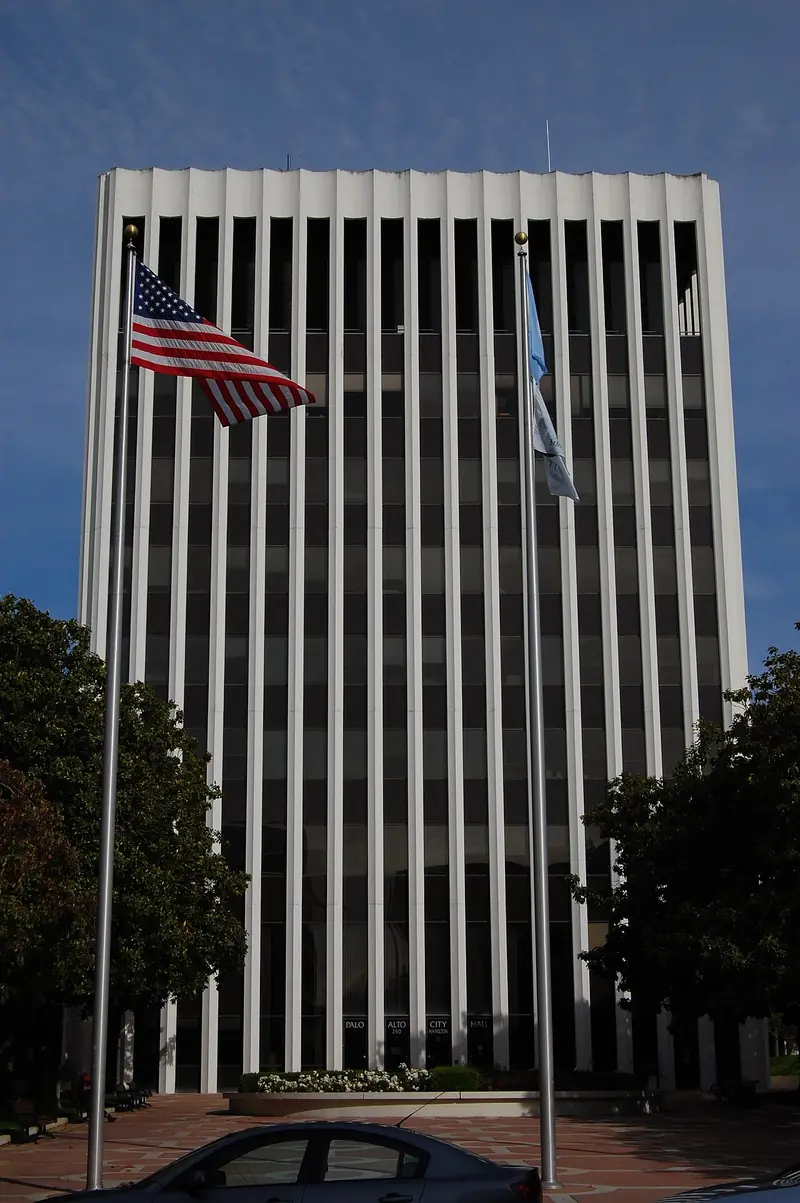

City of Palo Alto business registry
Palo Alto does not issue a business license in the traditional sense. It runs a business registry and, separately, a business tax. Both are explained on the city's Business Registry and Tax page.
Who must register
Businesses with a fixed place of business in the city, such as an office, a commercial building or a storefront, need a business registry certificate. New businesses must register within 30 days of starting. The city lists several exemptions, including home-based, transitory and virtual businesses, businesses with less than one full-time equivalent employee counting the owner and contractors with no fixed office in Palo Alto. Exempt businesses still file an annual application to claim the exemption, with no fee.
Fees and renewal
Certificates expire on March 31 each year. When we checked, the city listed an annual payment of $54, which includes a $4 state fee for disability access programs. The city also listed late fees of $25 for payments received after April 30 and another $25 after May 30. Registration and renewal are handled online through a portal run for the city by HdL, its processing contractor.
Palo Alto's business tax
Palo Alto voters approved Measure K in November 2022. It created a general tax on businesses based on the square footage they occupy. The city's page gives these details:
| Item | What the city says |
|---|---|
| Rate | 7.5 cents per square foot per month since January 2025 |
| Small business exemption | The first 10,000 square feet of every business |
| Other exemptions | Grocery stores, seasonal businesses under 90 days and residential space |
| Annual cap | $0.5 million per business |
| Filing | Quarterly, through a separate business tax account |
| Sunset | The tax runs for 35 years, ending in 2058 |
The city says rates and the cap rise each year starting in fiscal year 2026 to 2027. Most early startups fall under the 10,000 square foot exemption, but anyone leasing a large office or lab should budget for it.
Running a business from home
Many startups begin at a kitchen table. Palo Alto's zoning code permits home occupations in single-family districts when they are accessory to the home. The standards are in Section 18.42.060 of the Palo Alto Municipal Code. In summary:
- The business must fit in with the neighborhood and not change the look or character of the home.
- Only people who lawfully live in the home may work there for the business.
- No advertising is allowed on the site.
- The business may use no more than 25 percent of the home's gross floor area or 500 square feet, whichever is less, including accessory buildings.
- It may not create traffic, parking demand or deliveries much beyond what a normal home generates.
- It may not cause a nuisance from noise, vibration, odor, glare or similar effects.
- Outdoor storage of materials, equipment or goods is not allowed.
A home-based business is exempt from the city's business registry certificate but still files the annual exemption application. A software team of founders working from a shared house usually fits these rules. A team that hires non-resident employees or receives frequent visitors probably does not. It should look at coworking and office space.
Check zoning before you sign a lease
Not every commercial space allows every use. Office, retail, lab and light industrial uses are each allowed in different zoning districts. Downtown Palo Alto also has protections meant to keep shops and restaurants on the ground floor. Before you sign, ask the landlord for the zoning designation and confirm with the city's Planning and Development Services department that your use is allowed. Labs and anything involving hazardous materials may need extra review. If you work from an incubator or program space listed in our accelerators guide, ask the operator whether your use fits its permits. Space in Stanford Research Park is leased from Stanford, but city zoning and permits still apply. Our downtown guide describes the main commercial district.
Seller's permit from CDTFA
The California Department of Tax and Fee Administration issues seller's permits. According to its seller's permit FAQ, you generally need one if you do business in California and sell or lease tangible personal property that would normally be subject to sales tax. That covers individuals, partnerships, corporations and LLCs, wholesalers as well as retailers. There is no application fee, but CDTFA may require a security deposit set when you apply. You register online. Hardware startups and consumer product companies usually need a permit. Pure software and service businesses may not, depending on what they sell, so ask CDTFA or a tax professional.
Other common registrations
- Federal EIN. Most companies get an employer identification number from the IRS for banking, payroll and taxes.
- Employer registration. Once you hire employees in California, you register with the state Employment Development Department for payroll taxes.
- Licensed professions. Some fields, such as health care, contracting and food service, need their own state or county licenses or health permits.
Good to know
- Bookmark every official confirmation and due date. Missed state filings are the most common startup paperwork problem.
- International founders often need a US phone number for verification codes during setup. An eSIM bridges the gap until you have a US plan.
- Once you raise money, your investors will expect clean records. See our term sheet basics for what comes next.
Frequently asked questions
Do I need a business license to start a company in Palo Alto?
Palo Alto calls it a business registry certificate. Businesses with a fixed place of business in the city, such as an office or storefront, must register within 30 days of starting. Home-based, virtual and transitory businesses are exempt from the certificate but must still file an annual application, with no fee. Check the City of Palo Alto business registry page for your situation.
Can I run a startup from my home in Palo Alto?
Generally yes. Palo Alto's zoning code permits home occupations in single-family districts under Section 18.42.060. Only people who live in the home may work there, there can be no advertising on site and the business may use no more than 25 percent of the floor area or 500 square feet, whichever is less.
What is the $800 California franchise tax?
The Franchise Tax Board says every LLC organized or doing business in California owes an $800 annual tax. Corporations owe an $800 minimum franchise tax. New corporations generally do not owe the minimum tax in their first taxable year. The temporary first-year exemption for LLCs applied only to tax years from 2021 through 2023.
Do I need a seller's permit for a software startup?
A seller's permit from the California Department of Tax and Fee Administration is generally needed if you sell or lease tangible goods that would normally be subject to sales tax. Whether a software or online product needs one depends on what you sell and how you deliver it, so ask CDTFA or a tax professional.
What is Palo Alto's business tax?
Voters approved Measure K in November 2022. It taxes businesses based on the square footage they occupy, at 7.5 cents per square foot per month since January 2025. The first 10,000 square feet of every business is exempt, which covers most small startups.