On this page
Behind a fence at the edge of downtown San Mateo, the Japanese Garden in Central Park packs a koi pond, a granite pagoda, a teahouse, a gazebo and a grove of bamboo into a space you can walk around in 20 minutes. It is one of the oldest public Japanese gardens on the Peninsula, designed in the 1960s by a landscape architect who had worked at the Imperial Palace in Tokyo. Many locals call it the Japanese Tea Garden. The city's signs and website call it the Japanese Garden.
From Palo Alto it is easy by train: the San Mateo Caltrain station is about half a mile away. Entry is free, which makes it a calm stop before dinner downtown. This guide covers the garden's history, what to look for, hours and rules as the City of San Mateo listed them on November 1, 2026, getting there, accessibility, food and nearby pairings. Our San Mateo guide covers the rest of the city.
A garden for a sister city
Central Park itself is older than the garden. Charles B. Polhemus, an early railroad director who laid out San Mateo's downtown, built a mansion on the land in the 1850s. William Kohl, founder of the Alaska Commercial Company, bought the estate in 1880 and had it landscaped by John McLaren and William O'Farrell. Some of Kohl's trees and his stone and iron fence along El Camino Real survive. The city bought the property from the Kohl estate with a 1922 bond measure and opened it as San Mateo's first public park. The city now gives its size as 16.3 acres.
San Mateo formed a sister city relationship with Toyonaka, a city in Osaka Prefecture, in 1963. The Japanese Garden followed in 1966, designed by Nagao Sakurai. Toyonaka has since donated several pieces, including the five-level stone pagoda and a small shrine given in 1991 for the garden's 25th anniversary. The two cities also trade youth baseball visits: since 1979 San Mateo and Toyonaka all-stars have played a five-game series every other year. The garden reached its 50th anniversary in 2016.
The Peninsula's Japanese American community helped shape San Mateo's downtown, which still has many Japanese restaurants and shops. For the Palo Alto side of that history, see our page on Palo Alto's Japanese American community.
What to see
- The koi pond. The center of the garden, with the paths arranged around it so you see the fish from several angles.
- The granite pagoda. A five-level stone pagoda donated by Toyonaka.
- The teahouse and gazebo. A traditional teahouse and an open gazebo, called an azumaya, frame views across the pond. The small gazebo is also rented for weddings.
- The bamboo grove. A short path through tall bamboo on one side of the garden.
- Plants. Cherry trees, Japanese maples and bonsai. The city recommends late winter and early spring, when the cherries bloom. Maples color in late fall.
Most visitors take 20 to 45 minutes. It is a place for slow walking and sitting rather than activity, so younger kids may enjoy it most if you pair it with another stop.

Hours, admission and rules
The city's Central Park and Japanese Garden page listed these hours on November 1, 2026:
| Day | Hours |
|---|---|
| Monday to Friday | 10 a.m. to 4 p.m. |
| Saturday and Sunday | 11 a.m. to 4 p.m. |
| Holidays | Open, except December 25 |
The city lists no admission fee. Koi feedings take place during public hours at 11 a.m. and 3 p.m. on weekdays in spring and summer only. From November through March the fish are not fed during public hours, so a winter visit has no feeding. Visitors do not feed the fish. Dogs are not allowed in the garden.
Outside the garden walls, Central Park is in the middle of a construction project. The city says the playground and picnic areas will stay closed until it finishes, which it estimated would take 18 to 24 months. The Japanese Garden is not part of the closure, but families planning a picnic should look at the city's suggested nearby parks, such as Gateway Park at 800 E. Third Avenue, about 0.65 mile away.
Getting there from Palo Alto
By Caltrain
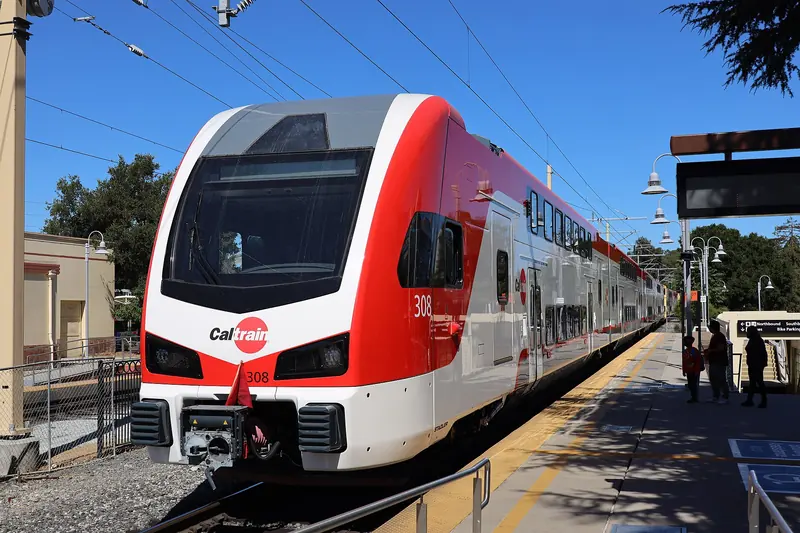
Ride Caltrain north to San Mateo, a two-zone fare: $6.25 in October 2026, rising to $6.50 on January 1, 2027. Many express trains stop there, so the ride can take under 20 minutes. From the station, walk south through downtown to Central Park, about half a mile and 10 minutes. The park fills the block between El Camino Real, Fifth Avenue, Laurel Avenue and Ninth Avenue.
By car
The drive is about 15 miles and 25 minutes outside rush hour. Take Highway 101 north to the Third Avenue exit and head west toward El Camino Real, or drive El Camino Real the whole way for a slower trip past downtown Redwood City and Belmont. Central Park has a parking structure under its tennis courts and downtown San Mateo has public garages and street meters. Check posted rates and time limits.
By bus
SamTrans buses run up El Camino Real from the Palo Alto Transit Center to San Mateo and pass the park. The trip is much slower than the train.
Accessibility
The city does not publish an accessibility guide for the garden. Japanese stroll gardens often include gravel, stepping stones and short slopes, so parts of the loop may be harder for visitors who use wheelchairs or strollers. Downtown streets between the Caltrain station and the park are level. For questions, call the city's parks and recreation department before you go.
Tips for a good visit
- Arrive early in the afternoon. Gates close at 4 p.m. every day, including weekends.
- Visit on a weekday morning. It is quietest then and in spring you can catch the 11 a.m. koi feeding.
- Come back in spring. Cherry blossom season, usually late winter into early spring, is the garden's best moment.
- Be patient with photographers. The pagoda and bridge are popular backdrops for portraits.
- Look around the park. Central Park has a rose garden kept by the San Mateo Arboretum Society, a copper giraffe sculpture named Leon from 1978 and a miniature train that has run since 1948.
Food nearby and pairing it with other stops
Downtown San Mateo, right next to the park, is one of the best places on the Peninsula to eat. The blocks around B Street, Third Avenue and Fourth Avenue are full of ramen, sushi, izakaya, dumplings, Thai, Indian and Mexican places. Our Japanese food guide covers the Palo Alto options for comparison. Bakeries and cafes make an easy stop on the walk from the station.
For a family day, drive ten minutes to CuriOdyssey at Coyote Point, which stays open until 4:30 p.m. in winter. Burlingame Avenue is one Caltrain stop north. Garden lovers can compare this garden with the larger, free Japanese Friendship Garden in San Jose and the ticketed Hakone Gardens in Saratoga. San Mateo also works as a base between SFO and Palo Alto, so you can compare San Mateo hotels if you are staying over. Visitors without a car who want a guided day around the Bay can browse Bay Area tours.
Good to know
- Closes at 4 p.m. every day; opens at 11 a.m. on weekends.
- No koi feedings from November through March.
- No dogs inside the garden.
- Central Park's playground and picnic areas are closed for construction.
Frequently asked questions
What are the San Mateo Japanese Garden hours?
The City of San Mateo lists 10 a.m. to 4 p.m. Monday to Friday and 11 a.m. to 4 p.m. on Saturday and Sunday. The garden is open on holidays except December 25. Arrive by 3 p.m. to have time for a slow loop.
Is the San Mateo Japanese Tea Garden free?
The city's garden page lists no admission fee for a regular visit. Weddings at the small gazebo need a rental application. Parking in the surrounding downtown garages and meters may cost money.
When can you see the koi fed at the San Mateo Japanese Garden?
Staff feed the koi at 11 a.m. and 3 p.m. on weekdays during spring and summer. The fish are not fed during public hours from November through March, so there are no feedings on a winter visit.
Who designed the Japanese Garden in Central Park?
The city credits landscape architect Nagao Sakurai, who had worked at the Imperial Palace in Tokyo. The garden was installed in 1966. San Mateo's sister city of Toyonaka, Japan has donated pieces such as a stone pagoda and a small shrine.
Are dogs allowed in the San Mateo Japanese Garden?
No. The city says dogs are not allowed in the Japanese Garden, though they may visit other parts of Central Park on leash under the city's park rules.