On this page
Not legal or financial advice
- This page summarizes federal and state grant programs in general terms. It is not legal, tax or financial advice.
- Rules, deadlines and award sizes change with each solicitation. We checked the sources linked below in October 2026.
- For a specific proposal, read the agency's solicitation in full and consider help from an experienced grants consultant or lawyer.
Most Palo Alto startups raise money by selling shares. A smaller group, often in hardware, energy, biotech, space and defense, also wins federal research awards that require no equity at all. The best known source is the Small Business Innovation Research program, known as SBIR. Its sibling is Small Business Technology Transfer, known as STTR. Together they market themselves as America's Seed Fund.
This guide explains how the programs work, who can apply and where they stand after a lapse in 2025 and 2026. It also covers CalSEED, a California program for clean energy founders. If your company grew out of university research, read our guide to patents and trademarks too. Federal money comes with rules about inventions.
What SBIR and STTR are
SBIR.gov says SBIR funding has supported small businesses since 1982. The Small Business Administration coordinates the programs. The money comes from 11 federal agencies, each required to set aside a share of its outside research budget for small businesses. Each agency runs its own program, picks its own topics and makes its own awards.
| Agency | SBIR | STTR |
|---|---|---|
| Department of Defense | Yes | Yes |
| Department of Health and Human Services, including NIH | Yes | Yes |
| NASA | Yes | Yes |
| Department of Energy | Yes | Yes |
| National Science Foundation | Yes | Yes |
| Department of Agriculture | Yes | No |
| Department of Homeland Security | Yes | No |
| Department of Transportation | Yes | No |
| Department of Education | Yes | No |
| Environmental Protection Agency | Yes | No |
| Department of Commerce (NIST and NOAA) | Yes | No |
Some agencies issue grants and others issue contracts. Grants, common at NIH and NSF, fund a project the company proposes within a broad topic. Contracts, common at the Defense Department, buy research on a specific problem the agency describes. That difference shapes how you write and how you get paid.
Reauthorization status in 2026
Congress must periodically renew the programs. Their authority expired after September 30, 2025. Many agencies paused new solicitations and awards during the lapse. According to published summaries from law firms, including one from Crowell & Moring dated April 20, 2026, the president signed the Small Business Innovation and Economic Security Act of 2026 (S. 3971) on April 13, 2026. The summaries say it:
- extends SBIR and STTR through September 30, 2031;
- creates a new Phase II "strategic breakthrough" award with a ceiling of $30 million;
- adds stronger screening for foreign risk and ties to countries of concern;
- lets agencies cap the number of proposals a company may submit, starting in fiscal year 2027.
Agencies restart on their own schedules after a lapse. Check SBIR.gov and each agency's own page before you plan around a deadline.
How the phases work
- Phase I funds a short feasibility study, usually six months to a year. It tests whether the idea can work technically.
- Phase II funds full research and development, often over about two years, for companies that did well in Phase I. Some agencies allow direct entry to Phase II for companies that have already proven feasibility.
- Phase III is commercialization. It uses private money or non-SBIR government contracts, not SBIR funds. Phase III status can make it easier to sell to the government later.
The SBA sets guideline award amounts and adjusts them for inflation. Agencies can go above or below those guidelines. Amounts vary widely by topic. Read the dollar limits in each solicitation rather than relying on averages.
Who can apply
The core eligibility rules are similar across agencies. In general, the company must:
- be a for-profit business located in the United States;
- have 500 or fewer employees, counting affiliates;
- be more than 50 percent owned and controlled by US citizens or permanent residents, with a separate path at some agencies for companies majority owned by venture capital firms, hedge funds or private equity funds;
- for SBIR, have a principal investigator whose primary employment is with the company during the award;
- for STTR, partner with a US research institution, such as a university or federal lab. The small business must do at least 40 percent of the work and the institution at least 30 percent.
Before applying you need several registrations: a Unique Entity ID through SAM.gov, a company registration on SBIR.gov and accounts on each agency's submission system. SAM.gov registration in particular can take weeks, so start early.

Why it matters locally
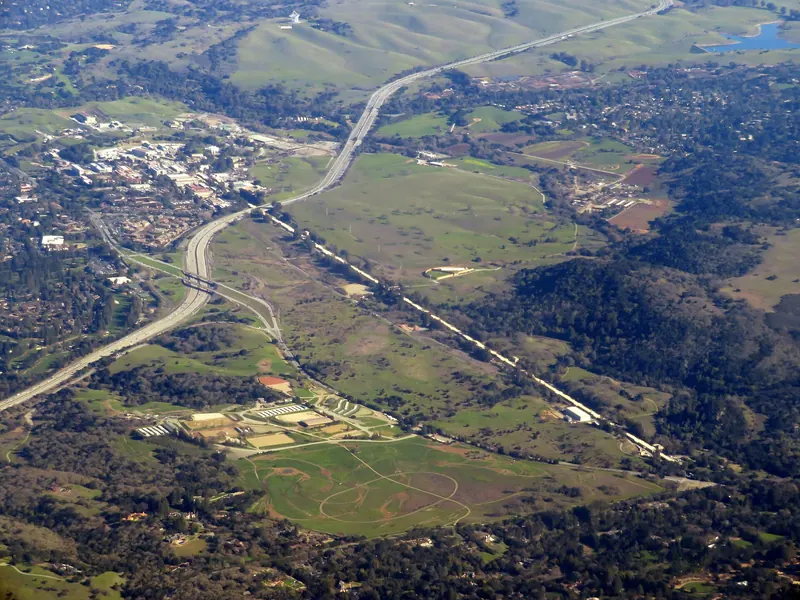
Palo Alto sits close to several federal research centers. NASA Ames Research Center is at Moffett Field in Mountain View. SLAC National Accelerator Laboratory, run by Stanford for the Department of Energy, sits in the hills above campus. SRI, an independent research institute, is in Menlo Park. Our research labs guide covers all three. Stanford's own researchers can partner with startups on STTR projects through the university's sponsored research process.
SBIR awards are especially common in climate, health and defense technology. Many startups combine them with venture money: a Phase I award proves a technical point, then a seed round follows. Our guides to climate tech investors and biotech and health investors name firms that back these companies.
California programs: CalSEED
The California Sustainable Energy Entrepreneur Development Initiative, known as CalSEED, is the best known state grant for early-stage founders. According to its website:
- It is administered by New Energy Nexus and funded by the California Energy Commission's EPIC program.
- It describes itself as a $48 million grant program for California clean energy startups.
- It awards grants of up to $700,000 to help companies move from concept to prototype.
- It reports 137 awardees and $23 million in awards since 2017.
- It announced its Cohort 7 prototype awards in April 2026.
The Energy Commission runs other research grant programs for energy technology, usually through competitive solicitations with set deadlines. Check the CalSEED and Energy Commission sites for the next open round rather than relying on past timing.
Tips for a first application
- Read the whole solicitation. Formatting rules, page limits and required forms are strict. Proposals can be rejected without review for small errors.
- Match a real topic. Contract agencies want a solution to the problem they described, not a pitch for your existing product.
- Use official question channels. Solicitations explain when and how applicants may ask questions. Some agencies restrict direct contact once a solicitation opens, so follow the rules in each document.
- NSF has a first step. NSF's program asks most applicants to submit a short Project Pitch before a full proposal.
- Budget for overhead. Award money must follow federal cost rules. Good bookkeeping matters from day one.
- Plan for data rights. SBIR awards generally let companies keep rights to their inventions, with reporting duties and certain government rights. Learn the rules before you sign.
- Get local help. SBIR.gov's "Find Local Assistance" page lists support organizations by state.
If you are still choosing between grants and equity, our seed funds guide and accelerators guide cover the other early sources of money. Grant applicants need an incorporated company, which our guide to incorporating explains.
Good to know
- SBIR money does not dilute founders, but it is slow. Expect months between submission and award.
- Most agencies require the work to be done in the United States.
- Keep invention records. Federal awards require you to disclose inventions made with the funding.
Frequently asked questions
What is the difference between SBIR and STTR?
Both fund research and development at small US businesses. STTR requires a formal partnership with a research institution such as a university or federal lab, which must do a set share of the work. SBIR allows partners but does not require one. It expects the principal investigator to be primarily employed by the small business.
Was SBIR reauthorized?
The programs' authority lapsed after September 30, 2025. Law firm summaries report that the Small Business Innovation and Economic Security Act of 2026 was signed on April 13, 2026, extending SBIR and STTR through September 30, 2031. Check SBIR.gov and each agency's solicitations for current open topics.
Can a venture-backed startup apply for SBIR?
Often yes. Applicants must generally have 500 or fewer employees including affiliates and be more than 50 percent owned by US citizens or permanent residents. Some agencies also accept companies majority owned by venture capital firms under separate rules. Read each agency's eligibility section.
Does the government take equity in SBIR companies?
No. SBIR and STTR awards are grants or contracts, not investments, so the company does not give up shares. Awards do come with reporting duties, rules on data rights and requirements to disclose inventions made with federal money.
What is CalSEED?
CalSEED is a California grant program for early-stage clean energy companies. It is administered by New Energy Nexus and funded by the California Energy Commission's EPIC program. Its site describes grants of up to $700,000 and $23 million in awards since 2017.