On this page
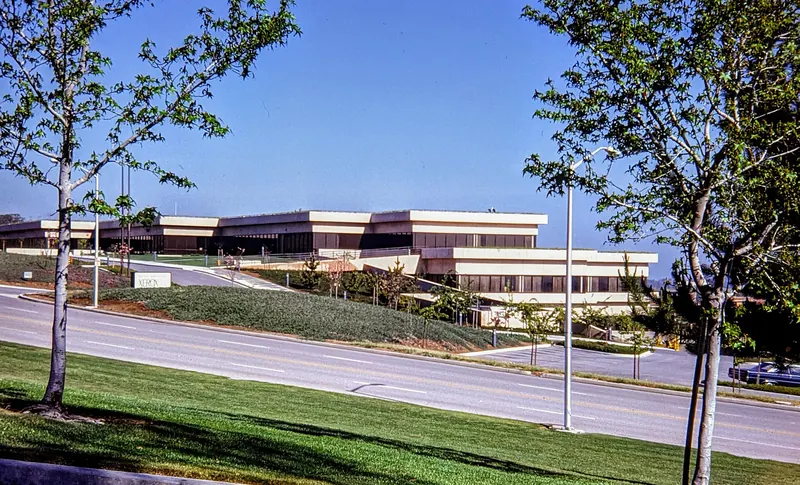
Few buildings in Palo Alto have had more influence on daily life than the long, low research center on Coyote Hill Road. Between the early 1970s and the early 1980s, researchers at Xerox's Palo Alto Research Center built a working version of the modern office: personal computers on every desk, connected by a network, with documents shown on screen as they would print and sent to a laser printer down the hall.
Xerox made a fortune from one of those inventions and let others profit from the rest. This profile covers PARC's founding, its best known work, the famous Apple visit and the lab's 2023 handover to SRI International.
Founding in 1970
In 1969 Xerox's chief scientist, Jack Goldman, proposed a new research lab that would look beyond copiers. He first suggested New Haven, Connecticut. The physicist George Pake argued for Palo Alto, close to Stanford and to the computer science talent around it. Pake won the argument and became PARC's first director.
The Xerox Palo Alto Research Center opened on July 1, 1970. Its first home in Stanford Research Park was a former Encyclopaedia Britannica building. The lab later moved into its own building at 3333 Coyote Hill Road, designed by the architecture firm Hellmuth, Obata and Kassabaum.
The first hire was Robert Taylor, a former deputy director at ARPA, the Pentagon research agency. Taylor recruited many of the computer scientists who made PARC famous.

The Alto, 1973
In 1973 PARC introduced the Alto. It had a bit-mapped screen, meaning every dot on the display could be controlled, which made it possible to show text in different fonts and draw pictures. It used a mouse, showed overlapping windows and connected to other machines over a network. It is widely considered the first modern personal computer.
Xerox never sold the Alto as a mass market product. Instead PARC built many of them for its own researchers and partners. Living with Altos every day let PARC staff develop software that assumed every person had a powerful networked computer, years before that was true anywhere else.
Ethernet, laser printing and the interface
Ethernet
Robert Metcalfe proposed Ethernet at PARC in 1973 as a way to connect Altos to each other and to printers. It was refined in the mid 1970s and later turned into an industry standard with Intel and Digital Equipment Corporation. Ethernet in its descendant forms still connects most wired networks in offices and homes.
The laser printer
Gary Starkweather had the idea for a laser-based printer while working as a Xerox researcher in the mid 1960s. Goldman had him transferred to PARC in 1971 and a working prototype was running by early 1972. Xerox brought laser printing to market in 1977. It became the most profitable product to come out of PARC by far.
Smalltalk and the graphical user interface
Alan Kay and his group developed Smalltalk, an object-oriented programming language and environment. Smalltalk and other PARC software introduced the ideas of windows, icons, menus and pointing with a mouse that now define desktop computing. PARC's Bravo editor showed documents on screen as they would look when printed, an approach later called WYSIWYG.
The Apple visit, 1979
In December 1979 Steve Jobs and a team from Apple received demonstrations of PARC technology. The visits were part of an arrangement that allowed Xerox to invest in Apple before Apple's public offering. Jobs came away convinced that the mouse and the graphical desktop were the future of personal computing.
Apple then designed its own interface for the Lisa and the Macintosh. It was not a copy. Apple engineers made many changes and additions. Apple's mouse also had to be redesigned to be cheap and durable enough for consumers. That job went to a small Palo Alto design firm, a story told in our IDEO profile.
Xerox did launch its own commercial system, the 8010 Information System known as the Star, in 1981. It had a mouse-driven interface, Ethernet and laser printing. It was expensive and sold poorly. Xerox later left the personal computer market.
PARC's alumni
PARC's biggest economic impact came through people who left. Metcalfe founded 3Com to sell Ethernet products. John Warnock and Charles Geschke left to found Adobe in 1982, building on PARC work in printing and page description. Charles Simonyi, who worked on Bravo, went to Microsoft and led its work on Word. Many other PARC researchers seeded companies across Silicon Valley.
That pattern of a lab inventing and others commercializing became one of the standard lessons of Silicon Valley history. Our Silicon Valley history puts PARC in the longer story.
Why PARC still comes up
PARC is often cited as a warning about big companies and new ideas. Xerox paid for research that produced the personal computer, the office network and the modern interface, then earned most of its return from printers. Other firms, many of them a few miles away, built businesses on the rest.
That story is a little too neat. Laser printing alone is often said to have repaid Xerox's spending on the lab many times over. Many PARC ideas also needed cheaper chips before anyone could sell them at a mass market price. Still, the gap between invention and commercial success was real. It is one reason Silicon Valley investors pay close attention to who leaves big research labs and what they start next.
PARC after the Alto years
PARC kept doing research for decades. Its work included ubiquitous computing, an idea about computers fading into everyday objects, as well as experimental mobile devices, electronic paper, sensors, clean technology and artificial intelligence. In 2002 Xerox turned the lab into an independent subsidiary, Palo Alto Research Center Incorporated, which could take on outside clients.
On April 24, 2023, Xerox announced that it would donate PARC and its assets to SRI International, the nonprofit research institute based in Menlo Park. The announcement credited PARC with pioneering Ethernet, laser printing, the graphical user interface and ubiquitous computing. SRI completed the acquisition that April.
PARC today
On January 18, 2024, SRI announced that the former PARC research group would become its Future Concepts division, led by Jan Vandenbrande, who had headed PARC research. SRI calls the Coyote Hill Road site its PARC campus and described plans to make it a gathering place for researchers, policymakers and business leaders. It also said it would revive the PARC Forum, a public talk series that ran until 2019.
Our page on research labs near Palo Alto covers SRI and other labs in more detail.
Good to know
- The PARC campus is a working research facility. You can see the building from Coyote Hill Road but there are no walk-in tours.
- Coyote Hill Road climbs into the hills off Page Mill Road in Stanford Research Park. It is easiest to reach by car or bike.
- Check SRI's website for PARC Forum talks or other public events.
PARC is one stop on our famous tech addresses tour. See the companies guide for other Palo Alto firms with a research park chapter.
Frequently asked questions
What was invented at Xerox PARC?
PARC researchers built the Alto personal computer, Ethernet networking, the laser printer, the Smalltalk programming environment and much of the graphical user interface with windows, icons and a mouse. Xerox sold the laser printer successfully but let others commercialize most of the computing ideas.
Where is Xerox PARC?
PARC is at 3333 Coyote Hill Road in Stanford Research Park, in the hills above Page Mill Road in Palo Alto. It is a working research facility and is not open for walk-in visits.
Did Steve Jobs steal the GUI from Xerox?
Not in a simple sense. In December 1979 Xerox let Apple see demonstrations of PARC technology as part of a deal that allowed Xerox to invest in Apple before its public offering. Apple then built its own interface for the Lisa and Macintosh, using ideas it saw at PARC as a starting point.
Who owns PARC now?
SRI International, the nonprofit research institute in Menlo Park. Xerox announced its donation of PARC to SRI on April 24, 2023. In January 2024 SRI turned the former PARC research group into its Future Concepts division.
Is it still called Xerox PARC?
Not officially. It was Xerox PARC from 1970 to 2002, then Palo Alto Research Center Incorporated, a Xerox subsidiary. Since 2023 it has been part of SRI, which refers to the Palo Alto site as its PARC campus.