On this page
Stanford is a big employer, but a lot of its public face is run by volunteers. Volunteers welcome families at the children's hospital. Neighbors lead hikes at Jasper Ridge. Students and residents pull weeds at the farm on Saturday mornings. If you live in Palo Alto and have a few hours a week, there is likely a Stanford program that wants you. The catch is that each one runs its own application, with its own age limits, health checks and waiting periods.
This guide gathers the main programs open to community members and what each asked for in late 2026. Several have long gaps between intakes, so read the timing notes before you plan around one. For volunteer work in the wider city, see our guide to volunteering in Palo Alto.
Stanford Health Care
Stanford Health Care says its volunteers support more than 100 departments across the main hospital, clinics and community sites. The program is large but strict. Its published requirements:
- Age. At least 16 when you apply. Some roles, including every inpatient unit role, require 18.
- Time. A six-month minimum with at least one shift a week. Inpatient roles require a full year.
- Purpose. Stanford asks that people apply for humanitarian reasons. Volunteering does not count as clinical hours for school applications.
- No clinical work. Volunteers do not shadow staff, provide clinical care or work in research labs, regardless of any license they hold.
Onboarding has four parts: an online training curriculum of 6 to 8 hours, an online background check, a health screening with Workforce Health and Wellness that reviews vaccination history and includes a TB test, plus a new volunteer orientation. Everything must be done within 30 days of selection. Volunteer Resources makes final placement decisions. Application dates open in rounds, so check the Stanford Health Care volunteering page for the next window. The office lists its phone as 650-723-7424.
Stanford Health Care also runs a Patient and Family Partner Program. Its volunteers are former patients and family members who sit on advisory councils, join focus groups, review materials and share their stories to improve care. It suits people who want to help but cannot commit to a weekly shift.
For more about the hospital itself, see our Stanford Hospital guide.
Lucile Packard Children's Hospital
The children's hospital runs its own program with separate adult and teen tracks. Its volunteers read to children, cuddle newborns and welcome visitors. The published requirements are a six-month commitment (some programs require a year), one shift a week and shifts of 2 to 3 hours.
The steps run in this order:
- Register for an online orientation through the adult or teen process.
- Complete an interview questionnaire and sign up for an interview.
- If accepted, complete an online application with two references.
- Take an online compliance course.
- Submit a free background check.
- Complete health requirements with Workforce Health and Wellness.
- Wait for a placement and start date.
The hospital warns that its monthly orientations fill quickly. If you miss one, sign up for the next as soon as it posts. Our Lucile Packard Children's Hospital guide covers the hospital's services and parking.
The Cantor and the Anderson
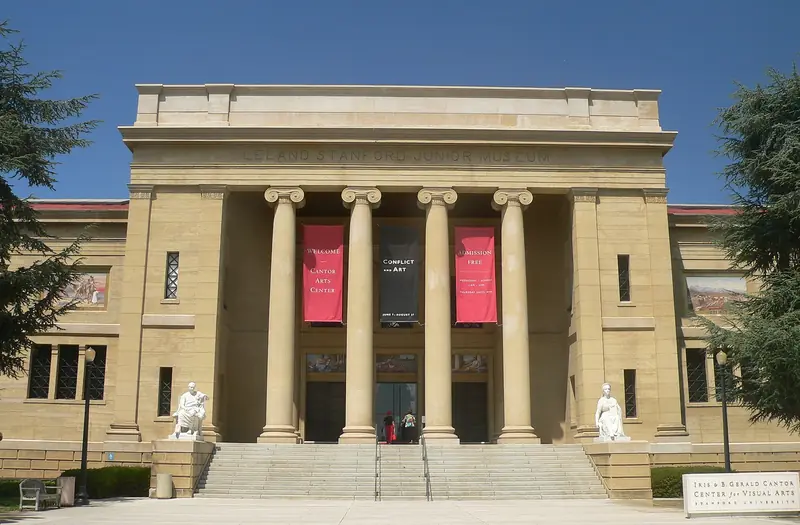
Stanford's two art museums share a volunteer program. In fall 2026 it listed two roles:
- Museum Engagement Guide. This is the docent role, leading tours and talking with visitors in the galleries. The museums say they are not accepting applications and expect to open the next round in autumn 2027. You can join an interest list. The last intake asked for a two-year commitment that included six months of training, with in-person sessions twice a month on Saturdays.
- Information Desk Ambassador. Open to applicants 18 and older. Ambassadors commit to weekly shifts for at least one year and finish training and orientation before starting. You apply with a written application and an interview.
Both museums are free to visit. Our Cantor Arts Center guide has hours and highlights if you want to see the galleries before you apply.

Jasper Ridge docents
Jasper Ridge Biological Preserve, Stanford's 1,193 acre field station near Woodside, can only be hiked with a docent. Those docents train through BIO/EARTHSYS 105, Ecology and Natural History of Jasper Ridge Biological Preserve, a two-quarter course that began as a community docent program in 1975. Stanford students and a few members of the local community are admitted each time through an application and interview.
The commitment is real. Classes meet Thursday afternoons from 1 p.m. to 5:30 p.m. through winter and spring quarters, with a field project in the spring. Graduates become Jasper Ridge affiliates who lead tours, help with research and stewardship and join continuing education programs. Jasper Ridge says the next offering will be in 2028, with applications due in fall 2027. Until then it lists other volunteer pathways on its site. Our Jasper Ridge guide explains the free public tours.
The educational farm
The O'Donohue Family Stanford Educational Farm on Fremont Road opens volunteer shifts to the public twice a week. You register for a specific shift online and sign the farm's waiver in advance. Volunteers must be at least 10 and anyone aged 10 to 14 needs an adult guardian volunteering alongside them. Work is seasonal: planting, weeding, harvesting and compost. Our farm guide has the shift times and how to find the gate.
Conservation and history
- Stanford Conservation Program. It runs stewardship days such as habitat work at Lake Lagunita, home to the threatened California tiger salamander. Volunteer dates go out through its quarterly newsletter.
- Stanford Historical Society. Founded in 1976 and open to all, it counts about 800 members and about 200 volunteers who record oral histories, research and run programs. Individual membership is listed at $60. See our Stanford Historical Society guide.
Research volunteering and internships
Volunteering as a research participant is a separate world with its own rules, consent forms and often pay. Our research studies guide explains how to find official listings. Stanford's community relations office also publishes tips for high school and community college students looking for lab internships. It says most labs take interns only in summer and rarely accept anyone for fewer than six hours a week or less than a quarter. Students are told to email six to eight faculty members directly with a one-page CV.
Before you apply
- Expect a background check and a health screening for any hospital role. Keep your vaccination records handy.
- Count the weeks. Most programs ask for six months to a year of weekly shifts.
- Do not volunteer to collect clinical hours. Stanford's hospital programs do not provide them.
- Watch for intake windows. Several programs, including museum guides and Jasper Ridge docents, open only every year or two.
Which program fits
| If you want | Try |
|---|---|
| Weekly contact with patients and families | Stanford Health Care or Packard Children's |
| Occasional advisory work from home | Patient and Family Partner Program |
| Art and visitors | Cantor and Anderson information desk |
| Deep training in ecology | Jasper Ridge docent course (2028) |
| Outdoor work with kids along | Educational farm shifts |
| Local history | Stanford Historical Society |
Frequently asked questions
How old do you have to be to volunteer at Stanford Hospital?
Stanford Health Care says the minimum age is 16 at the time of applying. Some roles, including all inpatient unit roles, require volunteers to be 18. Lucile Packard Children's Hospital runs separate adult and teen volunteer processes.
Does volunteering at Stanford Hospital count as clinical hours?
No. Stanford Health Care says volunteering does not fulfill clinical hours for school applications. Volunteers do not shadow staff, provide clinical services or work in research labs, even if they hold a clinical license.
How long is the commitment to volunteer at Stanford Health Care?
At least six months with one shift a week. Some roles, including all inpatient unit roles, require one year. New volunteers must finish online training, a background check, a health screening with a TB test and an orientation within 30 days of selection.
Can I become a docent at the Cantor Arts Center?
Not right now. The Cantor and Anderson Collection say they are not accepting applications for their Museum Engagement Guide program and expect to open applications next in autumn 2027. Their Information Desk Ambassador role was accepting applicants aged 18 and up.
How do I become a Jasper Ridge docent?
Docents train through the course BIO/EARTHSYS 105, which admits Stanford students and a few local community members by application. Jasper Ridge says the next offering is in 2028, with applications due in fall 2027. Classes meet Thursday afternoons in winter and spring.