On this page
Palo Alto's housing stock is old by California standards. Craftsman bungalows from the 1910s, Eichlers with single-pane glass walls and ranch houses from the 1950s often have little insulation, leaky ducts and gas appliances near the end of their lives. A home energy audit finds where the energy and money go before you spend on fixes. It also helps you plan the order of work, since sealing and insulating first can shrink the heat pump you need later.
City of Palo Alto Utilities runs both electric and gas service, so its programs cover the whole house. This page explains what the city offers for free, the upgrades available to income-eligible households, what a professional audit includes and a checklist you can do yourself. For your account and bills, see our utilities guide.
The city's free Energy Advisors
The city's Get Advice at Home page offers a free phone consultation with an Energy Advisor. The advisor asks about your goals and concerns, reviews your past energy and water use and gives custom recommendations, along with information on city rebates and programs. The city describes the advice as unbiased.
Advisors can help with:
- Heating and cooling efficiency and the effect of insulation
- Whether rooftop solar makes sense, based on your past electric use
- What an electric vehicle will do to your bill, home charger questions and public charging locations
- Rebates for heat pumps, heat pump water heaters and induction cooking
Book by calling (650) 713-3411 or emailing [email protected]. The page does not describe an in-home audit, testing equipment or a site visit for all customers, so treat the call as a planning session, not a full audit. It is a good first step and costs nothing.
Electrify My Home
If you already know you want to replace a gas water heater or furnace, the city's Electrify My Home program goes further. Its Electric Home Advisors work through a home profile with you, recommend equipment and arrange the installation and permits at a published price. Our home electrification rebates guide covers the program and the 2026 rebate amounts.
Free upgrades through REAP
The Residential Energy Assistance Program, or REAP, provides free efficiency upgrades to eligible customers through Electrify My Home. It is the closest thing Palo Alto has to a free weatherization program.
| Who | What REAP provides |
|---|---|
| All eligible households, owners and renters | LED lighting; insulation and weatherization in attics, roofs, walls, doors and windows; a portable induction cooktop |
| Eligible owners | Also heat pump heating and cooling, a heat pump water heater, an induction cooktop or range and an electric clothes dryer |
Who qualifies
- You must be enrolled in the city's Rate Assistance Program, which lowers utility rates for households with financial or medical need.
- Owners: the home must be under 2,500 square feet and your principal residence, with investable assets under $500,000 and no other properties.
- Renters: efficiency upgrades only. The home must be under 2,500 square feet and not a short-term rental, the owner must authorize the work and the tenant must meet the income rules. Corporate and institutional landlords are excluded.
To apply, start the Electrify My Home questionnaire and mark interest in the income-qualified program. Questions go to [email protected] or (650) 329-2241. The Rate Assistance Program itself is explained in our utility bill help guide.
What a professional audit includes
A full audit by a trained energy auditor or HERS rater usually takes a few hours and includes some or all of these tests:
- Blower door test. A fan in an exterior door depressurizes the house to measure overall air leakage and reveal where air gets in.
- Infrared scan. A thermal camera shows missing insulation and drafts, best done on a cool morning.
- Duct leakage test. Measures how much heated or cooled air escapes from ducts, often into the attic or crawlspace.
- Combustion safety. Checks gas furnaces, water heaters and ranges for carbon monoxide and proper venting, which matters more once a house is sealed tighter.
- Attic and crawlspace inspection. Insulation depth, gaps around lights and pipes and any signs of moisture or pests.
- Bill review. A look at a year of use to separate heating, cooling and baseline loads.
The result should be a written report that ranks fixes by cost and payback. Home Energy Rating System raters in California are certified through providers approved by the California Energy Commission. Building Performance Institute certification is another common credential. Ask whether the auditor also sells the fixes; a contractor who does both may be fine, but get a second bid on big jobs.

Notes for Eichlers and older houses
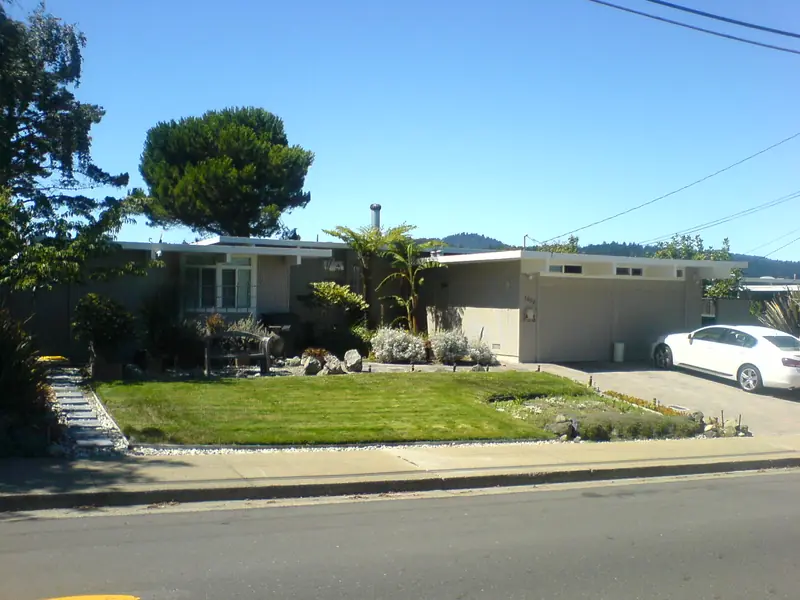
Eichlers have radiant heat in the slab, tongue-and-groove ceilings with little room for insulation and walls of glass. Common fixes include rigid foam insulation added on top of the roof during a re-roof, double-pane or laminated glass replacements and ductless heat pumps or air-to-water systems where the radiant system has failed. Our Eichler buying guide covers what to check.
Pre-war bungalows and Craftsman houses usually have open attics that are easy to insulate and walls that may be empty. Knob-and-tube wiring must be checked before blowing insulation into walls. Historic homes may also need review before changing windows; see our historic home guide.
A do-it-yourself checklist
You can find a lot on your own with a flashlight and a calm, windy day.
- Feel for drafts at outlets on exterior walls, around window frames, door thresholds and attic hatches. An incense stick shows air movement clearly.
- Look in the attic. If you can see the tops of the ceiling joists, there is not enough insulation.
- Check ducts in the attic or crawlspace for disconnected sections and failed tape.
- Check the fireplace damper. An open damper is a large hole in the roof.
- Read your meter data. MyCPAU shows your usage; WaterSmart shows hourly water use and leak alerts.
- Order a water kit. Valley Water's free outdoor survey can include a do-it-yourself indoor survey kit on request.
Cheap fixes come first: weatherstripping, door sweeps, foam gaskets behind outlet covers, LED bulbs and a programmable or smart thermostat. Air sealing before insulating makes both more effective.
Comfort, heat and smoke
An audit is not only about bills. A tighter, better-insulated house stays cooler during heat waves and keeps wildfire smoke out when paired with good filtration. Our heat waves guide and air quality guide cover those seasons. If you seal a house with gas appliances, make sure it has working carbon monoxide alarms and that combustion safety has been tested.
The federal Energy Efficient Home Improvement Credit, which once included a credit for home energy audits, covered work done through December 31, 2025 only. City rebates are now the main incentive, so start with the free Energy Advisor call.
Good to know
- The city's Energy Advisor consultation is free: (650) 713-3411.
- REAP gives free insulation and weatherization to Rate Assistance Program households.
- Seal air leaks before adding insulation.
- Test gas appliances for safe venting after sealing a house.
- The federal audit and efficiency credit ended with 2025.
Frequently asked questions
Does Palo Alto offer free home energy audits?
The city offers a free phone consultation with a City of Palo Alto Utilities Energy Advisor, who reviews your past energy and water use and gives custom recommendations. Call (650) 713-3411 or email [email protected]. The city's page does not describe a free in-home audit for all customers.
What is REAP in Palo Alto?
REAP, the Residential Energy Assistance Program, gives free efficiency upgrades such as LED lighting, insulation and weatherization to eligible City of Palo Alto Utilities customers. Households must be enrolled in the Rate Assistance Program. Owners of homes under 2,500 square feet can also get free appliance upgrades like heat pumps.
How much does a home energy audit cost in Palo Alto?
Private audits are priced by each contractor and vary with the size of the house and the tests included, so get quotes. A full audit with a blower door test and combustion safety checks costs more than a walk-through. Some electrification contractors include an assessment when they bid on heat pump work.
Can I still get a tax credit for a home energy audit?
No. The federal Energy Efficient Home Improvement Credit, which once included a small credit for home energy audits, covered work done through December 31, 2025 only.
What does a blower door test show?
A blower door is a powerful fan fitted into an exterior doorway that depressurizes the house. It measures how leaky the house is overall and, with a smoke pencil or infrared camera, shows where outside air is getting in. Auditors usually test before and after air sealing to confirm the work.