On this page
Palo Alto is a charter city with a council and city manager form of government, a setup it has used since 1950. Residents elect a seven-member City Council to set policy, pass laws and adopt the budget. The council hires a professional city manager who runs the departments that pave streets, staff libraries and deliver power and water. The mayor is a council member chosen by colleagues, not a separate elected executive.
The city also runs services most American cities leave to others, including its own electric, gas and water utilities. That gives City Hall a bigger day-to-day role in residents' lives than in many places. This guide explains who does what, how council meetings work, how to take part and where to send everyday requests. For how council members get elected, see our voting and elections guide.
The City Council
According to the city's City Council page, the council has seven members elected at-large in November of even-numbered years. They serve staggered four-year terms. Each January it picks a mayor and vice mayor from among its members for one-year terms.
The council lists these members for 2025 and 2026:
| Council member | Role | Term ends |
|---|---|---|
| Vicki Veenker | Mayor | December 31, 2026 |
| Greer Stone | Vice Mayor | December 31, 2028 |
| Pat Burt | Council member | December 31, 2028 |
| Ed Lauing | Council member | December 31, 2026 |
| George Lu | Council member | December 31, 2028 |
| Julie Lythcott-Haims | Council member | December 31, 2026 |
| Keith Reckdahl | Council member | December 31, 2028 |
The three seats ending in 2026 are on the November 3, 2026 ballot, so the council's makeup may change in January 2027. Each member has a city email address listed on the council page. Council committees, such as Policy and Services, take up issues in more depth before they reach the full council.
The City Manager and city staff
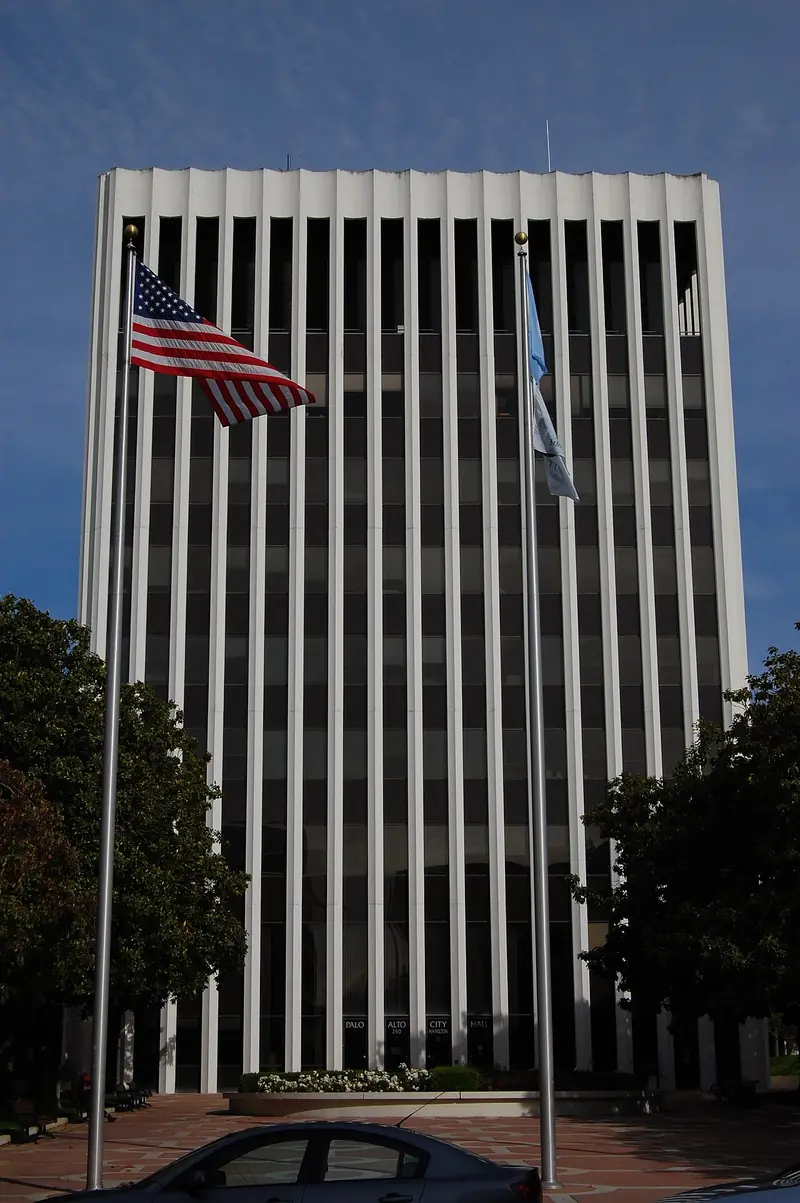
The City Manager is appointed by the council and runs the organization. The city describes the office as providing strategic leadership and professional management. In practice that means preparing the budget, carrying out council decisions, directing departments and coordinating communication with the public. Ed Shikada holds the post. The office is on the seventh floor of City Hall at 250 Hamilton Avenue and its line is (650) 329-2392.
The council also appoints other top officers, such as the city attorney and city clerk. The clerk keeps official records, runs city elections and manages meeting agendas.
Departments reporting to the city manager include:
- Police and Fire, covered in our public safety guide
- Utilities, covered in our utilities guide
- Planning and Development Services, which handles permits, zoning and housing policy
- Public Works and Transportation
- Community Services, which runs parks, recreation and the arts
- The Library, Emergency Services, Administrative Services, Human Resources and Information Technology

Council meetings
The council's regular meetings are on the first, second and third Monday of each month at 5:30 p.m. Special meetings are added when needed. The city's hybrid meeting page says meetings are held in person in the Council Chambers or the Community Meeting Room at City Hall and on Zoom at the same time.
- Agendas. The agenda packet is published 11 days before each meeting, with uploads after 5:30 p.m. on Thursdays. The city also posts a three-week preview of upcoming public meetings and offers an email list for agendas.
- Watching. The City of Palo Alto YouTube channel streams all meetings live. Midpen Media Center broadcasts most Palo Alto meetings and the city also shows them on local cable.
- Records. Agendas, minutes and staff reports are archived on the city's agendas and minutes pages.
Big topics such as housing, traffic, utility rates and major developments draw long public comment periods. Meetings can run late into the evening, so check the agenda to see roughly when your item comes up.
How to speak at a meeting
The city's hybrid meeting attendance page lists the options:
- In person. Fill out a speaker request card and give it to the City Clerk before the council reaches your item.
- By video. Use the Zoom link on the front page of the agenda. Remote comments are accepted only for items on the agenda.
- By phone. Dial (669) 900-6833 and enter the meeting ID from the agenda.
- In writing. Email [email protected] before the meeting.
Comments are accepted for up to three minutes each. General public comment on topics that are not on the agenda has its own slot on each agenda and is also limited to three minutes per speaker.
Writing to the council
Email reaches all members at once. Letters can also be mailed to the Office of the City Clerk on the seventh floor of City Hall. The city publishes correspondence weekly on Mondays. Anything received before noon on Monday appears that afternoon. Every written message to the council becomes a public record, so leave out phone numbers, home addresses and children's names.
Boards and commissions
Much of the detailed work happens in appointed boards and commissions, which advise the council or make decisions in their own areas. The city lists eight on its boards and commissions page:
| Body | Regular meeting |
|---|---|
| Architectural Review Board | 1st and 3rd Thursdays, 8:30 a.m. |
| Historic Resources Board | 2nd Thursday, 8:30 a.m. |
| Human Relations Commission | 2nd Thursday, 6 p.m. |
| Parks and Recreation Commission | 4th Tuesday, 7 p.m. |
| Planning and Transportation Commission | 2nd and last Wednesdays, 6 p.m. |
| Public Art Commission | 3rd Thursday, 7 p.m. |
| Stormwater Management Oversight Committee | Quarterly, Thursdays, 1 p.m. |
| Utilities Advisory Commission | 1st Wednesday, 6 p.m. |
The city keeps applications on file for the next recruitment and contacts applicants when seats open. The Local Appointments List, updated each year by December 31, shows current members, terms and qualifications. Serving on a commission is one of the most direct ways to shape city policy. Our volunteering guide covers other ways to help.
Reaching city services
For most everyday problems, start with PaloAlto311. The service request system works on the web and through iPhone and Android apps. It handles potholes, broken sidewalks, graffiti, overgrown weeds, code enforcement complaints, missed street sweeping, broken streetlights, clogged storm drains, fallen branches and abandoned bikes or shopping carts.
- Give the location, a short description and ideally a photo.
- Save the request number to follow up or add comments.
- Do not use it for emergencies. Call 911, or the 24-hour police dispatch line at (650) 329-2413 for urgent non-emergency police matters.
The general City Hall line is (650) 329-2100. Permits and zoning questions go to the Development Center, covered in our building permits guide. Parking permits are covered in our parking permits guide.
A short history
Palo Alto incorporated in 1894, a few years after Stanford opened, as a town for the university's neighbors. It took control of its own water and power early and has run its utilities ever since. The council and manager system adopted in 1950 has lasted through the city's growth from college town to tech center. Our history of the founding of Palo Alto tells the early story.
Good to know
- Agenda packets come out 11 days before a meeting. Read the staff report before you comment.
- Remote comments are taken only on agenda items.
- Anything you send the council is public.
- Use PaloAlto311 for everyday repairs and keep your request number.
Frequently asked questions
Who is the mayor of Palo Alto?
For 2026 the City Council lists Vicki Veenker as mayor and Greer Stone as vice mayor. Palo Alto's mayor is not directly elected. Each January the seven council members choose a mayor and vice mayor from among themselves by majority vote for a one-year term.
When does the Palo Alto City Council meet?
The council's regular meetings are on the first, second and third Monday of each month at 5:30 p.m., with special meetings added as needed. Meetings are held in person at City Hall and on Zoom. The agenda packet is published 11 days before each meeting.
How do I give public comment at a Palo Alto council meeting?
In person, fill out a speaker card and hand it to the City Clerk before the item comes up. Remotely, join through the Zoom link on the agenda or by phone at (669) 900-6833. Comments are generally limited to three minutes. You can also email [email protected] ahead of time.
Who runs Palo Alto day to day?
The City Manager, appointed by the council, runs daily operations and directs city departments. Ed Shikada holds the post. The council sets policy, adopts the budget and hires the manager, while department staff carry out the work.
How do I report a problem to the City of Palo Alto?
Use PaloAlto311 on the web or through its iPhone and Android apps for potholes, graffiti, broken streetlights, missed street sweeping, fallen branches and similar issues. You get a request number to track progress. For emergencies call 911 and for urgent police matters call (650) 329-2413.