On this page
Jane Stanford is usually remembered in two scenes: grieving her son in 1884 and dying of poison in Honolulu in 1905. The years between matter more. For a decade after her husband's death she alone stood between the new university and collapse. She did it with a court fight, a household budget and a box of jewels. She also made decisions that drew national anger.
Our page on the Stanford family covers Leland's career, the founding grant and the 1905 poisoning in detail. This page stays on Jane: her own background, how she ran the university and how she is remembered. Sources include her papers at Stanford, Stanford Magazine, Wikipedia and an encyclopedia biography. Where they disagree, we say so.
An Albany daughter
Jane Elizabeth Lathrop was born in Albany, New York, on August 25, 1828. Her father, Dyer Lathrop, kept a shop. Her mother was Jane Anne Shields Lathrop. She was the second of six children. She went to the Albany Academy for Girls. Her finding aid at Stanford gives her middle name as Eliza.
The Lathrops stayed close to her all her life. Her brother Ariel became the Stanfords' business manager. Her youngest brother, Charles, gave his name, with hers, to the railroad town of Lathrop in San Joaquin County, which the Stanfords' company developed in the late 1860s.
Wife, waiting and First Lady
She married Leland Stanford on September 30, 1850. They lived in Port Washington, Wisconsin, until a fire destroyed his law library in 1852. He left for California to join his brothers. She stayed behind in Albany for three years. He came back for her in 1855 and they moved to California the next year.
When Leland won the governorship, she became California's First Lady for his term of 1862 to 1863. For 18 years of marriage the couple had no children. Their son, Leland Jr., was born on May 14, 1868, when she was 39. He died of typhoid in Florence on March 13, 1884. Our page on Leland Stanford Jr. tells his story.
Partner in the founding
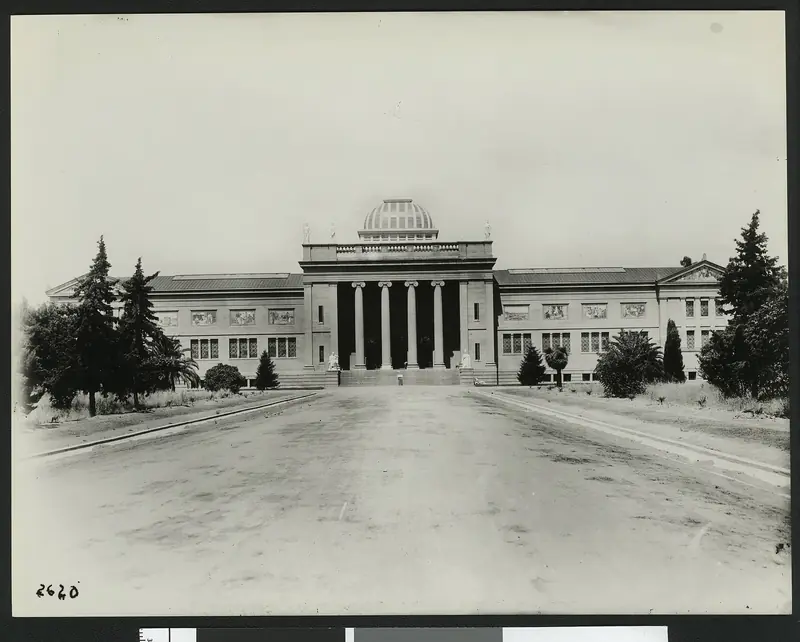
Her papers at Stanford describe Jane as "a full partner with her husband in the planning of the University." She designed and helped build the museum in her son's memory, Stanford Magazine says. That museum is today's Cantor Arts Center. The finding aid to her letters also notes her long interest in kindergartens. One encyclopedia says she founded several in the Palo Alto area.
At her direction the university also gave early weight to the arts. Women were admitted from the start under the founding grant. In 1899 she capped women's enrollment at 500, a rule our women's history page explains and that later presidents had to undo.
Keeping the university alive
Leland Stanford died on June 21, 1893, less than two years after the university opened. His estate went into probate. Jane announced the university would stay open under her direction and told President David Starr Jordan she was certain she could solve the money problems. Stanford Magazine puts the estate at $30 million.
It was harder than she expected. A depression gripped the country. In 1894 the federal government filed a claim of about $15 million against the estate over the Central Pacific's debts. The case went to the U.S. Supreme Court, which ruled for the estate on March 2, 1896, in United States v. Stanford (161 U.S. 412). Even so, the money stayed frozen for years. Faculty pay, construction and daily expenses all depended on what she could pull together. The university was barely two years old and its endowment was locked inside the frozen estate.
Wikipedia says that from 1893 to 1898 she drew $10,000 a month as the university's co-founder while the estate stayed in probate. One encyclopedia adds that she kept the school open with her own income and the proceeds of jewelry sales. In 1897, during Queen Victoria's Diamond Jubilee year, she took her rubies and other jewels to London to sell for the university. The prices disappointed her and she brought most of them home.
The estate left probate in 1898. One encyclopedia says the endowment was completed in 1901 with about $11 million in securities and 100,000 acres of land. Treat those figures as approximate.

Power and the Ross affair
As the surviving founder Jane held great legal power over the campus, its curriculum and its faculty. She used it. In 1900, at 72, she demanded the dismissal of economist Edward A. Ross over his political views. Several professors resigned in protest. The case drew national condemnation and fed into the American Association of University Professors' 1915 report on academic freedom and tenure.
The same years saw a building boom she directed, including Memorial Church, built in her husband's memory and dedicated in 1903. One encyclopedia says she leaned more on spiritualism as she aged. Accounts of how much it shaped her choices vary.
Handing it over
In 1903 she gave up her powers under the trust to a board of trustees she had chosen. She described the decade as bringing the university "through most difficult times to a fairly successful issue." Looking back, she said her social and political conscience had been "awakened" in those years. Stanford Magazine adds that the sense of doing something useful eased her grief. She stayed on the board and was its president when she died. Historians note she reportedly planned to remove Jordan as university president.
In her last years she traveled: around the world after 1903, then to New York State and New England. Early in 1905 she directed the trustees to sell her jewels after her death and use the money as a permanent fund for library books. That is the Jewel Fund. It began at about $500,000. Wikipedia puts it at about $20 million today. Books bought with it carry a bookplate showing Jane offering jewels to Athena. Since 2007 the library's endowment donors have been called the Jewel Society.
Her death in 1905
In January 1905 she drank bottled water at her San Francisco home that turned out to contain strychnine. She sailed for Hawaii to recover. On February 28, 1905, she died at the Moana Hotel in Honolulu. A coroner's jury found she died of strychnine poisoning given by a person or persons unknown. Jordan insisted on heart disease. Books by Robert Cutler (2003) and Richard White (2022) argue she was murdered. No one was ever charged. Our Stanford family page gives the full timeline.
How Palo Alto remembers her
She is buried with her husband and son in the Stanford Mausoleum in the Arboretum. In 1985 the former Wilbur Junior High in Palo Alto became Jane Lathrop Stanford Middle School. Jane Stanford Way now runs through the middle of campus. Hoover Tower's official address is on it.
For the institution she saved, read our history of Stanford University.
Frequently asked questions
How did Jane Stanford save Stanford University?
When Leland Stanford died in 1893 his estate was tied up in probate and a federal claim. Jane kept the university open on money she drew from the estate, cut costs and tried to sell her jewels in London in 1897. She ran the school until 1903, when she handed her powers to the trustees.
What is the Jane Stanford Jewel Fund?
In 1905 she directed the trustees to sell her jewels after her death and use the money as a permanent endowment for library books. The fund started at about $500,000 and Wikipedia puts its value at about $20 million. Books bought with it carry a bookplate of Jane offering jewels to Athena.
How did Jane Stanford die?
She died in Honolulu on February 28, 1905. A coroner's jury found she died of strychnine poisoning given by a person or persons unknown. University president David Starr Jordan said she died of heart disease. No one was ever charged and historians still debate the case.
Was Jane Stanford involved in firing Edward Ross?
Yes. In 1900 she demanded the dismissal of economics professor Edward A. Ross over his political views. Several faculty members resigned in protest. The case drew national criticism and is often cited in the history of academic freedom.
What in Palo Alto is named after Jane Stanford?
Jane Lathrop Stanford Middle School took her name in 1985. Jane Stanford Way runs through the campus. The town of Lathrop in San Joaquin County is named for her and her brother Charles.