On this page
For a city of its size, Palo Alto is unusually well placed for private flying. Its own airfield sits at the end of Embarcadero Road, about a 10 minute drive from downtown. San Carlos Airport is a few miles north on US 101. San Jose Mineta and SFO, the two big commercial airports, both have business aviation terminals for larger aircraft.
This page is for pilots, passengers on charter flights and anyone arranging a private arrival. It sticks to what the airports themselves publish. Runway data, procedures and fees change, so always confirm with the airport, the FAA and your operator before you fly. For plane spotting rather than flying, see our guide to watching planes at Palo Alto Airport.
The airports compared
| Airport | Code | Runway | Suits | Distance to downtown Palo Alto |
|---|---|---|---|---|
| Palo Alto Airport | PAO | 2,443 by 70 feet | Small piston aircraft, helicopters | A few miles |
| San Carlos Airport | SQL | 2,600 feet | Piston and some turboprops | About 20 minutes by car |
| San Jose Mineta | SJC | Long commercial runways | Business jets of all sizes | About 15 miles |
| San Francisco International | SFO | Long commercial runways | Business jets, international arrivals | About 20 miles |
Runway figures for PAO come from the city and for San Carlos from the San Carlos Airport Association, a local pilots' group.
Palo Alto Airport (PAO)
Palo Alto Airport is a general aviation field run by the City of Palo Alto's Public Works department at 1925 Embarcadero Road. It has no airline service. Its single runway, 13/31, measures 2,443 by 70 feet. The FAA operates the control tower, which the city's noise abatement sheet lists as open from 7 a.m. to 9 p.m.
For transient pilots
- Terminal. The city says the terminal is open to transient pilots and visitors daily from 7 a.m. to 9 p.m., with Wi-Fi, seating and restrooms.
- Fees. Since January 1, 2026, Vector Airport Systems (PLANEPASS) has billed non-based aircraft and charter or air taxi operators by monthly invoice. Amounts are set in the city's fiscal 2027 rates and fees schedule, linked from the city's transient fees page. FBO charges are billed separately.
- Exemptions. The city lists PAO-based aircraft, aircraft arriving for maintenance without using a transient tie-down, government and police operators and volunteer charitable flights.
- Fuel and services. The city lists independent businesses on the field for fuel, maintenance, flight training and aircraft management. An unleaded fuel became available at the airport in December 2024.
- Car parking. Parking by the terminal is free for up to 8 hours if you register through the self-pay parking app.
The airport office is at (650) 329-2444. The city's airport page links to the aviation business list, FAQs and noise reports. Our airport history page explains how the field came back under city control in 2014.

Noise abatement at PAO
The airport sits close to homes in Palo Alto and East Palo Alto, so noise is a constant local issue. The city publishes preferred noise abatement procedures and asks pilots to fly neighborly. Tower instructions always take priority. The main points on the city's sheet:
- Climb to and maintain at least 1,500 feet before crossing Highway 101.
- Pattern altitude is 800 feet on the bay side and 1,000 feet on the Peninsula side.
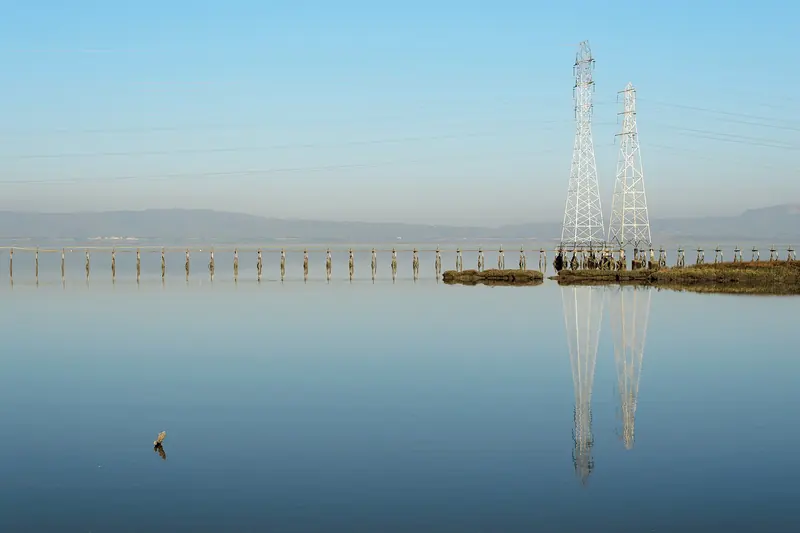
- On Runway 31, the Left Dumbarton departure turns right 10 degrees after takeoff and climbs over the bay, making the left turn only after reaching the Dumbarton Bridge.
- Use reduced power when it is safe and fly over the bay whenever possible.
Residents can call the city's noise hotline at (650) 329-2405. The city also publishes yearly noise reports.
San Carlos Airport (SQL)
San Carlos Airport lies beside US 101 in San Carlos, about 20 minutes north of Palo Alto. The County of San Mateo's Department of Public Works runs it, along with Half Moon Bay Airport on the coast. The San Carlos Airport Association, a local pilots' group, describes a 2,600 foot runway and says aircraft over 12,500 pounds maximum gross weight are prohibited.
The tower is a contract tower operated by Serco under FAA oversight. The association has reported staffing gaps and reduced tower hours at times in 2026, so check NOTAMs. The county runs a voluntary Fly Friendly noise abatement program with published arrival and departure paths and a video series for pilots. Its noise hotline is (844) 266-6266. The Hiller Aviation Museum sits beside the runway if you have time to spare.
San Jose Mineta (SJC)
For business jets, San Jose is the closest full-size airport. Its fixed base operators page lists two operators that may provide fuel, transient parking, hangar space, catering, ground transportation and maintenance:
- Atlantic Aviation, 1250 Aviation Avenue, San Jose.
- Signature Flight Support, 323 Martin Avenue, Santa Clara.
SJC has a noise-based curfew. The airport says certain louder aircraft may not operate between 11:30 p.m. and 6:30 a.m., with stricter limits on older Stage II aircraft. Operators can be fined $2,500 for curfew intrusions. Read the airport's curfew page before planning a late arrival. The airport also asks general aviation pilots to avoid night pattern work, to schedule high-power run-ups after 6:30 a.m. and to avoid flying over the residential areas near the field. Its noise complaint line is 408-392-3535.
SFO
SFO's private aircraft page lists Signature Flight Support at 1052 North Access Road. It says the FBO operates 24 hours a day, seven days a week, with an executive terminal of more than 9,000 square feet, a business center and a passenger lounge. SFO is the usual choice for international private arrivals and for passengers continuing into San Francisco. The drive to Palo Alto is about 20 miles on US 101, longer at rush hour.
Planning tips
- Match the airport to the aircraft. PAO and San Carlos suit small planes. Anything larger belongs at SJC or SFO.
- Mind the weather. Summer fog often sits over the bay in the morning and burns off by midday, while winter storms bring low ceilings and gusty wind.
- Expect busy airspace. The Peninsula sits under the approach paths to SFO, SJC and Oakland, so arrivals are tightly managed.
- Coordinate early. Ask the FBO or airport about parking, fuel and late arrivals before departure, especially on big Stanford weekends such as commencement in June.
Ground transportation and stays
From PAO, Embarcadero Road leads west to US 101 and downtown in a few minutes. From SJC or SFO, a car service or rideshare is the norm. Waymo's service area includes Palo Alto. Our page on robotaxis and rideshare explains how pickups work. Ask your FBO to arrange a car, or compare rental cars for pickup at SJC or SFO. For a place to stay near Stanford and Sand Hill Road, see our guide to luxury hotels or compare hotels in Palo Alto.
Good to know
- International private arrivals must clear US Customs and Border Protection at an airport that offers it. Ask your FBO and operator well ahead.
- Drones fall under FAA rules. Palo Alto bans drones in its parks and open space and Stanford bans visitor drones on campus. Check the FAA drone pages before flying near any airport.
- Commercial flights are covered in our guides to San Jose airport and SFO.
Frequently asked questions
Can private jets land at Palo Alto Airport?
Palo Alto Airport has a single runway of 2,443 by 70 feet, which suits small piston and light twin aircraft and helicopters. Business jets usually use San Jose Mineta or SFO, both of which have fixed base operators. Pilots should check runway data and aircraft performance before planning any arrival at PAO.
What are the tower hours at Palo Alto Airport?
The city's noise abatement sheet lists tower hours of 7 a.m. to 9 p.m. The FAA operates the tower. Outside those hours, follow the published procedures for the field.
How do transient pilots pay fees at Palo Alto Airport?
Since January 1, 2026, Vector Airport Systems (PLANEPASS) bills non-based aircraft and charter operators for Palo Alto Airport fees by monthly invoice. FBO fees are billed separately. The amounts are set in the city's rates and fees schedule.
Which FBOs serve San Jose airport?
San Jose Mineta lists two fixed base operators: Atlantic Aviation at 1250 Aviation Avenue, San Jose and Signature Flight Support at 323 Martin Avenue, Santa Clara. Contact them directly for fuel, parking, hangar space, catering and ground transportation.
Are there noise rules for flying into Palo Alto?
Palo Alto Airport publishes preferred noise abatement procedures, including climbing to at least 1,500 feet before crossing Highway 101. Tower instructions take priority. San Jose has a noise-based curfew for louder aircraft and San Carlos runs a voluntary Fly Friendly program.