On this page
Palo Alto draws visitors from all over the world. They come for Stanford, for meetings on Sand Hill Road, for conferences or to see family who moved here for tech jobs. Most of them fly into San Francisco International, about 20 miles north. A smaller number arrive at San Jose, the closest airport. Either way, the trip into town is short and you do not need a car to make it.
This page gathers what first-time visitors from abroad ask most. It covers the airport, the ride to Palo Alto, entry rules (by pointing you to the official sources), money, tipping, phones and time. For the airport transfer in full detail, see our SFO guide.
Arriving at SFO
Most long-haul flights arrive at SFO's Dianne Feinstein International Terminal. The airport's international arrivals page describes the steps:
- Immigration and customs. Arriving passengers complete US Customs and Border Protection entry procedures in the Federal Inspection Area. Passengers on flights from pre-cleared airports have already done this before departure.
- Baggage reclaim. Collect your bags after immigration. Baggage carts are free for arriving passengers in the International Terminal and porters charge $3 per bag.
- Connections. Onward passengers follow the "Connecting Flights" doors and recheck bags at the desks outside.
SFO notes that it does not set entry rules. CBP does. Eligible travelers can save time with CBP's Mobile Passport Control app or Global Entry, both listed on the airport's site. SFO also offers currency exchange and free Wi-Fi.
Arriving at San Jose (SJC)
San Jose has a short list of international routes. Its nonstop destinations page in October 2026 showed seasonal flights to Tokyo Narita plus several cities in Mexico, including Guadalajara, León, Morelia and Zacatecas. SJC is only about 15 miles from Palo Alto. Our SJC guide covers the trip from there.
Getting from the airport to Palo Alto
| Option | From SFO | From SJC |
|---|---|---|
| Train | BART to Millbrae, then Caltrain | Free VTA Route 60 bus to Santa Clara, then Caltrain |
| Rideshare or taxi | 25 to 60 minutes | 20 to 40 minutes |
| Prebooked driver | Meets you in arrivals | Meets you in arrivals |
| Overnight bus | SamTrans 397 to Palo Alto Transit Center | None direct |
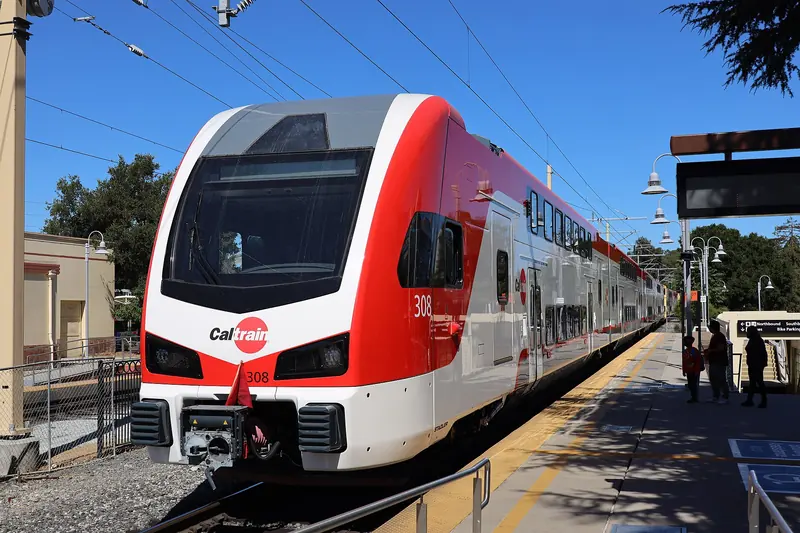
By train from SFO, ride the AirTrain to the BART station, take BART one stop to Millbrae and walk across to a southbound Caltrain. The Caltrain leg is two zones, $6.25 for an adult in October 2026 and $6.50 from January 1, 2027. You can pay on Caltrain, BART and the buses by tapping a contactless bank card or a phone wallet, so you do not need to buy a local transit card first. Our Caltrain guide explains tapping on and off.
After a long flight with luggage, many visitors prefer a car. Rideshare pickups are signposted at each terminal. You can also book a driver to meet you at SFO for a fixed price agreed in advance. Our page on robotaxis and rideshare explains the local options.

Visas and entry: the official sources
Entry rules are set by the US government and they change. This guide does not give immigration advice. Use these official sources:
- Visas. The State Department's US visas pages explain which visa fits your trip and how to apply at a US embassy or consulate.
- Visa Waiver Program and ESTA. Citizens of participating countries, 42 as of 2026, can usually visit for tourism or business for up to 90 days without a visa. They need an approved ESTA, applied for only on the official ESTA site. CBP raised the fee to $40 on September 30, 2025 and it now rises with inflation.
- Arrival rules. CBP's international visitors pages cover what to declare, what you may bring and how the inspection works.
Apply for an ESTA well ahead. CBP has long advised at least 72 hours before travel. Avoid third-party sites that charge extra fees to submit the same form.
Money, prices and tipping
Paying
The currency is the US dollar. Credit and debit cards are accepted almost everywhere. Contactless payment by card or phone is normal. A few businesses no longer take cash at all. Carry a little cash for small purchases, tips and the odd market stall. ATMs are easy to find downtown. Our guide to banks and credit unions lists local branches.
Sales tax
Price tags do not include sales tax. It is added at the register. The California Department of Tax and Fee Administration lists a combined rate of 9.75 percent for Palo Alto, effective October 1, 2026. Most grocery food is exempt. There is no tax refund scheme for foreign visitors.
Tipping
Tipping is expected for table service across the United States, California included. As a guide:
- Sit-down restaurants: about 18 to 20 percent of the bill before tax.
- Bars: a dollar or two per drink, or a percentage on a tab.
- Rideshare and taxis: a tip through the app or about 15 to 20 percent.
- Hotels: a few dollars a night for housekeeping and a few dollars per bag for porters.
- Counter service and cafes: payment screens often suggest a tip. It is optional.
Some restaurants add a service charge or a fee to the bill. Read it before you add a tip on top.
Phones, SIM cards and Wi-Fi
Most modern phones work on US networks, but check that yours is unlocked and supports the bands used in the United States. You have three main choices:
- Roaming on your home plan, which is simplest but can be expensive.
- An eSIM bought online before you fly, which activates when you land. You can buy a US eSIM in a few minutes.
- A prepaid SIM from one of the national carriers' stores, which gives you a US number for calls and texts.
Free Wi-Fi is easy to find. SFO and SJC offer it in the terminals, cafes downtown usually do and Palo Alto's city libraries have an open network with no password. Our guide to internet and cell service has more on local coverage.
Time zone and everyday basics
Palo Alto is on Pacific Time. Daylight saving time ends on Sunday, November 1, 2026, when clocks go back an hour to Pacific Standard Time, eight hours behind UTC. Clocks go forward again on Sunday, March 14, 2027, to Pacific Daylight Time, seven hours behind UTC.
- Electricity: 120 volts, 60 hertz, with flat two-pin or three-pin plugs (types A and B). Bring an adapter and check that chargers accept 120 volts.
- Measurements: miles, pounds and degrees Fahrenheit. Our weather guide shows typical temperatures by month.
- Water: tap water is safe to drink.
- Emergencies: dial 911 for police, fire or ambulance.
- Dates: written month first, so 11/1/2026 means November 1.
Good to know
- Medical care in the United States is expensive for visitors. Buy travel insurance that covers health care before you leave, for example through VisitorsCoverage.
- For minor illness or injury, our guide to urgent care and emergency rooms lists local options.
- Driving? Bring your home license and ask your rental company whether it also wants an International Driving Permit. Bay Area bridges and express lanes take no cash.
- Stanford's visitor center is the best first stop on campus. See our guide to the Stanford Visitor Center.
Frequently asked questions
Do I need a visa to visit Palo Alto?
It depends on your nationality and the purpose of your trip. Citizens of the 42 Visa Waiver Program countries can usually visit for tourism or business for up to 90 days with an approved ESTA. Others generally need a visa. Check the State Department's travel.state.gov and CBP's official ESTA site before you book.
How much is an ESTA?
CBP raised the fee to $40 on September 30, 2025. The law now ties it to inflation. Apply only on the official site, esta.cbp.dhs.gov. Third-party sites charge extra for the same form. CBP advises applying at least 72 hours before travel.
How do I get from SFO to Palo Alto?
Take BART one stop to Millbrae, then a southbound Caltrain to Palo Alto. The Caltrain leg was $6.25 for an adult in October 2026. A rideshare, taxi or prebooked car takes 25 to 60 minutes depending on traffic.
How much should I tip in Palo Alto?
At sit-down restaurants, about 18 to 20 percent of the pre-tax bill is customary. Bartenders usually get a dollar or two per drink and rideshare drivers a tip in the app. Tipping at counter service is optional. Check the bill first, since some restaurants add a service charge.
What time zone is Palo Alto in?
Pacific Time. Daylight saving time ends on Sunday, November 1, 2026, when clocks go back one hour to Pacific Standard Time, eight hours behind UTC. Clocks go forward again on March 14, 2027.