On this page
Palo Alto is small, but a lot of traffic passes through it. US 101 and Interstate 280 carry the Peninsula's main commute flows. El Camino Real runs through the middle of town. Stanford University, Stanford Research Park and the hospitals pull tens of thousands of workers in every weekday. Add school runs and big events at Stanford Stadium and the result is a town where timing matters as much as route.
This page describes the usual patterns in general terms. It is not a live report, so always check 511.org or Caltrans QuickMap before you set off. For exits and routes into town, see our guide to driving to Palo Alto.
The daily pattern
Traffic around Palo Alto runs in both directions at peak times, which surprises visitors used to a single flow into a downtown. San Francisco pulls Peninsula residents north in the morning. Silicon Valley employers pull workers south. The East Bay sends commuters west across the Dumbarton Bridge. Palo Alto itself is a major job center, so cars arrive from every side.
| Time on weekdays | What to expect |
|---|---|
| Before 6:30 a.m. | Light traffic on all roads |
| 7 to 10 a.m. | Morning peak on both freeways and the roads into Stanford and the Research Park |
| 7:45 to 8:30 a.m. | School drop-off adds local congestion near campuses |
| 10 a.m. to 2:30 p.m. | The easiest window of the working day |
| 2:30 to 3:30 p.m. | School pickup traffic builds near schools |
| 3 to 7 p.m. | Evening peak, usually longer and heavier than the morning |
| After 7:30 p.m. | Easing, apart from overnight freeway roadwork |
Friday afternoons tend to start early and run long. Mondays and Fridays are often a little lighter in the morning than midweek, when more office workers come in. These are general patterns, not guarantees.
US 101
US 101, the Bayshore Freeway, runs along the east side of town. It is the most direct road to San Francisco, SFO and San Jose and the most congested. Both directions slow at peak times. The stretch near the Dumbarton Bridge approach gets extra traffic from cross-bay commuters.
- Exits back up. University Avenue, Embarcadero Road and Oregon Expressway exits can queue onto the freeway at rush hour.
- University Avenue through East Palo Alto fills with commuters heading for the Dumbarton Bridge in the afternoon. Downtown-bound drivers coming off 101 meet that traffic head on.
- Express lanes run on 101 through the area, tolled on weekdays from 5 a.m. to 8 p.m. A solo driver with FasTrak can buy a faster trip. Our express lanes guide explains the rules.
Interstate 280
Interstate 280 follows the foothills west of town. It is usually less crowded than 101 and much more scenic. That does not make it empty. The Sand Hill Road and Page Mill Road exits queue in the evening as Stanford and Research Park workers head home. Sand Hill Road eastbound slows toward the medical center in the morning. 280 has no express lanes, so carpool shortcuts do not apply.
On weekends the roads that climb from 280 to Skyline Boulevard and the coast, including Page Mill Road and State Route 84, fill with hikers, cyclists and beach traffic. They are narrow and winding, so drive slowly and pass bikes with care.
El Camino Real
El Camino Real (State Route 82) is the old mission road through the middle of town. It has frequent traffic lights, many driveways and a steady stream of buses and turning cars. Expect slow going at lunchtime as well as rush hour. The busiest stretches for visitors are:
- The Stanford Shopping Center and Town and Country Village area around Sand Hill Road, Embarcadero Road and University Avenue.
- The Page Mill Road and Oregon Expressway intersection, one of the busiest crossings in the city.
- South Palo Alto near San Antonio Road, where traffic from the Mountain View shopping centers joins.
For short trips along El Camino, VTA Rapid 522 and SamTrans ECR buses use the same road and suffer the same delays. Caltrain runs parallel and is not affected by traffic at all. Our Caltrain guide covers schedules.
Page Mill Road and Oregon Expressway
Page Mill Road and Oregon Expressway form one cross-town route. Oregon Expressway runs from US 101 west to El Camino Real, where it becomes Page Mill Road. Page Mill then climbs past Stanford Research Park to Interstate 280 and on into the hills. The Research Park's offices and labs line the middle section, so the route carries heavy peak-hour traffic in both directions. Oregon Expressway also crosses the Caltrain tracks on an underpass and has signals at most residential cross streets, which slows through traffic.
Embarcadero Road is the other main cross-town link. It passes Palo Alto High School and Town and Country Village, so school bell times and shopping trips both affect it. In the low winter sun, east to west roads such as Embarcadero, Oregon and Page Mill bring strong glare in the early morning and late afternoon. The city's Safe Routes to School program publishes sun glare tips for drivers and riders for exactly this reason.
School hours
School traffic shapes Palo Alto's roads more than many visitors expect. More than half of PAUSD students walk or bike to school, according to the city's Safe Routes to School program, which means streams of children on bikes near every campus as well as lines of cars.
- Middle schools in PAUSD start at 8:30 a.m. every day in the 2026 to 2027 school year.
- High schools fall under California's later start law, which bars most public high schools from starting before 8:30 a.m.
- Gunn High School sits on Arastradero Road, which gets very busy with bikes at bell times.
- Palo Alto High School fronts Embarcadero Road and El Camino Real near Town and Country Village.
Plan on extra time near any school for about 30 minutes before the morning bell and during the mid-afternoon release. Elementary schools release at different times on different days, so slow down near every school zone. Our page on Safe Routes to School explains the walk and bike routes. Our public schools guide lists each campus.
Stanford game days and big events
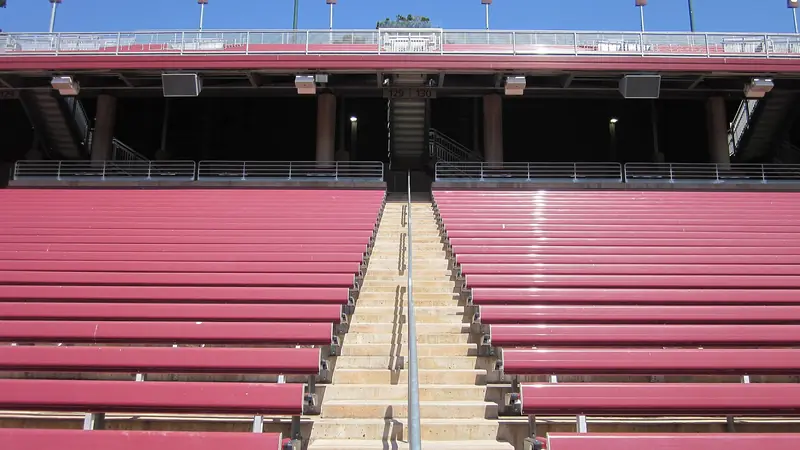
Home football games at Stanford Stadium bring the heaviest event traffic of the year. Roads around the stadium, including El Camino Real, Embarcadero Road and the campus streets near Galvez Street, slow sharply before kickoff and after the final whistle. Stanford's parking lots open five hours before kickoff, so traffic builds through the afternoon for a night game.
Caltrain's Stanford station did not open for the 2026 season. Fans who take the train use Palo Alto station and walk a little over 20 minutes to the stadium. Waymo runs a designated game day drop-off and pick-up zone at the Oval. The last home game of the 2026 regular season is against SMU on Saturday, November 28. Our Stanford football guide covers kickoff times and the traffic plan.

Other events that clog the roads include commencement weekend in June, concerts at Frost Amphitheater and big basketball games at Maples Pavilion. Hospital traffic on Sand Hill Road and Welch Road runs heavy every weekday regardless.
Holidays and seasonal patterns
- Thanksgiving week. Thanksgiving falls on November 26 in 2026. The Wednesday before is heavy on every freeway. Thanksgiving Day itself is quiet. Caltrain runs a weekend schedule that day and a modified schedule the Friday after.
- December weekends. Traffic around Stanford Shopping Center and Town and Country Village peaks with holiday shopping.
- School breaks. Commute traffic eases noticeably when PAUSD and Stanford are on break.
- Rain. The first storms of the season bring slick roads and more crashes. Allow extra time on wet days.
- Summer weekends. Coast-bound traffic over the hills builds on sunny Saturdays.
How to beat the traffic
- Take the train. Caltrain express trains reach San Francisco in well under an hour from Palo Alto, often faster than driving at rush hour.
- Shift your time. Leaving before 7 a.m. or after 10 a.m. makes a big difference.
- Bike or walk short trips. Downtown, Stanford and California Avenue are all within a couple of miles. See our walking guide.
- Use the express lanes on 101 if the time savings are worth the toll.
- Stay central. A hotel near the station removes the daily drive. You can compare hotels near Caltrain.
Renting a car for trips beyond town? Pick it up after the morning peak. You can compare rental car prices at SFO and SJC before you arrive.
Good to know
- Caltrans posts overnight lane closures on QuickMap. Freeway roadwork often closes lanes late at night.
- California law bans holding a phone while driving. Mount it and set navigation before you leave.
- Bike boulevards such as Bryant Street carry many children at school times. Drive slowly on them.
Frequently asked questions
When is rush hour in Palo Alto?
Weekday peaks run roughly 7 to 10 a.m. and 3 to 7 p.m. on US 101, Interstate 280 and the main roads into Stanford and Stanford Research Park. Traffic moves in both directions because the city draws workers from San Francisco, the South Bay and the East Bay.
Is Interstate 280 faster than US 101 near Palo Alto?
Often, yes. Interstate 280 through the foothills usually carries less congestion than US 101, though its exits at Sand Hill Road and Page Mill Road back up at peak times. Check 511.org or a live map before choosing, since a single crash changes everything.
How bad is traffic on Stanford football game days?
Roads around Stanford Stadium, including El Camino Real, Embarcadero Road and Galvez Street, slow sharply in the hours before kickoff and after the game. Parking lots open five hours before kickoff. Caltrain to Palo Alto station is the easier option, since Stanford station is closed for the 2026 season.
What time do Palo Alto schools start?
PAUSD middle schools start at 8:30 a.m. every day in 2026 to 2027. California law bars most public high schools from starting before 8:30 a.m. and middle schools before 8 a.m. Expect heavy foot, bike and car traffic near schools for about 30 minutes before the bell and again in mid-afternoon.
What is the best time to drive through Palo Alto?
Mid-morning between about 10 a.m. and 2:30 p.m. on weekdays and early weekend mornings are usually easiest. Sunday mornings are the quietest time of the week. Friday afternoons and December weekends near Stanford Shopping Center are among the worst.