On this page
Sapphire Ventures started life as a corporate venture arm and turned itself into one of the larger independent growth investors in enterprise software. It began inside SAP, the German software company, then spun out in 2011 and took the Sapphire name in 2014. Today it lists an office on Santa Cruz Avenue in downtown Menlo Park, plus San Francisco, Austin and London.
This profile is a neutral explainer. It draws on Sapphire's website and published reporting, with the firm's own figures marked as such. For the basics of how venture funds work, see our venture capital guide.
From SAP Ventures to Sapphire
Sapphire's roots go back to 1996, when SAP set up a venture capital arm, according to published profiles. SAP has had a large presence in Stanford Research Park for decades. Our page on SAP Labs Silicon Valley covers that campus on Hillview Avenue.
The venture team became independent in 2011. Sapphire's own disclosures count its growth strategy from that year. On October 16, 2014, SAP Ventures announced that it had become Sapphire Ventures. The press release, datelined Palo Alto, said the move reinforced the firm's independence. Published profiles say the firm managed about $1.4 billion at the time and had invested in more than 125 companies.
The story is a useful example of how corporate venture capital can evolve. Many corporate funds invest mainly for strategic reasons. Sapphire moved toward the model of an independent firm with outside limited partners and financial goals. Our corporate venture capital guide explains the differences.
Published profiles list Nino Marakovic as chief executive and Jai Das as president.
The Santa Cruz Avenue office
Sapphire's contact page lists 556 Santa Cruz Avenue, Suite 200, Menlo Park, CA 94025. That is in the first blocks of downtown Menlo Park, just west of El Camino Real. Floodgate lists an office a few doors away at 506 Santa Cruz Avenue. The Menlo Park Caltrain station is a short walk east.
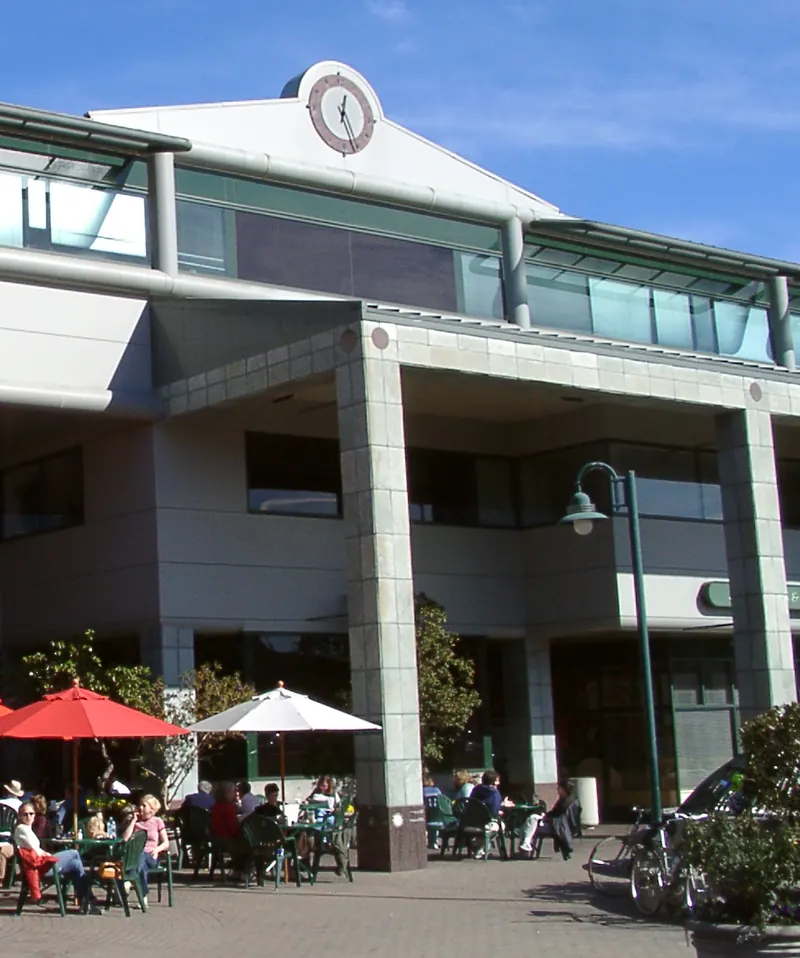

Sapphire's other offices are at 439 Bryant Street in San Francisco, 801 West 5th Street in Austin and Mortimer House on Mortimer Street in London. The 2014 rebrand release came out of Palo Alto, but the firm now lists Menlo Park as its Peninsula base. Our Santa Cruz Avenue guide describes the street. The office is private.
Stage and strategy
Sapphire describes its main strategy as partnering with expansion-stage enterprise software companies it believes can become category leaders. Its homepage now frames this around "Enterprise AI founders building Companies of Consequence." The key points from its website:
- Stage. Post product-market fit companies, often called the expansion or growth stage.
- Focus. Enterprise software and AI.
- Selectivity. The firm says it invests with high conviction in a select number of companies.
- Support. It reports more than 360 executive talent introductions and more than 360 customer and partner introductions a year, based on 2024 figures.
A second strategy, Sapphire Partners, invests in early-stage venture funds at seed and Series A across the United States, Europe and Israel. Published profiles say it launched in 2012. Sapphire also launched Sapphire Sport in 2019, a fund for companies in sports, media and entertainment, according to published profiles.
The growth stage comes after a seed round and a Series A. Our profile of IVP describes another growth investor and how its questions differ from those of an early-stage firm.
Notable investments
Sapphire's companies page lets visitors filter by IPO, acquisition or private company. A selection, with the outcomes it lists:
| Company | Outcome listed by Sapphire |
|---|---|
| DocuSign | IPO |
| Box | IPO |
| Alteryx | IPO |
| Braze | IPO |
| Five9 | IPO |
| Fitbit | IPO |
| Apigee | Acquired by Google Cloud, 2016 |
| Auth0 | Acquired by Okta, 2021 |
| Contentful | Acquired by Salesforce, 2026 |
| Dremio | Acquired by SAP, 2026 |
Current private companies on the page include Glean, Harvey, ElevenLabs, Clay, Cohesity and Baseten. Published profiles also credit Sapphire with investments in LinkedIn, MuleSoft, Square and Looker. Fitbit shows up on more than one local firm's list. True Ventures, a Palo Alto seed firm, backed it years earlier.
Sapphire says its growth strategy has seen more than 30 IPOs and more than 80 exits from its 2011 start through June 2025. These counts are the firm's own.
Assets and funds
Sapphire's homepage gives firmwide assets under management of more than $10 billion, citing the regulatory assets reported in its ADV filing of July 2026. Published profiles give a similar figure of about $10.2 billion. At the 2014 rebrand the firm managed about $1.4 billion, so it has grown several times over in a little more than a decade. The firm does not list each fund's size on the pages we read. Asset figures describe money managed, not results.
For a founder, a firm of this size matters in a practical way. A growth investor with billions under management can write large checks and often invest again in later rounds. It can also afford a platform team that works on hiring and sales introductions across the portfolio. The trade-off is that a growth firm expects a company to already be working. It is rarely the right first call for a team still searching for product-market fit, which is where seed firms such as Floodgate, a few doors away, come in. Our glossary explains growth equity, pro rata rights and other terms that come up at this stage.
Sapphire in the local ecosystem
Sapphire links two local threads. One is the big software companies of Stanford Research Park, such as SAP, whose corporate venture arms seeded a generation of investors. The other is the cluster of firms that now works in downtown Menlo Park, within walking distance of Floodgate, Menlo Ventures and Norwest. For founders, it is an example of a growth investor whose team grew up around enterprise software sales and could help a company sell to large businesses.
How founders reach Sapphire
Sapphire's contact page lists a main phone number and a general email address. Its fund investing team has its own address for venture managers. Sapphire invests after product-market fit, so practical steps look different from a seed pitch:
- Make sure you are at the stage Sapphire describes: real revenue, repeatable sales and a company already growing.
- Ask your existing investors whether they know the Sapphire team. Growth investors often meet companies through earlier backers.
- Use the firm's general contact if you have no introduction.
- Prepare revenue growth, net retention and sales efficiency figures before the first call.
Our term sheet basics and pitching guide cover later-stage terms and process.
Good to know
- The Menlo Park office is private. Come only for a confirmed meeting.
- Sapphire also has offices in San Francisco, Austin and London. Confirm the location before you travel.
- This page is not investment advice and makes no claims about returns.
Frequently asked questions
Where is Sapphire Ventures located?
Sapphire lists offices at 556 Santa Cruz Avenue, Suite 200, Menlo Park, at 439 Bryant Street in San Francisco, at 801 West 5th Street in Austin and at Mortimer House in London. The Menlo Park office is in downtown Menlo Park, a short walk from the Caltrain station.
Is Sapphire Ventures part of SAP?
Sapphire began as SAP's venture capital arm and became independent in 2011. It renamed itself from SAP Ventures to Sapphire Ventures on October 16, 2014, in a move it said reinforced its independence. Published profiles say SAP remained a major investor in its funds.
What stage does Sapphire Ventures invest in?
Sapphire says it invests in a select number of post product-market fit companies, which it calls the expansion stage. Its focus today is enterprise AI and software. A separate strategy, Sapphire Partners, invests in early-stage venture funds.
What companies has Sapphire Ventures backed?
Sapphire's companies page lists IPOs including DocuSign, Box, Alteryx, Braze, Five9 and Fitbit. Acquisitions include Auth0 (bought by Okta in 2021) and Apigee (bought by Google Cloud in 2016). Current companies include Glean, Harvey and ElevenLabs.
How do founders contact Sapphire?
Sapphire's contact page lists a main phone number and a general email address, with a separate address for its fund investing team. Because it invests after product-market fit, many introductions come through a company's existing investors.