On this page
An entrance modeled on the temple at Karnak, guarded by a statue of the hippo goddess Taweret nearby, makes the Rosicrucian Egyptian Museum one of the strangest sights in the South Bay. It stands on a residential street in San Jose's Rose Garden neighborhood, about 20 miles from Palo Alto. Its galleries hold the largest collection of ancient Egyptian artifacts on exhibit in western North America. Mummies, coffins, statues of gods, jewelry, tools and a walk-in replica of a rock-cut tomb fill a building designed to look as if it came from the Nile.
It is also one of the easier indoor outings for a rainy weekend, with one big catch. The museum is open only on Fridays, Saturdays and Sundays. This guide covers the museum's history, what to see, hours and tickets as the official site listed them on November 1, 2026, the drive and transit options from Palo Alto, accessibility and how to fit it into a day in San Jose. For the wider city, see our San Jose day trip.
A collector, a mystical order and a temple
The museum belongs to the Ancient Mystical Order Rosae Crucis, known as AMORC, a Rosicrucian organization with its headquarters next door. Its founder, Harvey Spencer Lewis, collected objects with symbolic meaning. His very first artifact was a small statue of the lion-headed goddess Sekhmet. In 1921 AMORC members donated money toward excavations at Tell el-Amarna, the capital of the pharaoh Akhenaten and the order received several antiquities in return.
Lewis first put the collection on public view in 1928 inside AMORC's administration buildings in San Jose. After his trip to Egypt in 1929 the collection grew quickly. His son, Ralph Maxwell Lewis, built the present museum building, which opened in November 1966. The museum itself notes that the galleries were built on several levels, as was common at the time.
The grounds around it, called Rosicrucian Park, were laid out in an Egyptian Revival style. The park also holds a historic planetarium, a temple, a research library, a labyrinth and the Peace Garden. In 2018 the museum became a zero net energy building. In 2005 its child mummy traveled up the Peninsula to Stanford for CT scans in a project with Silicon Graphics and the NASA Biocomputation Center. The results were released at the museum's 75th anniversary that August and a later image won a national science visualization prize.
What to see inside
The collection is arranged by theme rather than strict date. Wikipedia lists the main galleries as the afterlife and the rock-cut tomb, daily life and other cultures, kingship and the palace plus a temple gallery that covers Sekhmet and Akhenaten's Amarna period. Highlights include:
- Mummies. Human mummies, including the child mummy studied at Stanford and an upper-class man often called Usermontu. Animal mummies include cats, birds and a "baboon mummy" that turns out to hold a ceramic jar.
- Coffins. Painted wooden coffins, among them an early 18th dynasty example.
- The tomb replica. A walk-through composite of rock-cut tombs at Beni Hasan in Middle Egypt, built in the style of the Middle Kingdom. Many of its scenes come from the tomb of Khnumhotep II, a provincial governor of the 12th dynasty. The space is dark and enclosed.
- Daily life. Jewelry, cosmetics containers, tools, toys and pottery that show how ordinary people lived.
- The Alchemy Exhibit. Since 2015 the rotating gallery has held a display on the seven stages of alchemy, with a meditation chamber and a reproduction of the Ripley Scroll.
All tours are self-guided. The museum asks visitors to download its free app before arriving and to bring earbuds for the audio tour. Photography without flash is allowed for personal use. Flash, tripods, monopods and selfie sticks are not.

Hours, tickets and reservation rules
The admissions page listed these hours on November 1, 2026: Friday from 9 a.m. to 4 p.m. and Saturday and Sunday from 11 a.m. to 6 p.m. The museum is closed Monday through Thursday. The Rosicrucian Park site showed a slightly different Friday schedule of 10 a.m. to 5 p.m., so if you plan a Friday visit near either end of the day, check the museum page first.
Holiday closures listed for the year are New Year's Day, Easter Sunday, Independence Day, Thanksgiving, Christmas Eve and Christmas. Thanksgiving falls on Thursday, November 26, 2026, a day the museum is closed anyway. Christmas Eve and Christmas land on a Thursday and Friday this year, so Friday, December 25 is out.
| Ticket | Price |
|---|---|
| Adults 18 to 64 | $15 |
| Adults 65 and older | $12 |
| Students with ID | $12 |
| Children 7 to 17 | $10 |
| Children 6 and under | Free |
Online tickets are sold as timed admissions and the museum says buying ahead speeds up entry. Tickets are also sold at the door. Three rules catch people out: the museum does not accept cash, purchased tickets cannot be refunded or rescheduled and anyone 17 or younger must be accompanied by an adult 18 or older for the whole visit. Rosicrucian members and Friends of the Museum get in free. If you are planning several paid stops in the South Bay you can compare San Jose attraction tickets in one place.
Getting there from Palo Alto
By car
The drive takes about 25 minutes outside rush hour. Take Interstate 280 south, then Interstate 880 north to The Alameda exit. Turn right on The Alameda and right again at the second light onto Naglee Avenue. From Highway 101, take 880 south to the same exit and turn left on The Alameda, then right on Naglee at the third light.
The free parking lot is at Naglee Avenue and Chapman Street, one block east of the museum. You walk through the park to the entrance on Park Avenue. Construction of a new Alchemy Museum in the park was under way in fall 2026 and the museum warns that some parking and park paths may be closed, with alternate routes posted on its site.
By Caltrain and bus
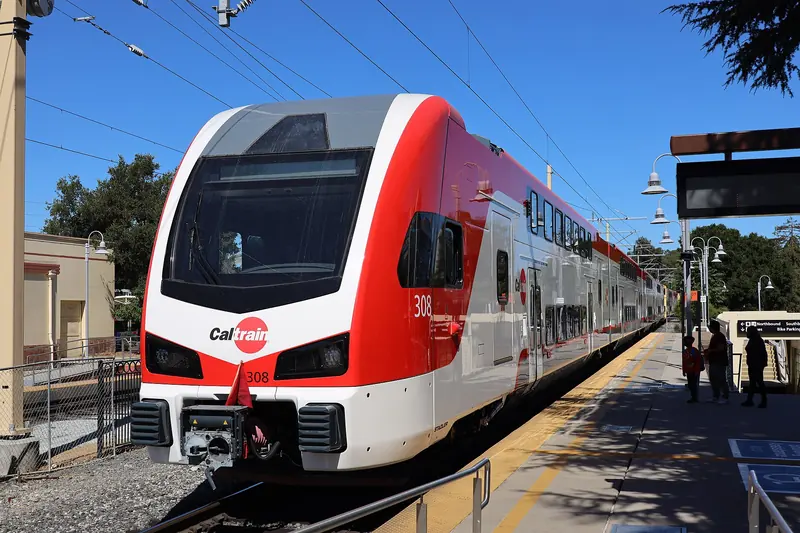
Take Caltrain south to San Jose Diridon. The museum is about a mile and a half west, a 30 minute walk, mostly along Park Avenue. The museum lists VTA bus routes 22 and 522, 61 and 62 and 81 as serving Rosicrucian Park. A rideshare from Diridon takes about five minutes. Our VTA guide explains fares and Clipper.
Accessibility
A ramp leads into the museum and drivers can drop passengers at the front door on Park Avenue. Because the 1966 building has galleries on several levels, the museum installed a platform wheelchair lift. Its platform measures 31.5 by 48 inches and it carries up to 550 pounds. State rules do not allow strollers on the lift, so families with small children should plan on carrying a baby through the stepped sections or using a carrier. Service animals are welcome. The tomb replica is dim and has tight corners, which some visitors find uncomfortable.
Tips for a good visit
- Download the app at home. The audio tour lives in the app and reception inside the galleries can be weak.
- Go on Friday morning. Weekend afternoons draw the biggest crowds and school groups.
- Check the events calendar. Short workshops, such as amulet making or a scavenger hunt, run some afternoons and are listed on the museum's site.
- Leave time for the park. The Peace Garden and the labyrinth open from 8 a.m. to sunset and cost nothing.
- Bring a card. There is no cash option at the ticket desk.
Food nearby
The museum has no restaurant and food is not part of the visit, though its site notes that cafes and restaurants are nearby. The closest cluster is along The Alameda a few blocks east, with coffee shops, bakeries, Mexican and Vietnamese places and a few sit-down restaurants. Santana Row and Westfield Valley Fair, about two miles west on Stevens Creek Boulevard, have dozens of options from quick counters to full dining rooms. Downtown San Jose and San Pedro Square are about ten minutes away by car.
Pairing it with other stops
The San Jose Municipal Rose Garden is less than half a mile away on Naglee Avenue, so the two make an easy morning. On a Saturday you could add the Winchester Mystery House, about ten minutes west and finish with dinner at Santana Row. Families who want a second museum can head downtown to the Children's Discovery Museum or The Tech Interactive. Our rainy day ideas list more indoor options closer to Palo Alto.
If you would rather have someone else plan the route, you can browse Silicon Valley tours that include San Jose stops.
Good to know
- Open Friday, Saturday and Sunday only.
- No cash, no refunds and no unaccompanied visitors under 18.
- Parking is free at Naglee Avenue and Chapman Street.
- The wheelchair lift cannot carry strollers.
Frequently asked questions
What days is the Rosicrucian Egyptian Museum open?
The museum opens only on Friday, Saturday and Sunday. Its admissions page lists Friday from 9 a.m. to 4 p.m. and weekends from 11 a.m. to 6 p.m. It is closed Monday through Thursday and on New Year's Day, Easter Sunday, Independence Day, Thanksgiving, Christmas Eve and Christmas.
How much are tickets to the Rosicrucian Egyptian Museum?
Adults 18 to 64 pay $15. Seniors 65 and older and students with ID pay $12, children 7 to 17 pay $10 and children 6 and under are free. Tickets are sold online and at the door, but the museum does not accept cash and does not give refunds.
Are there real mummies at the Rosicrucian Egyptian Museum?
Yes. Human and animal mummies are among the best-known pieces. One child mummy was scanned at Stanford in 2005 in a project with Silicon Graphics and NASA. The results were shown for the museum's 75th anniversary.
How long does a visit to the Egyptian museum take?
Most visitors spend about two hours inside, including the walk through the tomb replica. Add half an hour or more if you want to stroll the Peace Garden and the rest of Rosicrucian Park.
Can kids visit the Rosicrucian Egyptian Museum on their own?
No. Guests 17 and under must come with a parent or chaperone who is at least 18 and stays with them for the whole visit.