On this page
On a clear day you can see the white domes of Lick Observatory from Palo Alto, a small bright cluster on the ridge east of San Jose. Up close it is one of the most remarkable places in California: a research observatory founded in 1888, reached by a road laid out for horses and carts, with views from the Golden Gate to the Sierra Nevada. It is still a working site of the University of California, run by UC Santa Cruz.
A visit in late 2026 comes with an important caveat. A storm on Christmas morning 2025 badly damaged the dome over the famous Great Refractor and the main building has been closed since. Much of the summit is still open and free. This guide explains what you can see, how the Summer Series works, how to handle the drive and what to pair with it.
James Lick and the first mountaintop observatory
James Lick was a carpenter and piano maker who arrived in San Francisco in late 1847 and became, by the 1870s, one of the wealthiest people in California. In his final years he set aside $700,000 for a telescope larger than any yet built. He chose Mount Hamilton and negotiated for Santa Clara County to build a road to the summit, finished in 1876.
Construction of the observatory ran from 1876 to 1887. Alvan Clark and Sons ground the 36-inch lens, which reached the mountain on December 29, 1886. In May 1888 the trustees handed the observatory to the University of California. It is described as the first permanently occupied mountaintop observatory in the world. Lick himself is buried at the base of the great telescope's pier.
Lick astronomers went on to discover moons of Jupiter, supply standard time to the railroad by telegraph and, with the much later Shane Telescope, take part in early searches for planets around other stars. Our Stanford observatory page covers stargazing much closer to Palo Alto.
The 2025 storm and what is open now
Early on December 25, 2025, winds gusting to 114 miles per hour tore across Mount Hamilton. The multi-ton shutter section of the Great Refractor's dome fell outward onto the roof of the Great Hall and crushed structural beams. The telescope itself was not damaged and its lens and electronics were protected from the rain.
The observatory's September 4, 2026 update said repairs to the main building's roof and interior were nearing completion and that the focus had shifted to the dome. Engineers were scanning it with LiDAR to plan the repair. The observatory said it did not know when the 36-inch refractor would return to service. As of its October 28, 2026 visitor pages:
| Area | Status |
|---|---|
| East Grounds and outdoor viewpoints | Open daily, 9 a.m. to 5 p.m. |
| Shane Telescope visitors' gallery | Open daily, with restrooms, water and vending machines |
| Gift shop | Moved to the Historic Diner, open weekend afternoons |
| Main building, visitor center and Great Refractor | Closed |
| Main building parking lot | Closed for construction |
The gift shop's posted hours differed between pages (11 a.m. or 1 p.m. to 4 p.m.), so expect it to be open on Saturday and Sunday afternoons. It is closed on Thanksgiving Day, Christmas Eve and Day and New Year's Eve and Day. Check the visitor information page before driving up.
The Shane Telescope
The main daytime attraction is the Shane Telescope, a 120-inch reflector that is still used for research nearly every night of the year, weather permitting. From the visitors' gallery you look at about 145 tons of steel and glass, built around a primary mirror that weighs roughly 4 tons. Displays explain the instruments and the planet discoveries made with them.
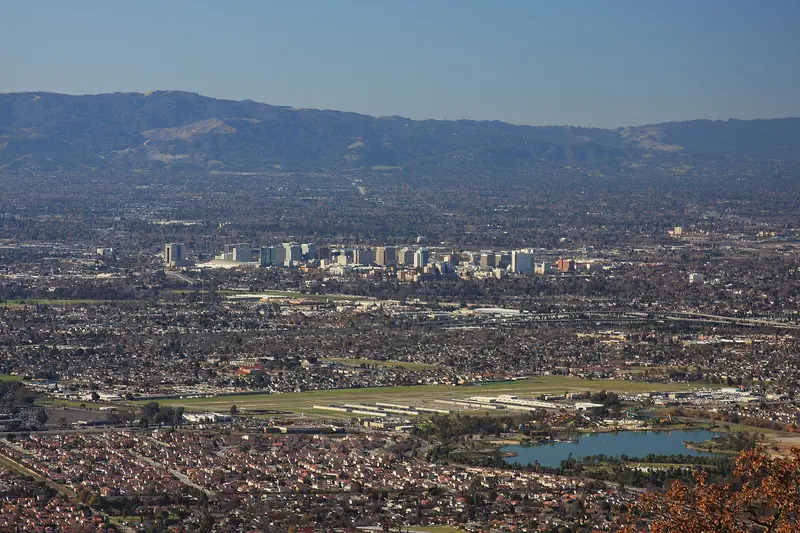
The gallery is a short uphill walk of three to five minutes from the Historic Diner and the public parking areas. Outside, the East Grounds look northwest over Silicon Valley toward the bay and, on crisp days, Mount Tamalpais. To the southeast the Diablo Range drops toward the Central Valley with the Sierra on the horizon.

The Summer Series
Lick's evening program is the best way to see the observatory at work. The 2026 season was the 46th and, because of the storm, it was built around the east side of the summit. Each After Hours evening included a walk through the grounds, a visit to the Shane Telescope, a twilight history lecture and then stargazing through portable telescopes once the sky was dark.
- Dates: 22 evenings from June 26 to September 25, 2026, mostly Fridays and Saturdays.
- Cost: $75 plus the Eventbrite fee, for a total of $81.88.
- Length: about 4 to 6 hours, with roughly a mile of walking including stairs.
- Tickets: sold through Eventbrite, with general sales opening June 10, 2026. Members of Friends of Lick Observatory get access a week earlier.
Dates for 2027 had not been announced in late October 2026. Tickets usually go on sale in late spring and popular nights go fast, so join the mailing list if you want a summer evening.
Getting there from Palo Alto: the drive
There is no public transit to the summit. From Palo Alto, take US 101 south to San Jose, head east to Alum Rock Avenue and follow signs for Mount Hamilton Road, also State Route 130. Allow about 1.5 hours each way in normal traffic.
The final 19 miles or so are the memorable part. The road follows a gentle grade designed in the 1870s, which means it winds constantly, with sharp curves and narrow stretches. The observatory's advice is worth following:
- Fill your tank in San Jose. There is no gas or car service on the mountain or along the road.
- Drive slowly and watch for others. Cyclists and motorcyclists use the road heavily, especially on weekends.
- Expect hazards. Rockfall, gravel, mudslides and wildlife are common after storms.
- Check for closures in winter. Snow sometimes closes the road. Caltrans road information for Highway 130 has the current status.
- Park only in public areas. Do not stop on the road or block private driveways.
Anyone prone to car sickness should take a remedy before the climb. If you are visiting without a car, you can compare rental cars in San Jose or Palo Alto. Our car rental guide lists the agencies closest to Palo Alto.
Tips and accessibility
- Bring layers. The summit is often much cooler and windier than the valley.
- Pack lunch and water. There is no cafe. Vending machines and a water bottle filler are at the Shane gallery.
- No pets. UC Santa Cruz rules ban animals other than service animals on its property.
- No drones without approval. All drone flights need prior permission from the observatory.
- Go on a clear day. The HamCam webcams on the observatory site show conditions at the top.
Accessibility is limited while the main building is closed. Restrooms are at the Shane gallery, but reaching it involves a short uphill walk. The Summer Series also includes stairs. Contact the observatory at [email protected] before you go if anyone in your group uses a wheelchair.
Food nearby and pairing it with other stops
Eat before you climb. San Jose has the last restaurants and grocery stores before the summit. Our San Jose day trip covers downtown and Japantown, both easy stops on the way. If you want to stay in the South Bay and start early, compare hotels in San Jose.
Mount Hamilton Road passes Joseph D. Grant County Park on the way up, a large Santa Clara County park with oak-studded hills and trails. It makes a good picnic stop. Santa Clara County charges $6 for day use at most of its parks. The summit is also one of the best viewpoints in the Bay Area at the end of a clear day, so it belongs on any list of sunset spots, though the grounds close at 5 p.m. outside special events. For another big-view mountain, our Mount Diablo guide covers the peak across the valley to the north. Families who caught the space bug can follow up with the Starlight Nights at the Hiller Aviation Museum, which pair a Starlab sky show with telescopes outside.
Good to know
- The main building and Great Refractor are closed after the December 2025 storm. No reopening date is set.
- The East Grounds and Shane gallery are open daily 9 a.m. to 5 p.m. and free.
- Fill up on gas in San Jose. The mountain road has none.
- Summer Series dates for 2027 were not posted in late October 2026.
Frequently asked questions
Is Lick Observatory open to visitors?
Partly. Since a windstorm on December 25, 2025, the historic main building and its Great Refractor have been closed for repairs. The East Grounds and the Shane Telescope visitors' gallery are open daily from 9 a.m. to 5 p.m. with free admission, as of late October 2026.
Does Lick Observatory cost anything?
Daytime visits are free. The evening Summer Series is ticketed. In 2026 its After Hours tours cost $75 plus an Eventbrite fee, for a total of $81.88.
How long is the drive to Lick Observatory?
From San Jose the observatory is about 19 miles up Mount Hamilton Road, a narrow route with many sharp curves that takes close to an hour. From Palo Alto, allow about 1.5 hours each way. There is no gas station on the road.
Can you look through the telescopes at Lick Observatory?
Not during the day. Daytime visitors view the 120-inch Shane Telescope from a gallery. During the Summer Series, guests look through portable telescopes after dark, weather permitting. The 36-inch Great Refractor, once used for public viewing, is out of service while its dome is repaired.
When does the Lick Observatory Summer Series happen?
It runs on selected summer evenings. The 2026 season, the 46th, ran from June 26 to September 25 with tickets on sale June 10. Dates for 2027 had not been posted in late October 2026. Friends of Lick Observatory members get a week of early access.