On this page
Napa and Sonoma lie north of San Francisco Bay, roughly 75 to 90 miles from Palo Alto. That puts wine country at the edge of what is comfortable for a day trip. It is absolutely doable. Thousands of Bay Area residents do it every weekend, but the day goes better with a plan. You need to know which valley suits you, how to get there without sitting in bridge traffic, which tastings to book ahead and who will be driving home.
This guide covers all of that. It is written for visitors starting from Palo Alto, though most of the advice applies from anywhere on the Peninsula.
Getting there from Palo Alto
There is no single best route, because it depends on traffic and which valley you are heading to. The two main options:
- Through the East Bay. Cross the Dumbarton Bridge or the San Mateo Bridge, head north on Interstate 880 to Interstate 80, then continue toward Vallejo and up Highway 29 into Napa. This is usually the quicker way to Napa.
- Through San Francisco. Take Highway 101 north through the city and across the Golden Gate Bridge into Marin, then east on Highway 37 and north toward Sonoma. This is often the better way to Sonoma and it is the scenic option.
Expect about 1.5 hours each way with light traffic and well over 2 hours at the wrong time. Leave Palo Alto by 8 a.m. on a weekend and avoid the weekday evening commute on the way home. Bay Area bridge tolls are collected electronically and only in one direction. The Golden Gate Bridge has no cash lanes, so ask your rental company how it bills tolls. Check a live traffic map before you choose your route.
Napa or Sonoma?
The two valleys sit side by side, separated by the Mayacamas Mountains, but they feel different. Use this table as a starting point.
| Napa Valley | Sonoma | |
|---|---|---|
| Feel | Polished and destination focused | More relaxed and rural |
| Known for | Cabernet Sauvignon and famous estates | A wide range, from Pinot Noir and Chardonnay to Zinfandel |
| Layout | One valley about 30 miles long with five towns | A large county with several distinct valleys |
| Tasting fees | Generally higher | Generally lower |
| Main town stop | Downtown Napa, Yountville or St. Helena | Sonoma Plaza or Healdsburg |
| Best route from Palo Alto | Usually through the East Bay | Usually through San Francisco and Marin |
Napa Valley
Napa Valley runs about 30 miles from the city of Napa north to Calistoga. Two roads run up the valley: Highway 29 on the west side and the quieter Silverado Trail on the east. Wineries line both. Downtown Napa has tasting rooms and restaurants within walking distance of each other. Yountville is known for its restaurants, including The French Laundry. St. Helena has a classic small-town main street. Calistoga, at the top of the valley, is known for its hot springs and mud baths.
Sonoma
Sonoma County is much bigger and more varied, so a day trip usually focuses on one part of it. The town of Sonoma is the closest and easiest target from the Bay Area. Its historic plaza is surrounded by tasting rooms, shops and restaurants and it holds Mission San Francisco Solano, the last of California's 21 missions and now part of Sonoma State Historic Park. The plaza is also where the 1846 Bear Flag Revolt took place. Healdsburg, farther north, is a lovely town but adds significant driving to a day trip from Palo Alto.

Booking tastings
Wine tasting has changed a lot in recent years. Many wineries, especially in Napa, now take guests by appointment only. The official visitor bureau, Visit Napa Valley, advises visitors to assume a reservation is required. Some wineries still welcome walk-ins, but you risk being turned away on a busy Saturday.
- Book two or three tastings, not five. Each takes 60 to 90 minutes and you need time to drive between them and eat lunch.
- Cluster them. Pick wineries close together, ideally on the same road, to cut driving time.
- Expect fees. Tastings are rarely free and Napa fees run well above what you might pay in Sonoma. Some wineries waive the fee if you buy wine.
- Bring layers. Some tastings take place in cool caves or cellars.
Designated drivers and tours
This is the most important part of planning. California's legal limit is 0.08 percent blood alcohol for adult drivers and a few tasting flights over an afternoon can put you near or over it. The drive home to Palo Alto is long, with busy freeways and bridges. Plan for a sober driver from the start.
Your options:
- A guided tour. Small group wine tours handle the driving and often the tasting reservations too. Most leave from San Francisco, an easy Caltrain ride from Palo Alto. You can compare Napa and Sonoma wine tours and look for ones that cap group sizes.
- A private driver. Hiring a driver for the day, in your car or theirs, gives you full control of the itinerary. Agree on the hours and price in advance.
- The Napa Valley Wine Train. The train leaves from 1275 McKinstry Street in Napa and runs vintage cars up the valley. Journeys range from about 2.5 to 6 hours. Some include stops at wineries, while others stay on board with a multicourse meal. You still need to get to Napa, though.
- A designated driver in your group. If one person stays sober, most wineries offer nonalcoholic options.
Do not count on rideshare. Cars can be scarce in rural parts of wine country, especially late in the day. You can also browse more wine country day trips that pair tastings with lunch or a stop in Sausalito.
When to go
There is no real off-season in wine country. Each time of year has its appeal.
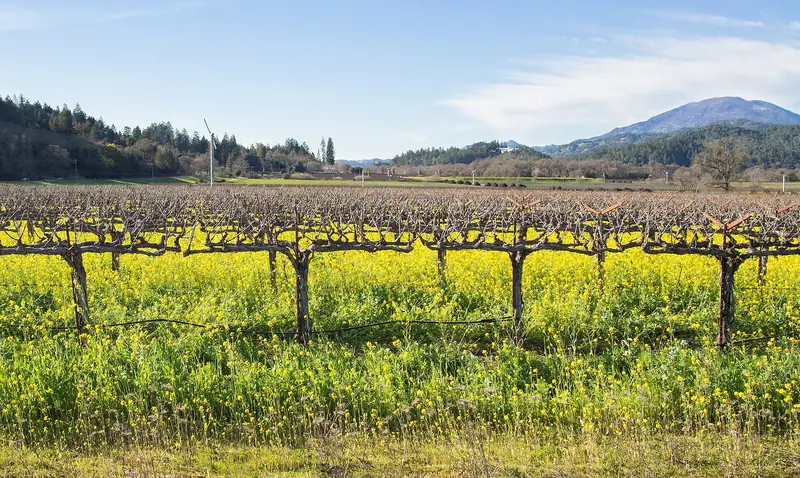
- Late winter and spring: bright yellow mustard flowers between the vines and fewer crowds.
- Summer: warm, often hot days in the valleys and long evenings.
- Harvest, from late summer through October: the most exciting time as grapes come in. It is also the busiest and most expensive.
- Late fall and winter: quieter, with cozy tasting rooms and changing leaves on the vines in November.
Weekdays are calmer than weekends at any time of year. Check our weather guide too, since the inland valleys can be much hotter than Palo Alto in summer.
A sample day in Napa
- Leave Palo Alto at 8 a.m. and drive through the East Bay.
- Arrive in the valley around 9:45 and take a short walk in downtown Napa.
- Book a first tasting around 10:30 at a winery south of Yountville.
- Have lunch in Yountville or St. Helena.
- Book a second tasting around 2 p.m. on the Silverado Trail.
- Have an early dinner or coffee, then let your sober driver take you home after the evening traffic eases.
Making it an overnight
Wine country is much more pleasant with a night in the middle. You can enjoy dinner without worrying about the drive and start fresh the next day. Hotels in Napa and Healdsburg can be expensive, especially during harvest, but the city of Napa and the town of Sonoma usually have a wider range. You can compare wine country hotels and look for midweek rates. Many of the tours mentioned above leave from San Francisco, so a night in the city before or after also works. See our San Francisco guide for that part of the trip.
Good to know
- Visitors must be 21 or older to taste wine in California. Bring photo ID.
- Eat a real breakfast and lunch and drink plenty of water between tastings.
- Shipping wine home is common. Ask the winery about rules for your state or country.
- Prefer to stay local? Our guide to bars and wine in Palo Alto covers wine bars close to home and our food and drink guide has more.
- Browse all our day trips for shorter outings.
Frequently asked questions
How long is the drive from Palo Alto to Napa?
Napa is roughly 75 to 85 miles from Palo Alto, depending on the route. With light traffic it takes about 1.5 hours, but weekday commute traffic around Oakland or San Francisco can push it past 2.5 hours. Leave early and avoid crossing the bay during rush hour.
Should I visit Napa or Sonoma?
Choose Napa for famous Cabernet estates, polished tasting rooms and destination restaurants. Choose Sonoma for a more relaxed feel, a wider range of wines and a historic town plaza. Tasting fees in Napa generally run higher than in Sonoma.
Do you need reservations for wine tasting in Napa?
Usually, yes. Visit Napa Valley advises visitors to assume a reservation is required, since many wineries now take guests by appointment only. Some still accept walk-ins, but weekends and harvest season fill up quickly.
What is the best way to do wine tasting without driving?
Book a guided wine tour or hire a private driver for the day. The Napa Valley Wine Train is another option, with some journeys that include winery visits. Rideshare service can be thin in rural parts of wine country.
Can you do Napa and Sonoma in one day?
It is possible because the valleys are next to each other, but it is rushed when you add the round trip from Palo Alto. Pick one valley, book two or three tastings and leave room for lunch.